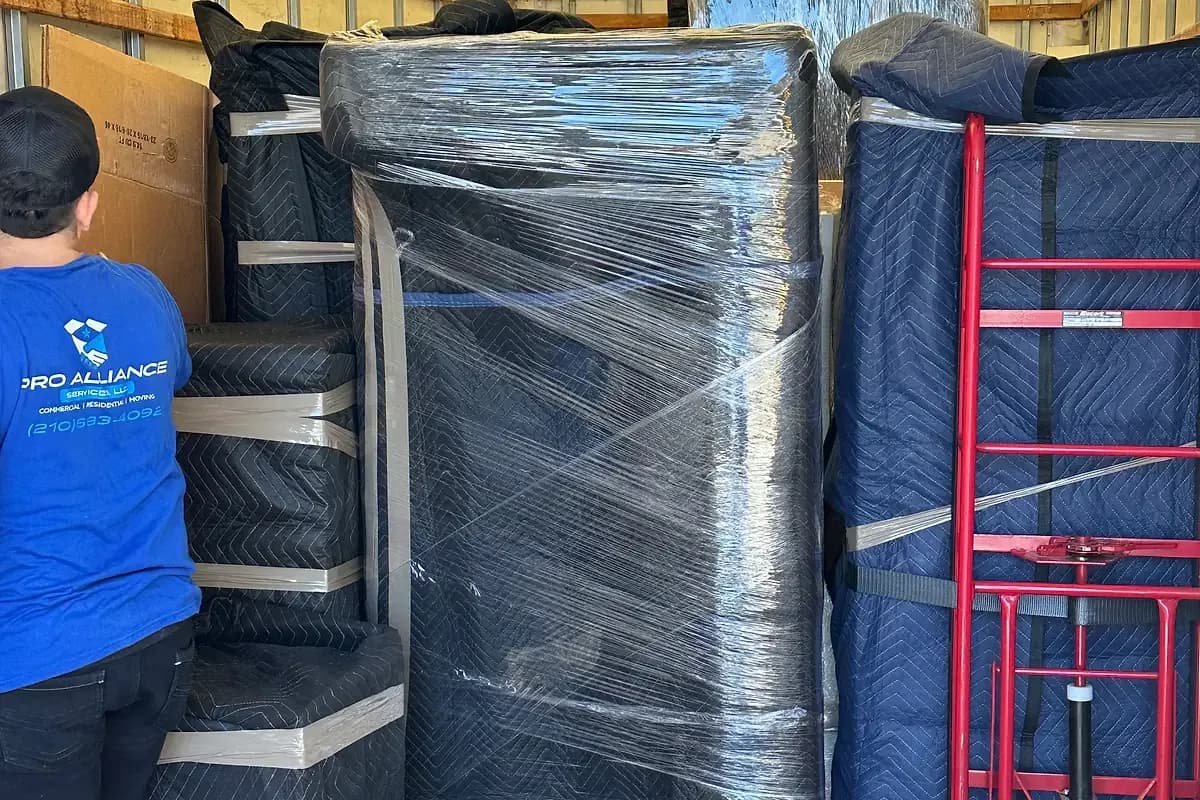
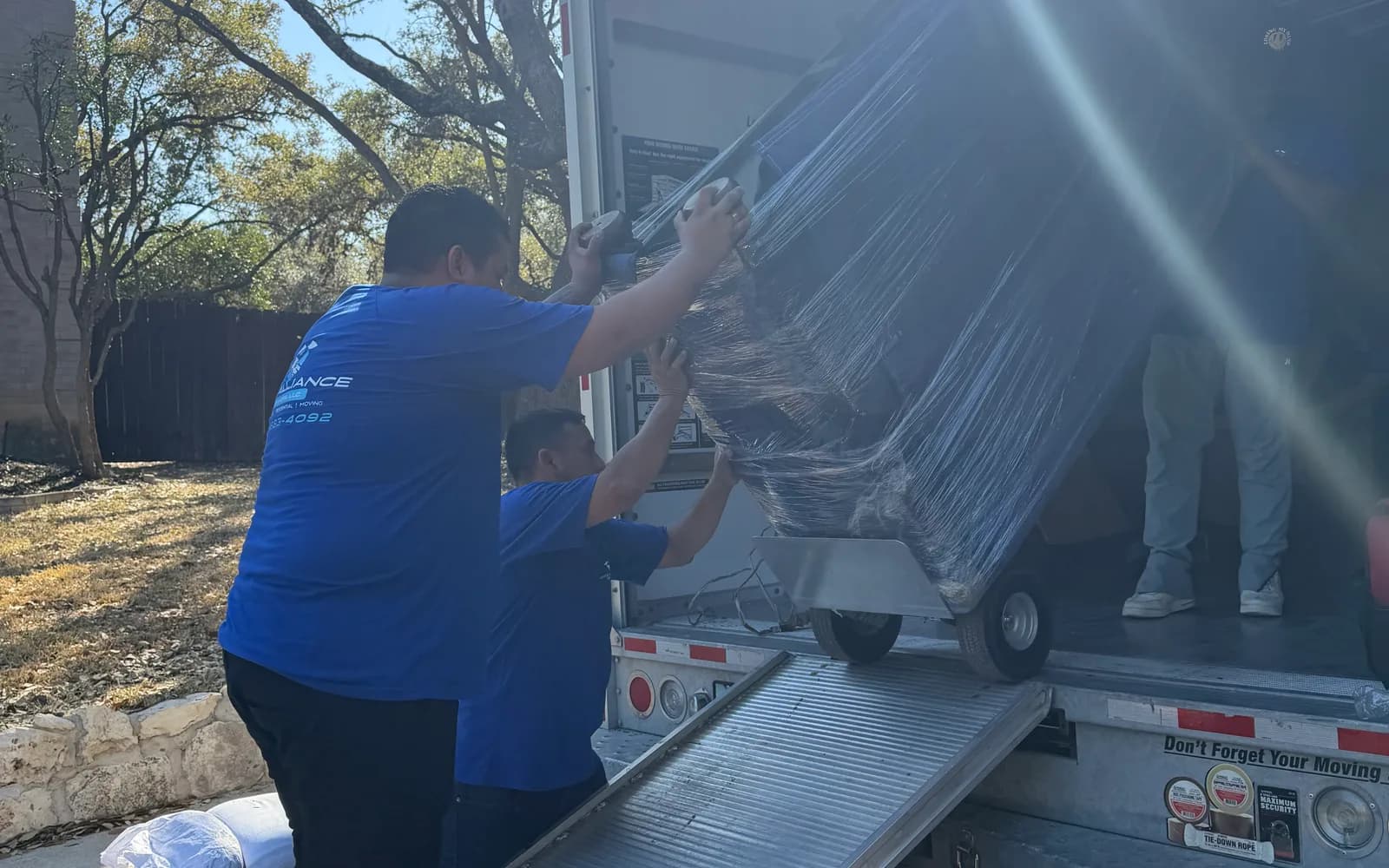
A moving estimate starts with a question that sounds simple and is not: which service is this job, exactly? A household move across town, an office relocation, a single heavy dresser, and a truck full of self-packed cartons are all called moving. They are planned, crewed, and quoted as different kinds of work.
Pro Alliance Services organizes that work into service pages, one per job type. This guide is the map between them. It covers distance, property type, packing, and specialty items, the parts of a move that usually decide which services apply. Each section links the service page for that part of the job, and a deeper guide where the decision deserves one.
You do not need every answer before you contact a mover, just a sense of which questions are still open, since sorting those out is exactly what an estimate review is for.
Direct answer: Match a San Antonio move to a service by looking at distance (local or long distance), property type (a house, an apartment, or a commercial space), who packs (the crew, you with delivered supplies, or a mix), and which items, such as appliances, pool tables, or furniture that needs installation, call for a specialty crew. Send the whole picture in one estimate request.
Short answer: which moving service do you need in San Antonio?
These four decisions rarely get equal thought before someone calls a mover, so it helps to walk through them in order. Distance usually settles itself: moves that stay inside the San Antonio area are local jobs, while anything crossing Texas or leaving the state calls for long distance planning. Property type takes more work, since houses, apartments, and commercial spaces are scoped on different terms, and a business closing a space for good may also need decommissioning on top of the move itself. Packing is the one people default to habit on, when the real question is whether the crew handles everything, just the difficult rooms, or none of it while you use delivered supplies. Specialty items, appliances, pool tables, single large pieces, and anything needing assembly or installation, are worth naming early, before the quote is set. Write down where you land on each one, flag what is still undecided, and send the whole picture with the estimate request.
Start with distance: local or long distance
Distance is the first fork because it changes how the move is regulated and how precisely it must be planned. A local move starts and ends in the San Antonio area. The crew can see both properties in one day, and the plan can flex around access details.
A move that crosses Texas or leaves the state is a different kind of project. The inventory has to be more precise, the schedule has more moving parts, and the questions you ask a mover change. The long distance planning guide covers how those moves differ and what makes their estimates accurate.
Whichever direction the move goes, the mover should be verifiable. Texas movers must be licensed with the Texas Department of Motor Vehicles, and interstate movers are registered with the Federal Motor Carrier Safety Administration. Both agencies publish public lookup tools, listed under Sources below.
Match the service to the property type
The second decision is what sits on each end of the move. A full house is the center of residential moving: a household inventory, furniture in every room, and a truck at a private address. An apartment brings its own conditions, including gates, elevators, stairs, long carries, and property rules, which is why apartment moving is scoped as its own service.
A business move runs on a different clock. Commercial moving has to work around building requirements and business operations as well as the inventory itself. When a company leaves a space for good, the leaving side can be a project of its own. Office decommissioning covers that end of a lease rather than the move itself.
When the two ends of a move are different property types, describe both in the estimate request. The harder end usually shapes the plan.
Decide who packs and what should be delivered
Packing is the part of the service mix people most often decide by habit, without checking what the inventory actually calls for. Packing services can cover the whole home or only the rooms that punish mistakes, usually the kitchen and anything fragile. If you would rather pack yourself, moving supplies covers boxes and materials without the labor.
The right choice depends on your calendar and your inventory. What worked last time is beside the point if the rooms and the schedule are different now. A move with a tight timeline and a full kitchen argues for professional packing. A move with weeks of lead time and a simple inventory may only need supplies. The full versus partial packing guide walks through that decision, and the self packing guide covers box standards when you pack your own.
Specialty crews cover the items that need their own plan
Some items should be scoped individually no matter what kind of move surrounds them. Large appliances raise questions the rest of the inventory does not, including water and gas connections, doors and drums that need securing, and routes that must be measured. Appliance moving is the page for that conversation, and the prep questions come first.
A single couch, dresser, or bed set between addresses is its own kind of job, covered by furniture moving. A pool table is the classic example of an item that deserves a dedicated scope; if the move includes one, say so early and review pool table moving. And when the truck is empty but the beds, sectionals, or office workstations still need to come back together, furniture installation covers the assembly side as its own service.
The pattern across all of these is the same. Name the item, share its dimensions and location, and let the estimate review decide how it should be handled.
Confirm these details before you request an estimate
Work through this list once, and the estimate request almost writes itself.
- Confirm the pickup and delivery addresses and note whether each one is a house, an apartment, an office, or a storage unit.
- Decide whether the job stays in the San Antonio area or needs a long distance plan.
- List every room and the large items in it, and flag anything that may need disassembly.
- Decide who packs each part of the home: the crew, you with delivered supplies, or a mix.
- Flag appliances, pool tables, and any other item that seems to need its own plan.
- Note the access conditions at both addresses, including stairs, elevators, gates, and parking.
- Choose the dates that could work for you and rank them in order of preference.
- Put all of it in one message so the estimate reflects the real scope of the job.
Use the guide that matches your open decision
Each decision above has a deeper guide behind it. Start with the one that matches the question you have not answered yet.
- Long distance moving from San Antonio
- Self packing: box standards and what cannot ship
- Office furniture liquidation and disposal
- Planning an office move: access and sequencing
- Getting appliances ready to move
- Moving a single large item
- Moving day: what to expect from the crew
- Adding a storage unit stop to a move
- Furniture assembly and installation after a move
These guides help you identify questions and gather details. The specific scope of any job still gets settled in the estimate review.
Where Pro Alliance fits
Every section above narrows to the same step: put the move in front of the team and let the details pick the service. Include both addresses, preferred dates, a room by room inventory, access notes, and the services you expect. The residential moving page describes the typical household job, and a free estimate request works with whatever you have settled so far.
Frequently asked questions
How do I know whether my move is local or long distance?
Think in terms of the plan. The mileage number alone does not say much. If both addresses are in the San Antonio area and the job can be seen end to end in a short drive, it is a local move. If the move crosses a large part of Texas or leaves the state, it needs long distance planning and a more precise inventory.
The distinction also affects which agency regulates the mover, which is why it is worth settling in your first message to a mover.
Can I combine several services in one move?
Yes, and most moves are a combination. A household job might pair residential moving with partial packing and appliance handling, while an office job might pair commercial moving with decommissioning and furniture installation. The services are described separately so each part can be scoped honestly.
List every part you expect to need in the estimate request. It is easier to trim a scope than to discover a missing one on moving day.
What if I have not decided who is packing?
Say so in the estimate request and share the inventory anyway. The choice between full packing, partial packing, and supplies only is easier with the room list in front of you. It is a normal thing to settle during the estimate conversation.
If the timeline is short or the kitchen is large, lean toward having the crew pack at least the fragile rooms.
Do single items and small jobs use the same services as full moves?
The equipment and care are the same, but the scoping is different. A single couch or dresser is quoted around the item and the two access paths rather than a household inventory. That is why furniture moving exists as its own service, scoped around the item and its two access points.
For those jobs, the item's dimensions and the route at both ends matter more than anything else.
What details should be in my first message to a mover?
Both addresses, the property type on each end, the preferred dates, a room by room inventory, access notes such as stairs or gates, and the expected services. Add photos of large or unusual items if you have them.
A complete first message shortens the whole process, because the review can start from facts and skip a round of follow up questions.
Sources
Ready to plan the real move?
Send both addresses, your date, and what you are moving. The team reviews access at each end and comes back with a written estimate.
Prefer to talk it through? Call (210) 683-4092, Mon–Fri 8:00 AM–5:30 PM and Sat–Sun 8:00 AM–4:30 PM.
Keep planning