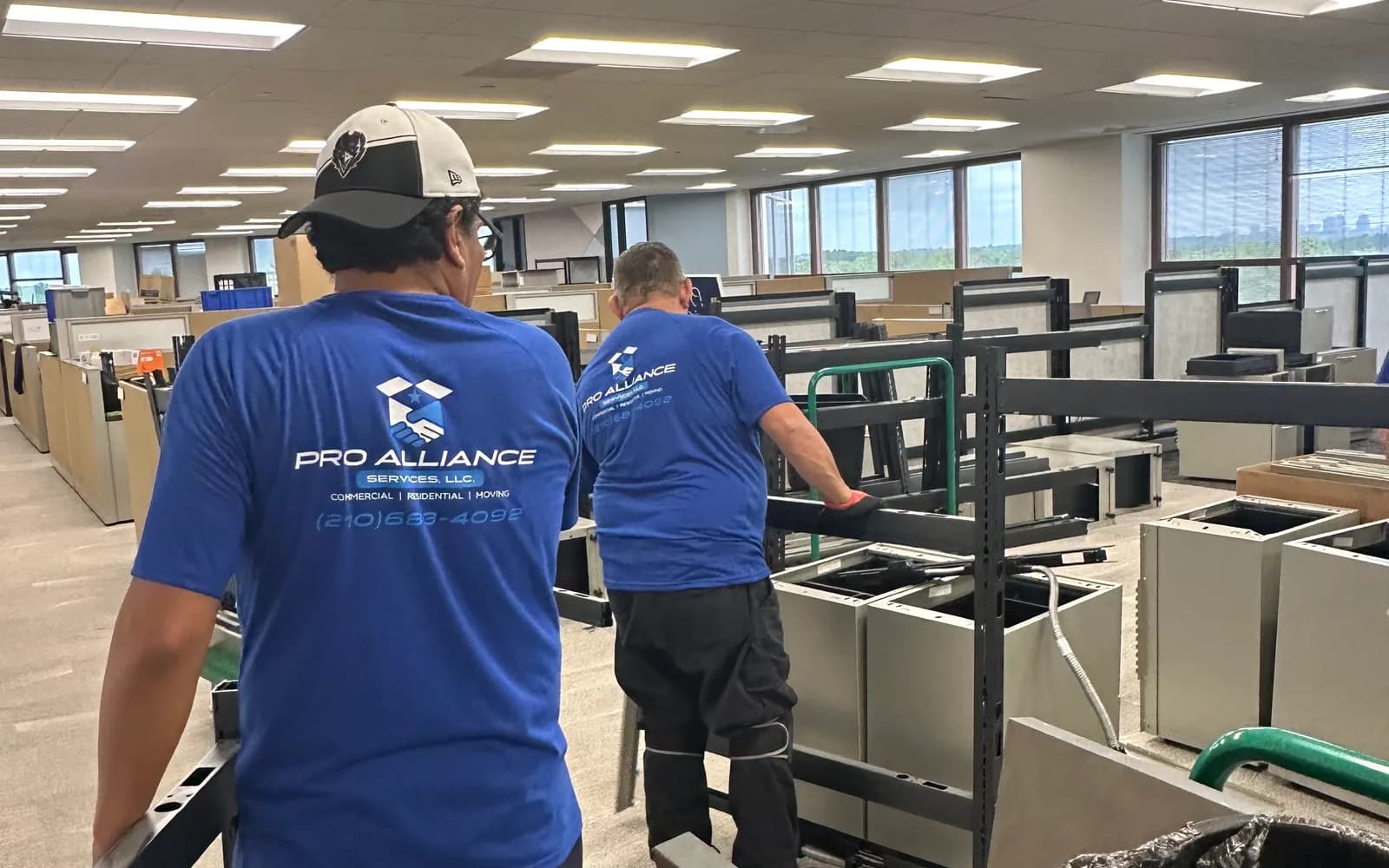
An office move is two building problems connected by a truck. The furniture and the crates are the visible part, but the plan actually rests on loading docks, freight elevators, security desks, and the rules each property manager enforces.
Those rules differ from building to building, and neither property bends its process because the other one is easier. The date, the working hours, and even the route the crew walks are usually set by the stricter of the two buildings.
This guide covers collecting each building's requirements, scheduling dock and elevator access, phasing departments so work continues, and labeling desks to the new floor plan. Clearing and surrendering the old suite afterward is a separate project.
Direct answer: Plan an office move by collecting both buildings' rules before setting the date. Ask each property manager how the dock and freight elevator are reserved, what documentation the building requires from vendors, which hours moves may run, and what protection is expected. Then sequence departments so the business keeps operating, and label every desk, chair, and crate to a numbered position on the new floor plan.
Short answer: how do you plan office move access and sequencing?
The two buildings usually matter more than the furniture list, so start there. Call each property manager and get in writing how the dock and freight elevator get reserved, what paperwork vendors owe the building, which hours a move is allowed to run, and what floor and elevator protection they expect to see. Once those answers are in hand, work out the department sequence: storage areas and rooms nobody uses daily go first, and whichever team is hardest to interrupt moves last. Every desk, chair, pedestal, and crate then gets a code tying it to its numbered spot on the new floor plan. Getting both buildings' rules, the inventory, and the target dates to your mover early is what keeps the plan built on real access rather than guesses.
Collect each building's rules in writing
Managed office buildings treat a move as vendor work, and vendor work runs on the building's process. That process is rarely published anywhere useful. You get it by asking the property manager direct questions, then getting the answers in writing.
Ask both buildings the same set of questions:
- How is the loading dock reserved, and which dates and windows are open?
- How is the freight elevator booked, and is a key, an attendant, or padding involved?
- What documentation does the building require from a moving vendor before work starts?
- Which hours are moves allowed, and are business-hours moves permitted at all?
- What floor, wall, and elevator protection does the building expect the crew to place?
- Where may the truck stand, and how does the crew check in with security?
Documentation requirements deserve special attention. Many managed properties ask vendors for paperwork before work starts, often including a certificate of insurance naming the building, and the specifics vary. Ask exactly what each building requires, then pass the requirement to your commercial movers so the documents reach the building before move day.
Separately, the Texas Department of Motor Vehicles publishes consumer protection information about moving companies. Reviewing it is a reasonable step when comparing movers for any job.
Schedule the dock and freight elevator early
The freight elevator is usually the single constraint the whole move squeezes through. Docks are shared with daily deliveries, and elevators are shared with every other tenant and vendor in the building.
Elevators in Texas are regulated equipment. The Texas Department of Licensing and Regulation oversees elevators, escalators, and related equipment, and building owners carry compliance responsibilities for them. In practice, that means tenants request elevator access through building management rather than controlling it directly. Reserve it, and ask about the car's interior size, the door opening, weight guidance, and how long a reservation holds.
Walk the route while you are in the building. The distance from dock to elevator, the turns, the door widths, and the thresholds all shape how fast a crew can cycle loads.
Plan the after-hours window realistically
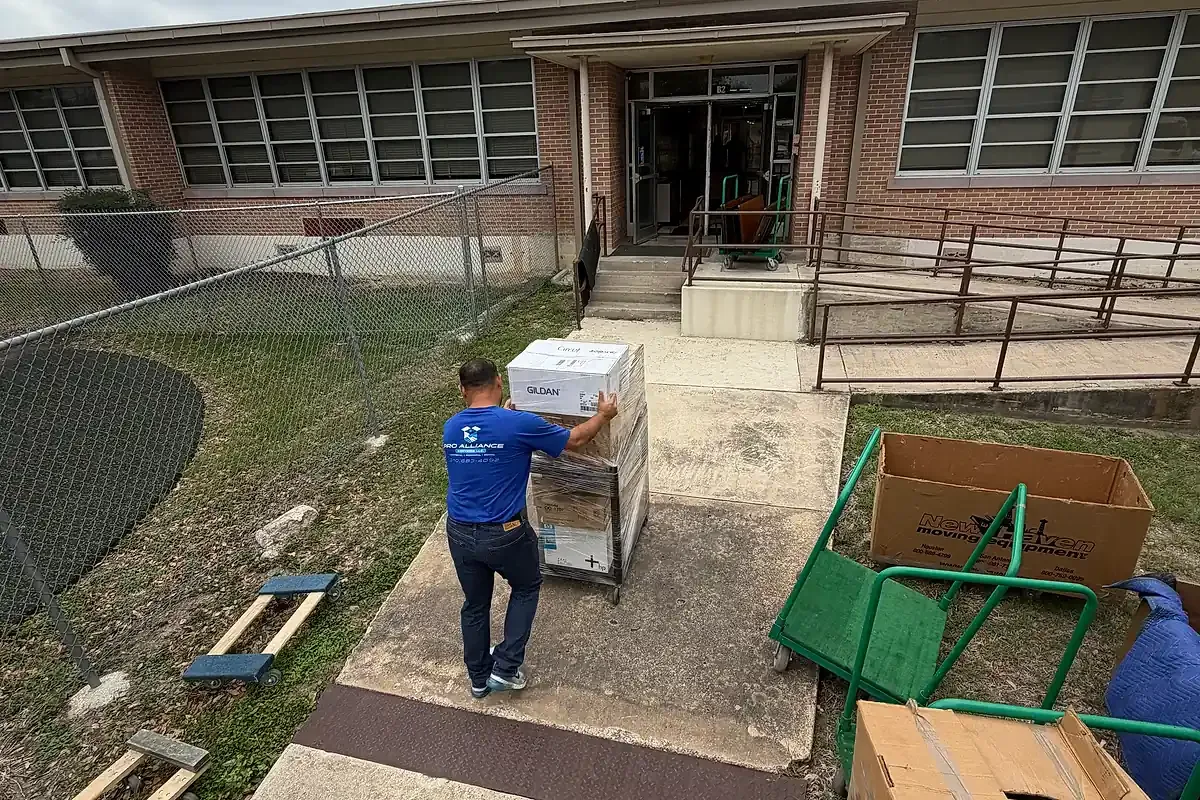
Many buildings only allow moves outside business hours, which changes more than the start time. Ask who unlocks the freight entrance, whether security stays on site, and whether the elevator is released to the crew for the whole window. Ask whether lights and air conditioning run after hours and who from your company must be present.
After-hours work also changes the street side of the plan. Blocks near either building can carry construction, closures, and event traffic that daytime scouting will not show. The Texas Department of Transportation publishes current road conditions on its DriveTexas map, so check the routes between the buildings close to the move window. If the truck must use public curb space instead of a dock, ask the building and the responsible city what applies at that address.
Sequence departments so the business keeps working
A phased move keeps the company running while the buildings trade boxes. Storage rooms, archives, and equipment nobody touches daily move in the first wave. Working departments follow in groups, and the most schedule-critical team moves last, so it works right up to its own move date.
The people who land in the first wave can confirm that desks, chairs, and crates are reaching the right positions. They can also flag placement problems while those are cheap to fix.
Decide the service mix at the same time as the sequence. Packing help, crate delivery, and specialty items each change the plan; the San Antonio moving services guide covers how those pieces fit together. After the last wave leaves, the old suite becomes a teardown and surrender project, which is handled separately through office decommissioning.
Label every desk to the new floor plan
Placement is where office moves quietly fail. A crew can move everything carefully and still leave a floor of misplaced desks if the labels do not map to the destination.
Number every seat on the new floor plan before packing starts. Give each seat a short code, such as floor, zone, and seat number. Put that code on the desk, the chair, the pedestal, the monitor, and every crate for the seat. Employees pack their own crates and copy the code exactly.
Post enlarged, coded floor plans at the destination freight elevator lobby and on each floor. The crew places by code, and a placement check happens while the crew is still on site. Desks and workstations that were taken apart for the move are rebuilt at their coded positions, which is where furniture installation picks up.
The access and sequencing checklist
Run this list once per building, then merge the answers into one plan.
- Get the move rules from both property managers in writing before the date is set.
- Reserve the loading dock and the freight elevator at both buildings for every phase.
- Ask each building what documentation it requires from vendors and send the requirements to your mover.
- Confirm the approved hours, the security check-in process, and who must be on site after hours.
- Walk the route from dock to suite in both buildings and note doors, turns, and protection points.
- Sequence departments so at least one working group stays fully operational at all times.
- Assign every seat a code on the new floor plan and label desks, chairs, pedestals, and crates with it.
- Post the coded floor plan at the destination and check placement while the crew is on site.
Where Pro Alliance fits
An office move is really two buildings' worth of rules, and the review is only as good as the paperwork behind it. Collect both addresses, target dates, each building's written requirements, the inventory, and the new floor plan, then hand the stack to the commercial moving team. To do that, request an estimate and attach the documents rather than summaries.
Frequently asked questions
Do both buildings need their own move reservation?
Yes. The origin and destination buildings each control their own dock, freight elevator, and approved hours, and a reservation at one covers nothing at the other. Collect both sets of rules and let the stricter building set the plan.
If either end is a smaller property without managed access, confirm parking, entry, and hours with the owner or manager there instead.
What paperwork do office buildings require from movers?
It varies by building. Many managed properties ask vendors for documents before work starts, often including a certificate of insurance naming the property, and the delivery process differs from building to building. Ask each property manager exactly what is required and pass the request to your mover well before move day.
How long does an office move take?
It depends on the inventory, the access, and the phasing, and access usually matters more than volume. A building that limits moves to short evening windows stretches the calendar regardless of how fast the crew works. Share both buildings' rules and the inventory when requesting an estimate, and build the timeline from that review.
What should employees pack themselves?
Most plans have employees pack their own desk contents into labeled crates marked with the seat code. Personal valuables and small electronics go home with the person for the move window. Shared equipment, common areas, and anything that needs disassembly stay with the crew.
When is the old office cleared out?
After the last department lands at the new address. The old suite then moves into teardown, disposal, and surrender work, which is planned against the lease surrender date rather than the move date. Treat it as its own project with its own checklist, vendors, and building reservations.
Sources
Ready to plan the real move?
Send both addresses, your date, and what you are moving. The team reviews access at each end and comes back with a written estimate.
Prefer to talk it through? Call (210) 683-4092, Mon–Fri 8:00 AM–5:30 PM and Sat–Sun 8:00 AM–4:30 PM.
Keep planning