Some San Antonio moves do not end at one front door. Part of the load goes to the new home, and the rest goes into a rented storage unit. The reasons are ordinary: a downsize, a renovation, a gap between closings, or two households combining into one.
That second destination changes the job more than it seems to. The truck now unloads twice, the loading order matters, and a gate with its own hours sits in the middle of the day. A move with a storage stop is planned like a move with two deliveries, because that is what it is.
One point of ownership matters throughout this guide. The storage unit is yours. You choose the facility, sign the rental, hold the code, and supply the lock. Pro Alliance Services does not operate storage facilities. On a job like this, the movers treat your unit as a second delivery address and handle the loading and unloading there.
Direct answer: Treat a storage unit stop as a second delivery, not an errand. Split the inventory into a home list and a storage list before packing starts. Confirm the facility's gate hours, code process, truck clearance, and unit number in writing. Check the unit size against the actual furniture list. Label every carton and piece by destination, then send both addresses and both lists with the estimate request so the loading order can be planned for two unloads.
Short answer: how do you plan a move with a stop at your storage unit?
Plan the storage stop as a second delivery with its own paperwork. Before packing starts, split the inventory into a home list and a storage list, and label every carton and piece by destination. Call the facility you rent from and confirm gate hours, the code process for move day, truck access to the unit, and the unit number. Compare the storage list against the unit size, allowing for stacking and a walkway. Then send both addresses, both lists, and the access details with your estimate request. The truck is loaded in reverse of the unload order, so the destination of every item has to be settled before loading begins.
Split the inventory by destination before packing starts
Sorting the storage list is more of a logistics call than a decluttering one, since everything is coming with you either way. The real question is what you will need soon at the new address, and what can sit in the unit for a while.
Furniture that has no room waiting for it, seasonal equipment, and boxes tied to a later phase of the plan go on the storage list. Everything you will reach for in the first months goes on the home list. Write both lists down, because they drive the labels, the loading order, and the estimate.
Not sure yet what the rest of the job calls for? The San Antonio moving services guide walks the full set of service decisions. For the storage stop itself, the two lists are the foundation everything else stands on.
Check the unit against the furniture list
Unit sizes are posted in feet, but furniture fails in inches and in shape. A sofa, a mattress set, and a dining table can fit a unit's floor area on paper and still stack badly in practice. Measure the largest pieces on the storage list and think in three dimensions: what stands on end, what stacks flat, and what cannot carry weight on top of it.
Plan the inside of the unit like a small room. Heavy, rarely needed items go low and to the back. Anything you might retrieve before the unit is emptied belongs near the door. Leave a walkway if the unit is deep, because a unit packed solid to the door has to be half emptied to reach anything at the back.
Ask the facility about the route as well as the unit. An interior unit reached by elevator and corridor loads differently from a drive-up unit, and the answer changes what the crew should know before the truck arrives.
Confirm access at the facility before move day
Storage facilities run on gate hours, and gate hours are not always office hours. Confirm the hours for your move date, how the gate code works, and whether the entrance the truck must use will accept it. Ask about clearance too: canopies, tight lanes, and height limits stop box trucks in places cars pass without thinking.
Plan to be present at the stop, or make whatever arrangement the facility allows. The rental agreement is yours, so the decisions at the unit are yours. You decide which pieces go in, how full is too full, and when the door closes and your lock goes on. Share the gate code with the crew the way the facility recommends rather than posting it in an open message.
Load for two stops and label for two lists
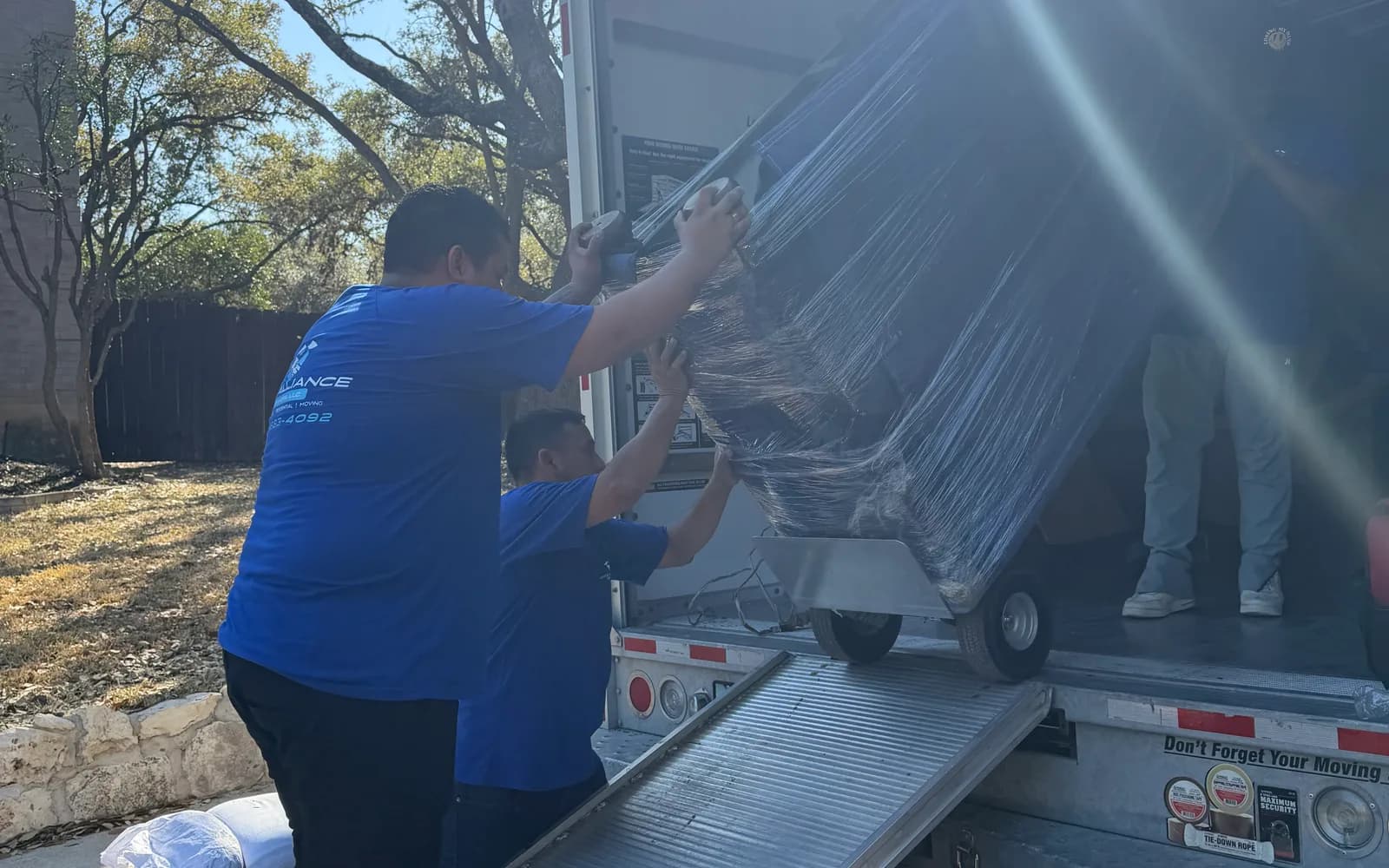
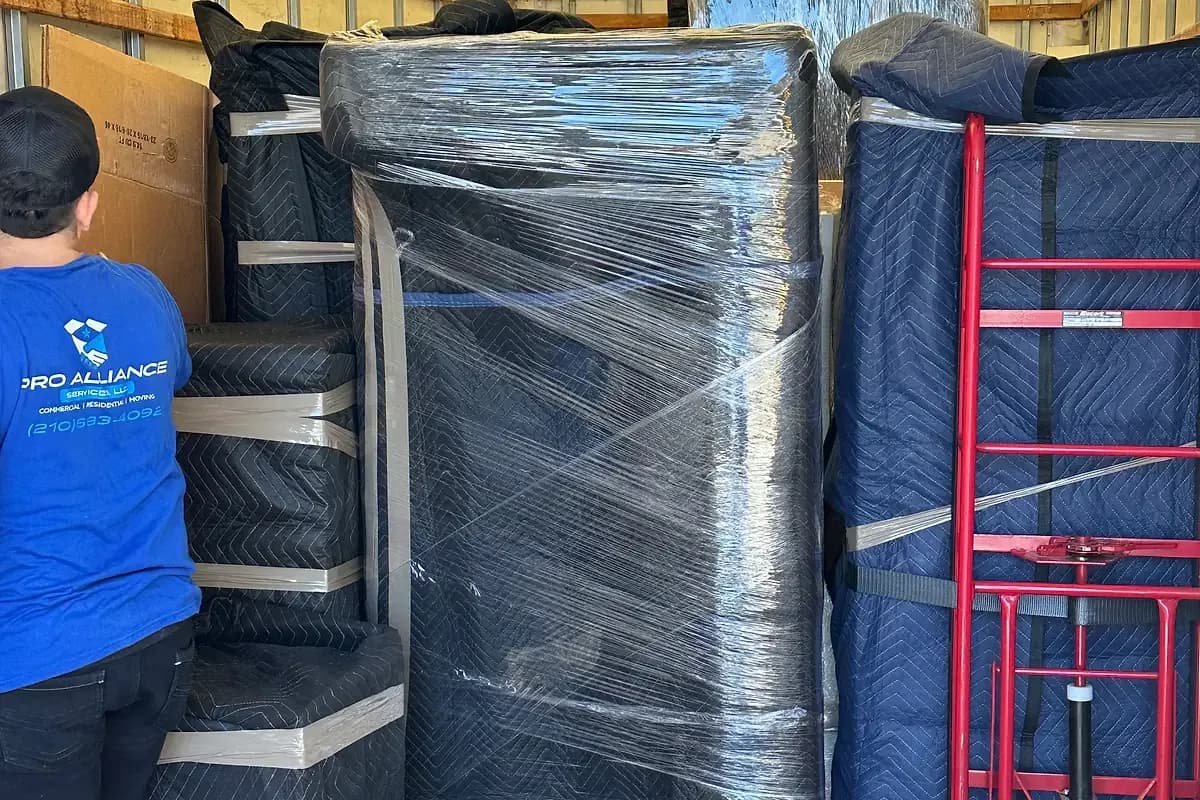
A truck unloads in roughly the reverse of the order it was loaded. On a two stop move, that means the first stop's items are loaded last, nearest the door. The stop order is worth settling when the job is planned, because the route, the gate hours, and how much of the load each destination takes all bear on it.
Labels carry the plan. Mark every carton and every wrapped piece with its destination, in a word the crew can read at arm's length, before anything leaves its room. Keep two written lists, one per destination, and count pieces off the truck at each stop. That is how you avoid discovering at the house that a box rode along to the unit, or the reverse.
Sturdy cartons matter more for the storage share, because those boxes will sit in a stack longer than the ones being unpacked next week. The moving supplies page lists cartons and materials if you are packing that share yourself. The move itself is usually part of a local job, so review local moving support and include the second stop in the details you send.
Two official reference points help here. TxDMV requires Texas movers to be licensed, and a licensed mover provides a written proposal before loading; make sure that proposal reflects both stops. FMCSA's consumer guidance for interstate moves describes an inventory prepared at loading, and a local two stop move benefits from the same habit applied per destination.
A checklist for the storage unit stop
Run this list in the week before the move.
- Write two lists before the first box is packed, one for the new home and one for the storage unit.
- Confirm the facility address, unit number, and gate hours for the move date in writing.
- Ask the facility how the gate code should be shared on move day and who it will admit.
- Ask about truck clearance on the property, including canopies, lane width, and any posted height limits.
- Measure the largest pieces on the storage list and compare them with the unit's posted dimensions before committing the list.
- Sketch the inside of the unit so heavy items sit low and at the back and an aisle stays open.
- Label every carton and wrapped piece with its destination before it leaves its room.
- Keep documents, medications, keys, and daily essentials in your own vehicle rather than on the truck.
- Send both addresses, both lists, and the facility access details when you request the moving estimate.
Where Pro Alliance fits
A two stop move adds one list and one gate code to the usual details. Alongside both addresses and the move date, send the two destination lists and the facility's access rules, and the team plans the loading order around them. The unit stays under your rental and your lock throughout. See local moving support for the service itself, and request an estimate with the storage stop spelled out.
Frequently asked questions
Does Pro Alliance offer storage or rent storage units?
No. Pro Alliance Services is a moving company and does not operate storage facilities or rent units. The storage unit on a move like this is one you have rented yourself from a facility you chose.
The crew's role is to load, transport, and place items at the unit as one of the move's two stops. The rental, the code, and the lock stay entirely on your side.
Should the truck go to the storage unit or the new home first?
It depends on the route, the gate hours, and how much of the load each destination takes. Whichever stop comes first, its items are loaded last so they come off first.
Raise the question when the move is planned so the loading order can be set to match, rather than deciding at the curb with a full truck.
Can the movers get into the facility without me?
Access is controlled by your rental agreement and the facility's rules, not by the movers. Plan to be at the stop, or confirm in advance what arrangement the facility allows.
Decisions at the unit, such as what goes in and when the lock goes on, belong to you as the renter, which is another reason to be there in person.
What if the storage list does not fit in the unit?
Decide the fallback before move day rather than at the unit door. Rank the storage list so the crew knows which pieces matter most if space runs short, and know which items would return to the home list.
If the list has grown since you rented, talk to the facility about your options before the truck is loaded.
How should boxes bound for storage be packed?
Pack them to be stacked and left alone. Use sturdy cartons that close completely flat, keep the weight of each box sensible so stacks stay stable, and face the labels toward the aisle.
Anything perishable or hazardous stays out of the shipment entirely, and anything you may want mid-storage should be placed near the unit door.
Sources
Ready to plan the real move?
Send both addresses, your date, and what you are moving. The team reviews access at each end and comes back with a written estimate.
Prefer to talk it through? Call (210) 683-4092, Mon–Fri 8:00 AM–5:30 PM and Sat–Sun 8:00 AM–4:30 PM.
Keep planning