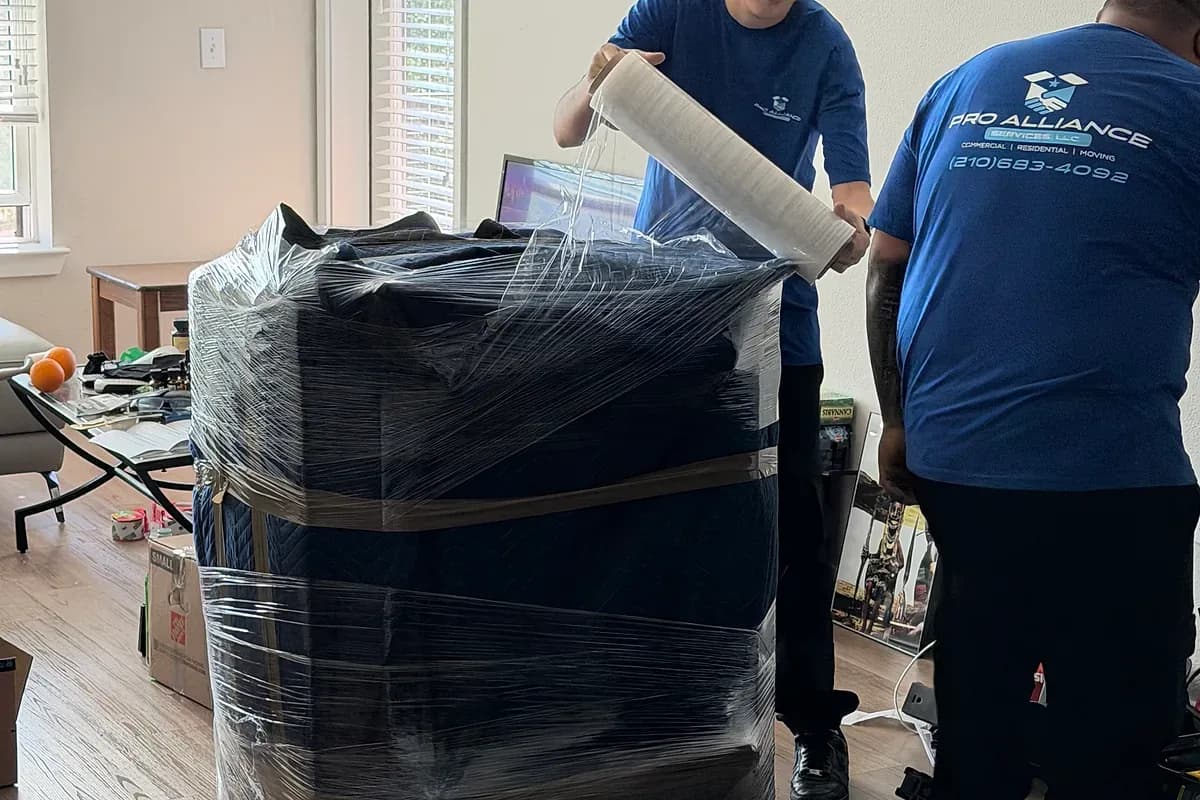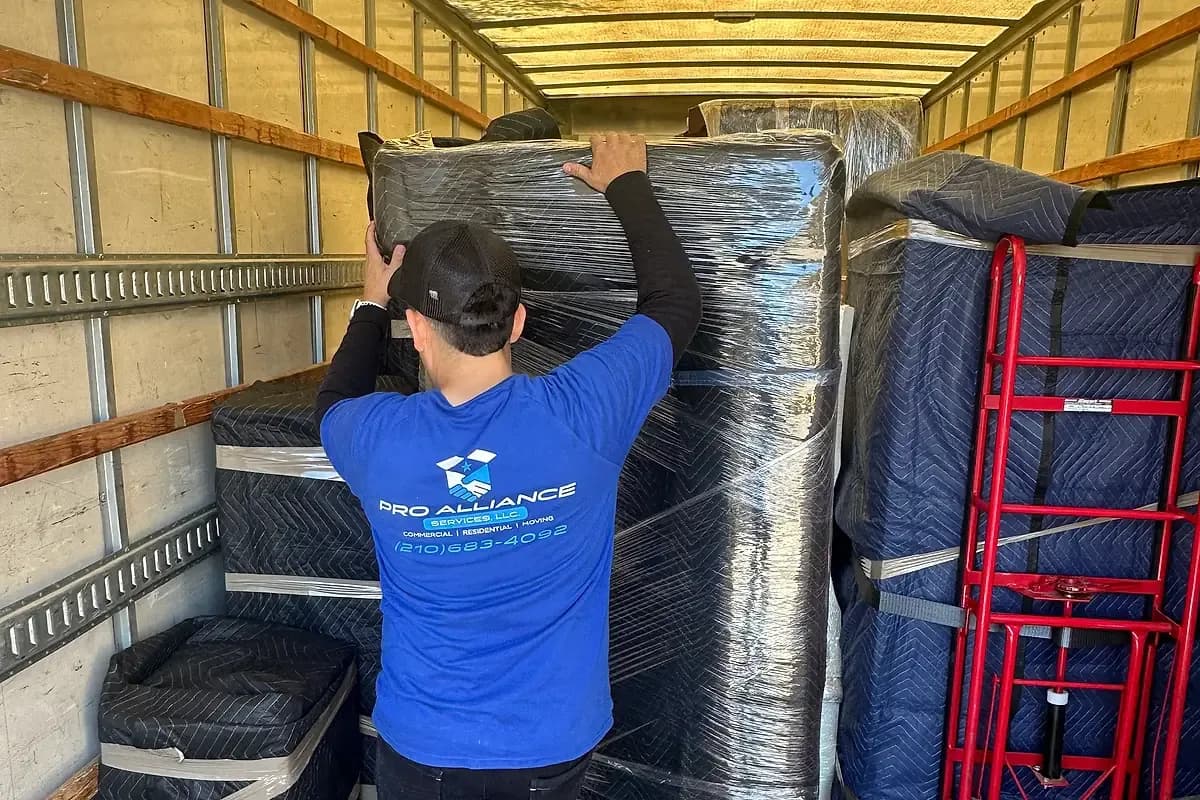
A local move across San Antonio can tolerate a loose plan, but a long-distance move can't. Once the truck leaves the metro area, every unresolved detail travels with it, and a problem discovered on the road is much harder to fix than one caught back at the curb.
Distance also changes who regulates the move. A move that crosses a state line falls under federal rules and the FMCSA lookup tools. A long move that stays inside Texas falls under the Texas Department of Motor Vehicles. Knowing which lookup applies to your move is the first verification step, and it takes minutes.
This guide walks through the planning work these moves demand: an inventory precise enough to price, mover verification, and the load and delivery questions worth asking before you sign.
Direct answer: Plan a long-distance move from San Antonio in three passes. First, build a complete written inventory and photograph large or unusual items. Second, verify the mover: interstate movers must be registered with the FMCSA, and movers working within Texas must be licensed with the TxDMV, so check the lookups before signing. Third, get the load plan in writing: whether the shipment travels alone or consolidated, who performs pickup and delivery, and how the delivery window will be set and communicated.
Short answer: how should you plan a long-distance move from San Antonio?
Start with the inventory, because everything else depends on it. Walk each room and list every item the truck will carry, with photographs and measurements for large pieces. Then verify the mover. If the move crosses a state line, look up the company's USDOT and MC registration in the FMCSA mover search and the SAFER Company Snapshot. If the move stays inside Texas, confirm an active certificate in the TxDMV Truck Stop lookup. Pro Alliance publishes its USDOT, MC, and TxDMV numbers in the site footer, so that check takes minutes. Finally, ask how the load will travel, who handles each end, and how the delivery window is set, and get the answers in writing before you sign.
What changes when the move leaves the metro
A crew that moves a household across town can see the whole job in one day. Load, drive, unload, done. A long-distance job spreads the same work across days, and sometimes across more than one crew or vehicle. That changes what the estimate needs and what the paperwork must say.
Jobs within the San Antonio area are usually planned around access and working hours; the local movers page covers that scope. Long-distance jobs are planned around the inventory and the route. The mover prices what is actually on the truck, so a list that is close enough for a local job is not close enough here.
Timing stretches too. Pickup and delivery become separate events with separate windows, and the goods may wait at a transfer point between them. Every window, hold point, and handoff belongs in writing. For a wider view of how these services fit together, start with the San Antonio moving services guide.
Verify the mover in the federal lookups
For-hire movers that carry household goods across state lines must be registered with the Federal Motor Carrier Safety Administration. Registration comes with a USDOT number and an MC number, and both are public record. The FMCSA runs its Protect Your Move consumer program so that anyone can check them.
Two tools cover the check. The FMCSA mover search finds interstate movers by company name, USDOT number, or MC number, and shows registration status, contact details, and complaint history. The SAFER Company Snapshot shows the same carrier's identification details, company size, and inspection summaries.
Pro Alliance publishes its USDOT, MC, and TxDMV numbers in the site footer. Any mover you consider should make its numbers just as easy to find. If a company will not state its numbers, or the numbers do not match the lookup results, keep shopping.
Check the Texas license as well
A long move that stays inside Texas, from San Antonio to another part of the state, is regulated by the TxDMV instead. Movers performing household goods moves within Texas must be licensed with the TxDMV.
The TxDMV consumer page Don't Make a Move Without Us explains the license and lists the warning signs worth taking seriously. Those include unusually low pricing, generic contact information, unmarked or rental trucks, no written contract, and missing rights and responsibilities paperwork. The state's Truck Stop lookup shows whether a company's TxDMV certificate is active.
Run the state check even when your own move is interstate. If a San Antonio company also performs moves within Texas, its TxDMV record should be active, and pulling it takes only a minute.
Build an inventory the estimate can rely on
A long-distance estimate is only as accurate as the list behind it. Walk every room, closet, garage bay, and storage area, and write down what will actually travel. Note the pieces that disassemble, the pieces that do not, and anything unusually heavy, fragile, or valuable.
Photographs help more than adjectives. A picture of the armoire, the safe, or the workbench tells the mover what words cannot. Measure the largest items and the tightest doorways at both addresses well before loading day, so nothing catches anyone by surprise then.
Decide early who packs. Crew-packed cartons and owner-packed cartons are handled and documented differently, and the split affects the estimate. If you want the crew to take some or all of the packing, review packing services and say so when you request pricing.
Ask how the load will travel
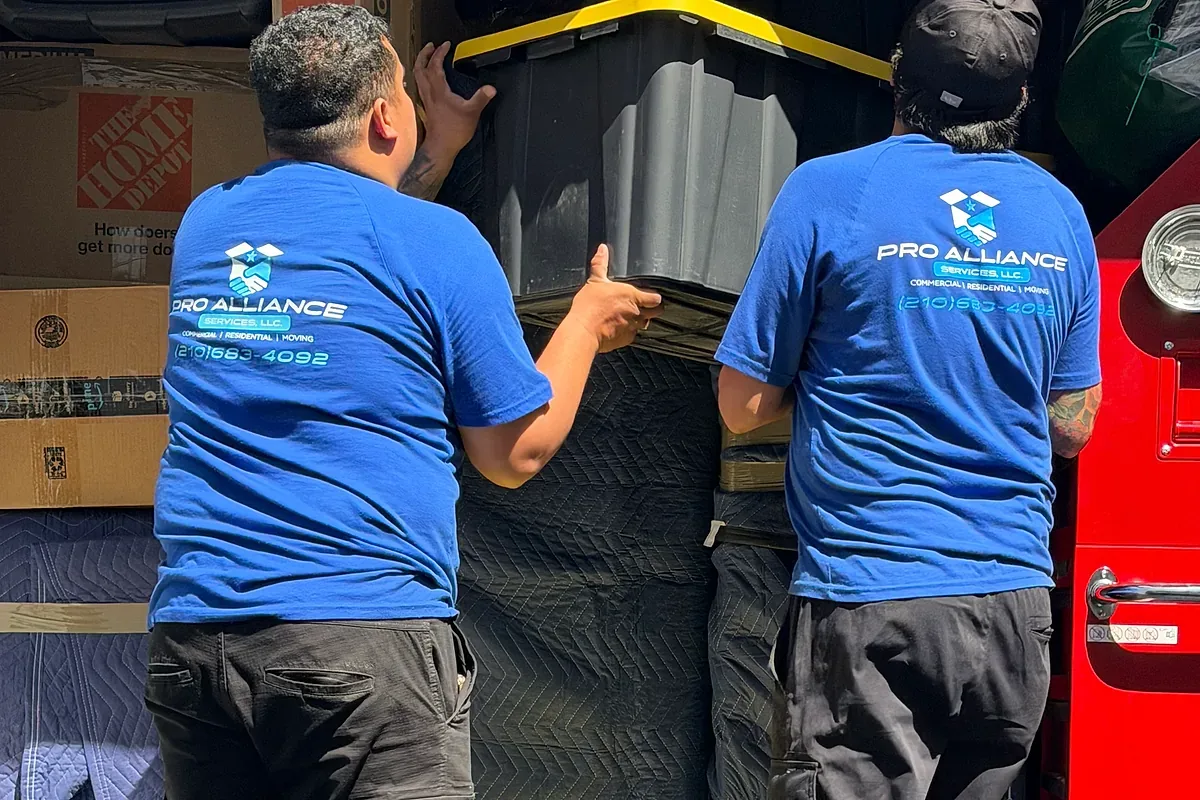
Long-distance shipments do not all travel the same way. Some ride alone from door to door. Others are consolidated with other households' goods and move on a shared schedule. Neither model is wrong, but they behave differently, and you should know which one you are buying.
Ask the mover these questions and keep the answers with the paperwork. Does my shipment share the truck with other households? Who performs the pickup, the line haul, and the delivery, and are they the same company? Where would my goods wait between legs, and how are they identified there? How is the delivery window set, and how will changes be communicated?
A verbal transit estimate is not a promise. Road conditions change, so careful movers describe windows rather than certainties, and that window, along with how it might shift, needs to end up in writing.
A pre-signing checklist
Work through this list before committing to any long-distance mover, including Pro Alliance.
- Build a complete written inventory of everything that will travel, room by room.
- Photograph and measure the largest, heaviest, and most fragile items on the list.
- Confirm whether the move crosses a state line, because that decides which regulator applies.
- Look up an interstate mover's USDOT and MC registration before requesting an estimate.
- Look up a Texas mover's certificate status in the TxDMV Truck Stop system.
- Ask whether the shipment travels alone or consolidated, and who handles each leg.
- Get the pickup window, the delivery window, and the process for changes in writing.
- Decide who packs which rooms, and confirm how owner-packed cartons are documented.
- Read every document before signing, and keep copies of all of it.
Where Pro Alliance fits
Once a move leaves the metro, the inventory carries the estimate, so build it before anything else. Pro Alliance can look at a long-distance move from both addresses, target dates, that room-by-room inventory, and photographs of the large pieces. All of it goes through the free estimate form; add a note if cartons should join the same review, since packing services can be scoped alongside the move.
Frequently asked questions
How far in advance should I plan a long-distance move from San Antonio?
Start as soon as the destination and the likely dates are known. The inventory, the verification checks, and the load questions all take time, and rushed answers are the ones that go wrong. Working earlier also leaves more room to compare movers before settling on whoever answers first.
What is the difference between a USDOT number and a TxDMV certificate?
A USDOT number, together with MC operating authority, is the federal registration for carriers that cross state lines. It is issued through the FMCSA and can be checked in the federal lookups. A TxDMV certificate is the state license for movers performing household goods moves within Texas. A San Antonio company that does both kinds of work appears in both systems.
Is a consolidated shipment a bad sign?
No. Consolidation is a normal way to move smaller long-distance shipments. The important part is disclosure: you should know that the load is shared, how your goods are identified, and how the delivery window is set. Unclear answers cause more problems than the consolidation model itself does.
Do I really need a written inventory for the estimate?
Yes. A long-distance estimate is built from what the truck will carry, so the list is the estimate. An incomplete inventory produces a number that looks good and holds up badly. Write everything down, photograph the large pieces, and update the mover if the list changes before moving day.
What should I check on moving day itself?
Match what goes on the truck against your inventory, and keep your copy of every signed document. Confirm the delivery address, the contact numbers for both sides, and how you will be reached about the delivery window. Nothing about that day should depend on memory.
Sources
Ready to plan the real move?
Send both addresses, your date, and what you are moving. The team reviews access at each end and comes back with a written estimate.
Prefer to talk it through? Call (210) 683-4092, Mon–Fri 8:00 AM–5:30 PM and Sat–Sun 8:00 AM–4:30 PM.
Keep planning