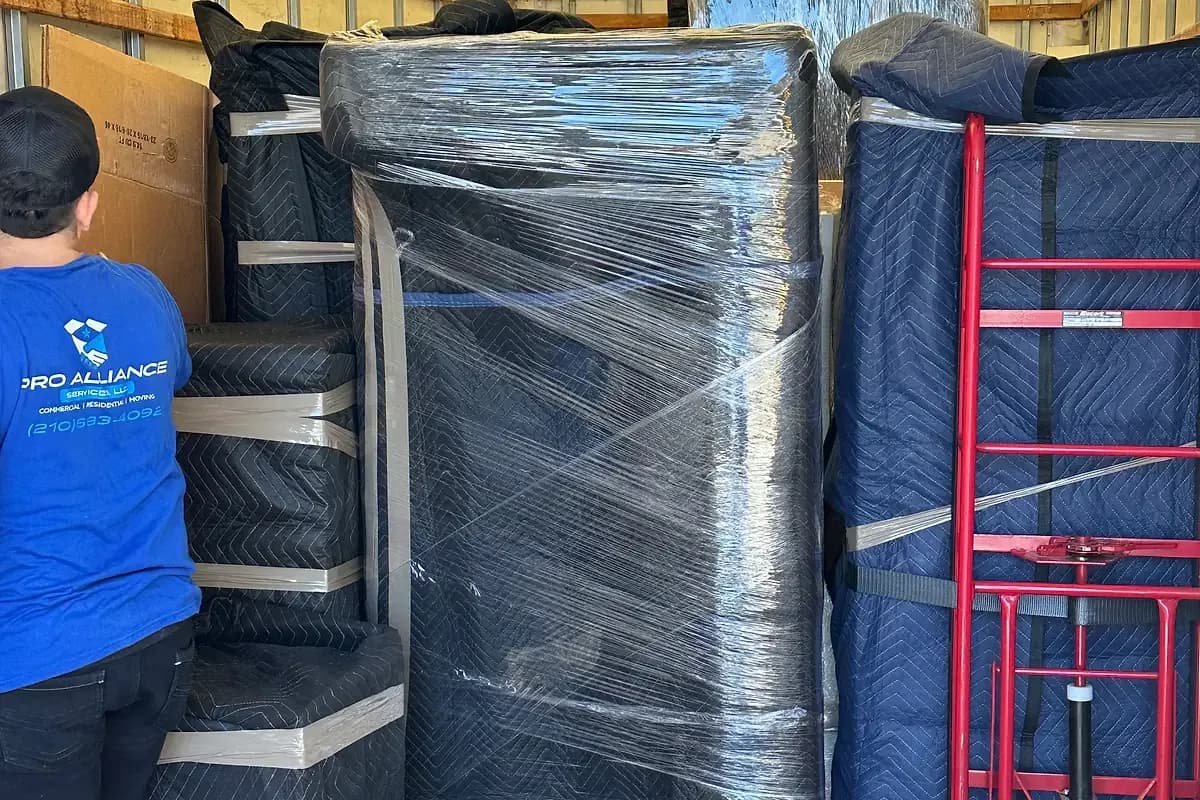
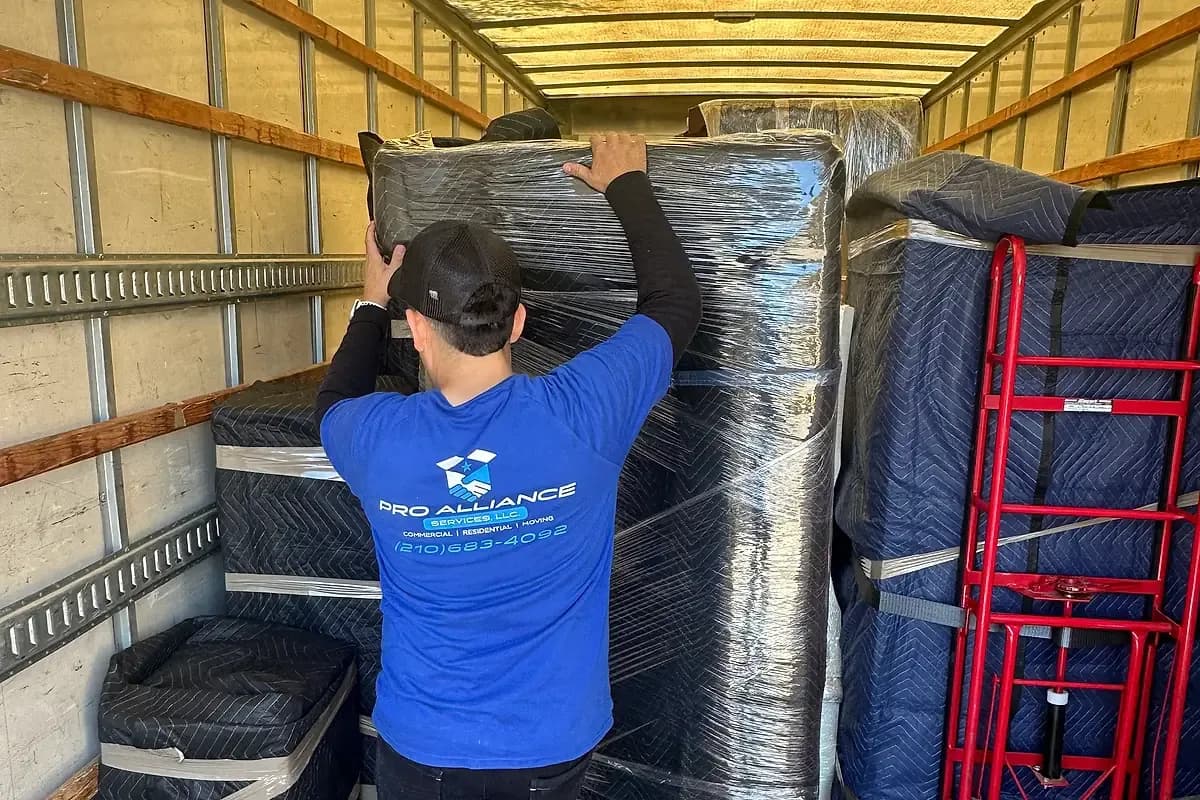
When the truck pulls away, there is still a house or office full of pieces that were taken apart to travel: bed frames down to rails and slats, a sectional in segments, desks missing their legs, and hardware in bags that had better be findable.
Rooms only become usable again when that furniture is rebuilt where it belongs. For homes, that means beds, tables, and the tall pieces that should be secured to a wall. For businesses, it means systems furniture that came down as panels and parts and has to go back up to a floor plan.
This guide covers what assembly and installation involve after a San Antonio move. It looks at the hardware habits at disassembly that decide how smoothly reassembly goes, at anchoring as a safety practice, and at when installation deserves its own scheduled visit.
Direct answer: Furniture installation after a move covers rebuilding what was taken apart to travel: bed frames, sectionals, desks, and office systems furniture. Each piece is set in its decided room. It goes smoothly when hardware was bagged and labeled at disassembly and photos were taken before teardown. Anchoring tall furniture to the wall is a related safety step worth asking about, following U.S. Consumer Product Safety Commission guidance. Confirm during the estimate whether reassembly happens on moving day or as separately scheduled installation work.
Short answer: what does furniture installation after a move include?
Furniture installation after a San Antonio move includes reassembling items that were taken apart for transport, such as bed frames, sectional sofas, tables, and desks. Each piece is placed where the new floor plan says it belongs. It can extend to securing furniture that should be anchored, such as tall dressers and bookcases, a safety practice the U.S. Consumer Product Safety Commission promotes through its Anchor It campaign. For businesses, it includes rebuilding cubicle panels and workstations to a planned layout. Whether this happens on moving day or as a separately scheduled service depends on the job size, the state of the space, and the scope agreed in the estimate.
Reinstallation is decided at disassembly
The quality of a reassembly is set days before it happens, at the moment things come apart. A bed frame without its bolts is not furniture, it is lumber. The habits below are what installers mean by hardware-bag discipline:
- Photograph each piece before it comes apart, including close shots of how rails, brackets, and connectors attach.
- Bag hardware separately for each furniture item, and label every bag with the name of the piece it belongs to.
- Tape each bag to the piece it came from, or collect all the bags in one clearly marked parts box.
- Keep manufacturer tools, such as hex keys and cam lock keys, with the hardware instead of in a junk drawer.
- Set aside the anti-tip kits and instructions that came with newer furniture so anchoring can be discussed at the new address.
- Decide which rooms must work first, so beds and essential pieces are rebuilt in the right order.
- Tell the crew or installer where each large piece goes by room, wall, and orientation before reassembly starts.
- Test drawers, doors, and connections on each rebuilt piece while the installer is still on site.
When a crew handles the disassembly, ask how they label and transport hardware. When you disassemble something yourself, the same discipline applies, and the bags should be pointed out at load time so they travel deliberately rather than by luck.
Beds and sectionals come first
The first pieces rebuilt should be the ones that make the first night work. Bed frames go back together before decor gets attention, and mattresses go on last so bedrooms close out finished. Sectionals follow: segments placed in their planned arrangement, connectors engaged, and the room walkable again.
Items that a moving crew took apart for transport are generally reassembled as part of the delivery. That is one reason disassembly and reassembly belong to the same team when possible. That continuity is part of what furniture movers handle on a residential job. Anything that arrived flat-packed in a retail box is a different kind of work, and it should be named separately when the job is scoped.
Anchoring tall furniture is a safety practice worth asking about
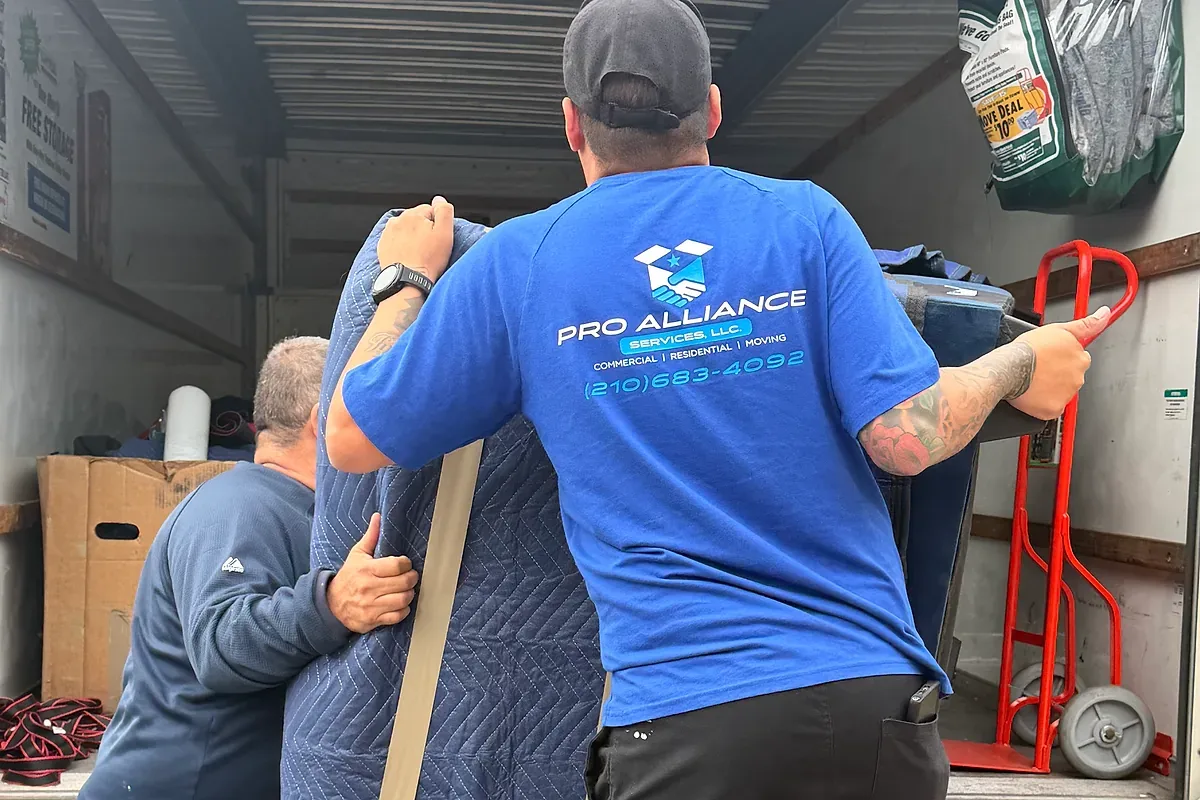
A move is the natural moment to anchor furniture. Every tall piece is already off the wall, rooms are being decided, and the tools are out. The U.S. Consumer Product Safety Commission runs the Anchor It campaign, which recommends anchoring furniture with drawers, doors, or shelves to the wall to prevent tip-over injuries, especially in homes with children.
The method the campaign describes is simple hardware. A bracket attaches to the wall, a bracket or plate attaches to the furniture, and a strap connects the two, tightened and then tested with a firm tug. CPSC's AnchorIt.gov safety page adds that televisions belong on furniture designed to hold them, and that TVs which are not wall mounted should still be anchored. Newer clothing storage units, such as dressers and chests manufactured after September 1, 2023, must meet a federal stability rule. Many ship with anti-tip devices that CPSC says to install right away.
Ask directly whether anchoring is part of the installation work you are arranging, which pieces it covers, and what wall types are involved, since it is easy to assume this is automatic when it usually is not. Renters should confirm wall attachment rules with the property first. The campaign also notes that anchor holes left behind at the old address are ordinary wall repairs, so anchoring is not a one-way decision.
Office systems furniture goes back up to a plan
Cubicles, benching runs, and panel systems do not move as furniture. They move as parts: panels, rails, work surfaces, raceways, and boxes of connectors. Reinstallation is sequence work, and the sequence only exists if the teardown labeled parts by workstation and the new floor plan stayed current through the move.
This is why office installation is planned alongside the move itself rather than improvised after it. The reinstallation schedule has to respect the building's access rules and the days when staff return. Power and data connections need the appropriate building or IT vendor coordinated for the same window. On commercial jobs this planning sits with the scope described on the commercial movers page, with installation treated as its own phase.
When installation is its own scheduled service
Reassembly at the end of moving day suits a straightforward household job: a few beds, a table, a sectional. A separately scheduled installation visit fits when the work has its own weight. Office layouts with many workstations argue for a scheduled visit. So do anchoring decisions that need wall types confirmed, rooms not ready because flooring or paint is unfinished, and furniture still arriving from retailers.
The standalone service is described on the furniture installation services page. The San Antonio moving services guide shows where installation sits among the other services when you are deciding what the whole job needs. Describe the assembly work in the free estimate request so it is scoped on purpose instead of squeezed into the end of a long day.
Where Pro Alliance fits
An installation request is reviewed from three things: the furniture list, what is already in pieces, and the rooms each item is headed for. Say whether the work follows a move or stands on its own, and raise any anchoring questions for tall pieces. Read the furniture installation services page for what the work includes, then put the list on a free estimate request.
Frequently asked questions
Do movers put furniture back together after a move?
Items a crew disassembles for transport are generally reassembled at delivery as standard practice, but it helps to have that spelled out in the estimate up front. Anything you took apart yourself, and anything still boxed from a retailer, should be named separately so it can be reviewed as installation work.
Will the crew anchor my dresser or bookcase to the wall?
Anchoring is not automatic, so it needs to be requested explicitly when the work is arranged. The U.S. Consumer Product Safety Commission recommends anchoring furniture with drawers, doors, or shelves, and the hardware attaches to the wall, which means the property's rules matter. Ask what the installation scope includes when you arrange the work, and confirm permission for wall attachment if you rent.
Are new dressers already safe without anchoring?
Clothing storage units manufactured after September 1, 2023 must meet a federal stability rule, and many newer pieces ship with anti-tip devices in the box. CPSC guidance still calls for installing those devices right away and for anchoring furniture in homes where children live or visit. A stability standard changes how the furniture itself is built. It does not evaluate the wall or room where a particular piece ends up.
How is office furniture reinstallation different from home reassembly?
Systems furniture is built from panels, rails, and connected parts that only go together in sequence, so reinstallation follows a documented floor plan rather than memory. Labeling parts by workstation during teardown is what makes the rebuild predictable. It is usually planned as scheduled work coordinated with the building, well before load-in day begins.
What happens if hardware is missing at reassembly?
Common bolts can sometimes be matched at a hardware store. Manufacturer-specific fasteners and cam locks are slow to replace, and some pieces cannot be rebuilt safely without the right parts. That is why hardware bags are labeled, attached to their pieces, and transported deliberately. Raise any missing part with the installer immediately instead of improvising a substitute.
Sources
Ready to plan the real move?
Send both addresses, your date, and what you are moving. The team reviews access at each end and comes back with a written estimate.
Prefer to talk it through? Call (210) 683-4092, Mon–Fri 8:00 AM–5:30 PM and Sat–Sun 8:00 AM–4:30 PM.
Keep planning