Most of a move happens before moving day: the estimate, the inventory, the packing plan. But the day itself is the part people picture when they hire movers, and it is often the part they know least about.
This guide walks the day in order, from the arrival walkthrough to the final walkthrough, describing standard professional practice in general terms. The specifics of any one job depend on the inventory, the buildings, and the quoted scope. Treat this as the shape of the day rather than a script.
It also covers your side of the day. A crew works from the plan and the access you provide, so the customer role matters more than most people expect.
Direct answer: On a professionally run moving day, expect the crew to start with a walkthrough, protect floors and door frames, wrap furniture, and load in a planned order. Your side of the day: finish packing before arrival, keep a marked do not load area, and stay reachable during transit. At delivery, direct placement by room and walk every room before the crew leaves. Details vary by job, so confirm specifics when you book.
Short answer: what should you expect from movers on moving day?
A professionally run moving day follows a recognizable sequence. The crew arrives, walks the property with you, and confirms the scope against the estimate before work begins. Protection goes down first: floor runners, door frame padding, and furniture blankets. Pieces that were quoted for disassembly, such as bed frames, come apart with the hardware kept together. Loading follows a planned order built around weight, shape, and fragility so items stay secure for the drive. During the drive, you stay reachable and travel to the destination. At delivery, labeled boxes and furniture go to the rooms you direct, and quoted reassembly happens. The day closes with a walkthrough of every room and a look inside the empty truck.
Finish the customer side before the crew arrives
The smoothest moving days are decided the night before. Unless packing is part of the booked service, every box should be sealed and labeled with a destination room before the crew arrives. Walking paths should be clear, and the parking spot for the truck should be settled at both addresses. Children and pets need a plan that keeps them away from the carry routes.
Set aside a marked do not load area for the things that ride with you: keys, documents, medications, chargers, and anything valuable or irreplaceable. Point it out during the walkthrough so nothing in it ends up on the truck.
If you are still comparing service levels for a household job, start with residential moving before the day is booked. The wider set of decisions, from packing to specialty items, is covered in the San Antonio moving services guide.
The walkthrough sets the plan for the day
The day opens with a tour, before any lifting starts. The crew leader walks the property with you, compares what is actually there against the estimate, and confirms the truck position and the carry route. This is the moment to point out fragile pieces, items with sentimental value, anything that needs disassembly, and the do not load area.
Paperwork belongs at the start as well. Read what you are asked to sign before work begins and keep your copies together. For moves that cross state lines, the Federal Motor Carrier Safety Administration publishes consumer rights information for the customer. Moves within Texas fall under the Texas Department of Motor Vehicles, which licenses movers operating in the state. Both agencies' consumer pages are listed under Sources.
Protection and wrapping come before loading
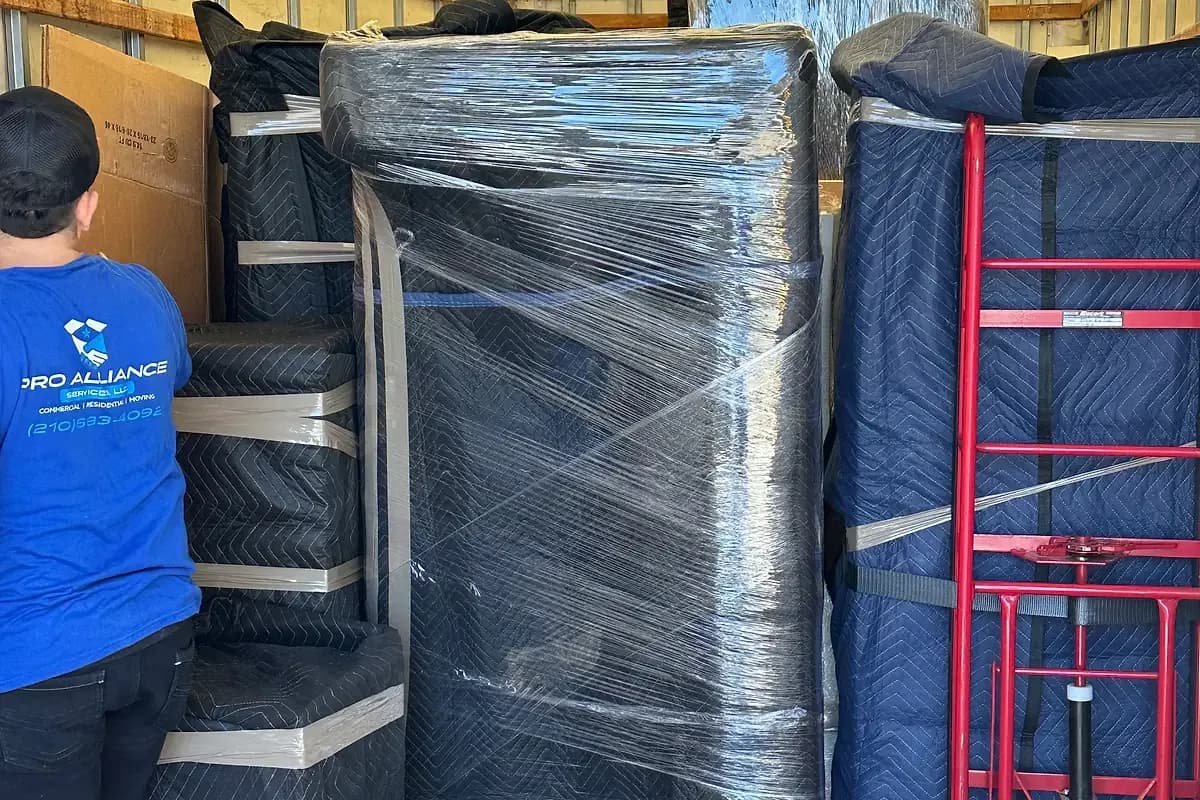
A careful crew protects the building before it moves the inventory. Standard practice includes floor runners along the carry routes, padding on door frames and tight corners, and moving blankets or stretch wrap around furniture. Upholstered pieces are typically wrapped in place, right where they sit in the room.
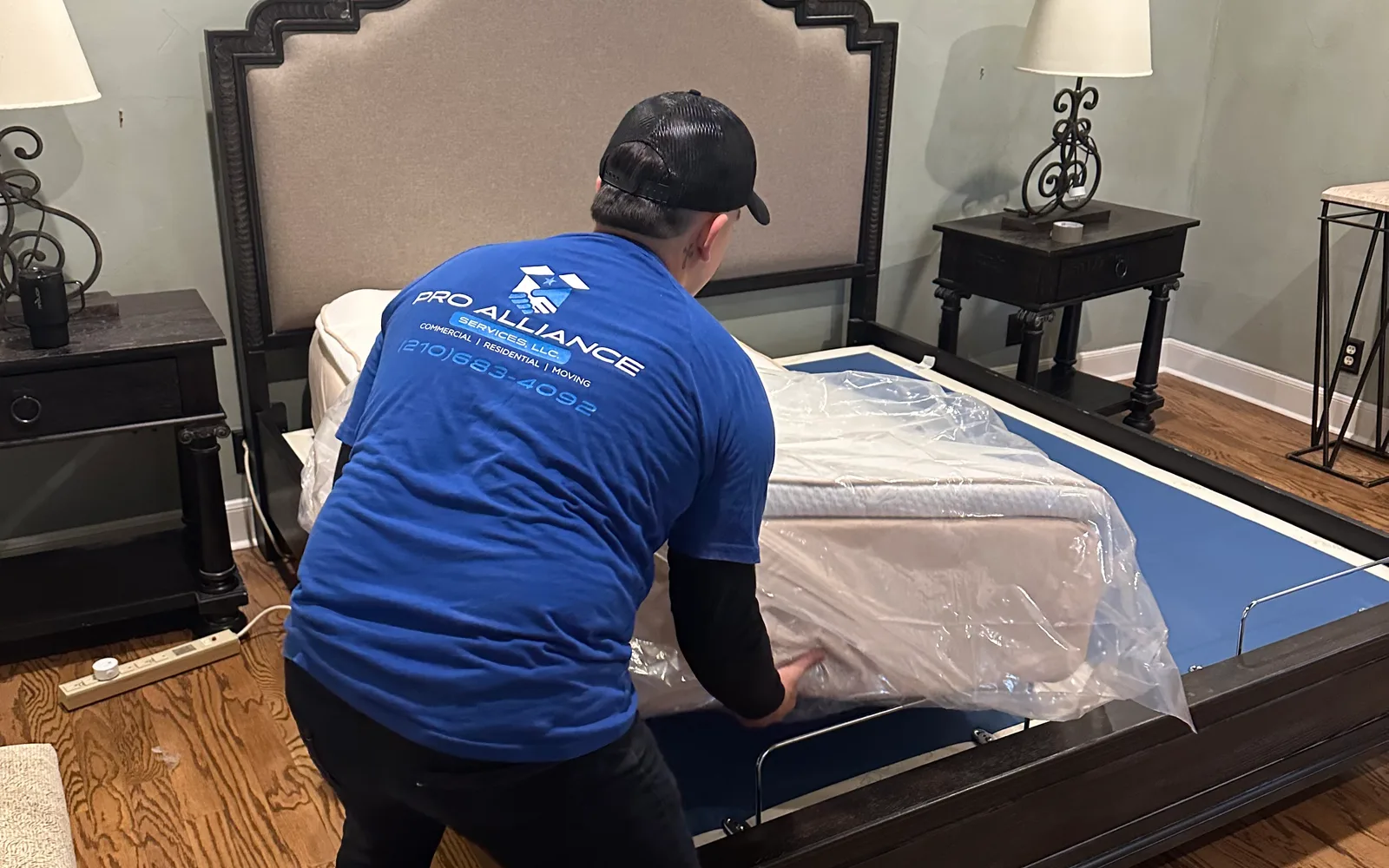
Furniture that was quoted for disassembly comes apart at this stage. Bed frames are the most common example, and the hardware is kept together for reassembly at delivery.
Loading, the drive, and staying reachable
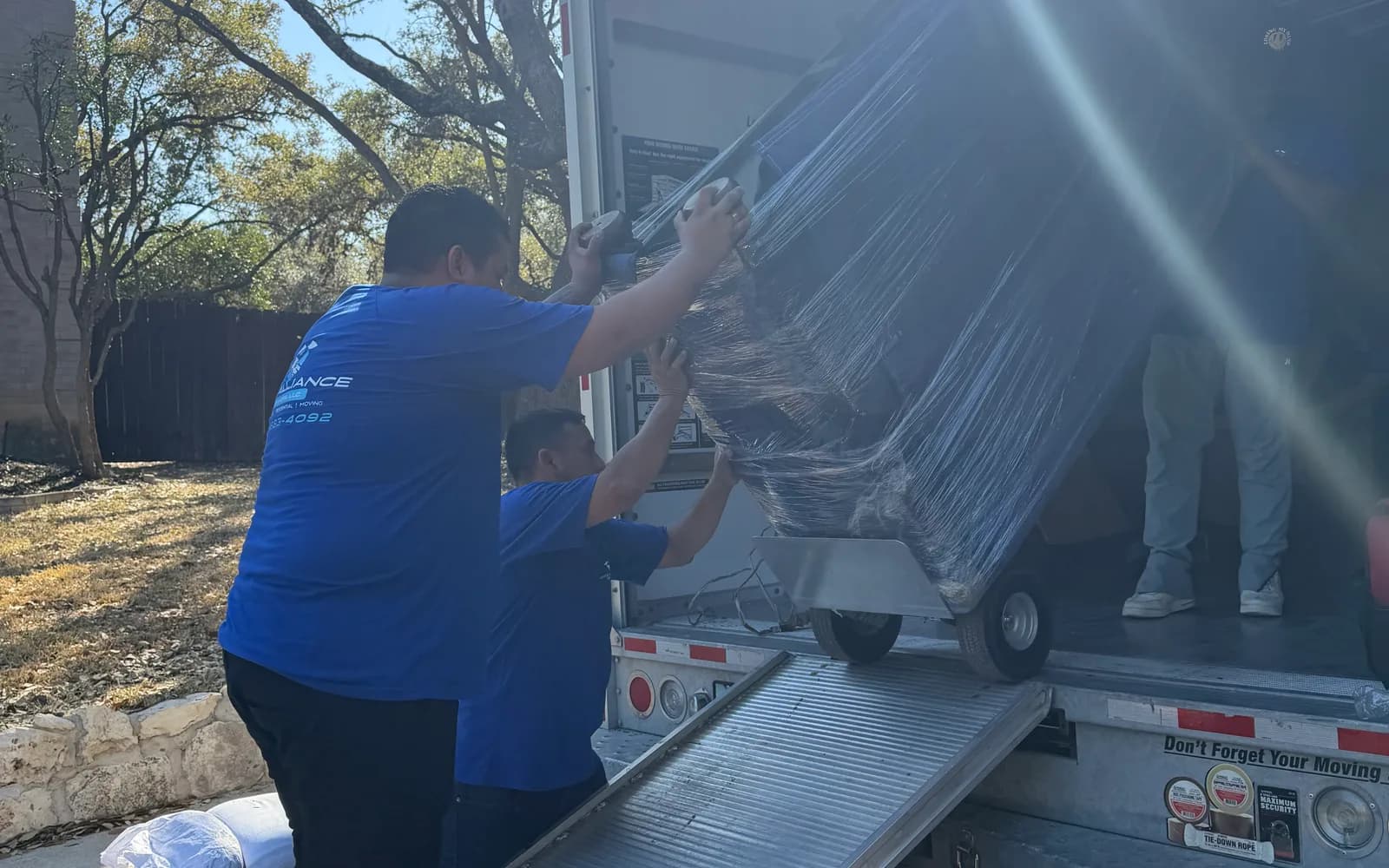
Crews build the load around weight, shape, and fragility, working through it in a set sequence so that items support each other and stay put on the road. Before the doors close, do a quick sweep of every room with the crew leader so nothing is left behind.
During transit, your only job is to be findable. On a local move inside the San Antonio area, the drive is usually the shortest part of the day. Plans can still change, though, and the crew may need a decision from you. Keep your phone on, travel to the destination, and be ready to confirm access details like gate codes or elevator use at the delivery end.
Delivery, placement, and the final walkthrough
At the destination, room labels do the routing. Boxes and furniture go where their labels say, which is why labeling by room beats labeling by floor. Direct large furniture to its final position on the first placement, since rearranging it afterward falls on you rather than the crew.
Items the crew disassembled as part of the quoted scope get reassembled. Then the day ends the way it began, with a walkthrough. Check every room, closet, and cabinet, look inside the truck, and raise anything that concerns you before the final paperwork is signed. Keep your copies of everything.
A checklist for the day itself
- Finish and seal every box before the crew arrives, unless packing is part of the booked service.
- Label each box with a destination room rather than only a floor.
- Set aside keys, documents, medications, chargers, and valuables in a marked do not load area.
- Clear the walking paths and confirm the truck's parking spot at both addresses.
- Walk the property with the crew leader and point out fragile, heavy, or unusual items.
- Read the day's paperwork before work begins and keep your copies together.
- Stay reachable by phone from the start of loading until the last item is placed.
- Direct furniture placement by room at delivery instead of rearranging after the crew leaves.
- Check every room, closet, and cabinet, and look inside the truck before the final signature.
Where Pro Alliance fits
A predictable moving day starts weeks earlier, when the job gets matched to the right scope on paper. That matching needs both addresses, the preferred date, a room by room inventory, and access notes on parking, stairs, elevators, and gates. Household work is described under residential moving, and a free estimate request with those notes gets the scope conversation going.
Frequently asked questions
What happens first when the movers arrive?
Expect a walkthrough before any lifting. The crew leader tours the property with you, compares the inventory against the estimate, confirms the truck position and carry route, and reviews the paperwork. Protection for floors and door frames goes down before furniture starts moving.
Use that walkthrough to point out fragile items, pieces that need disassembly, and the do not load area you set aside.
Do I need to help carry boxes or furniture?
No. The crew handles the lifting, and inserting yourself into the carry routes usually slows things down. Your role is decisions and access: answering questions, confirming where things go, and keeping doors, gates, and elevators available.
The most useful thing you can physically do is stay near the crew leader and stay reachable.
What should I do while the truck is in transit?
Travel to the destination and keep your phone on. The crew may need a decision about access, parking, or placement before they arrive. Use the time to confirm gate codes, elevator arrangements, and the parking spot at the delivery end.
Avoid scheduling anything else during the transit window, since the delivery end of the day needs the same attention as the loading end.
What if an item cannot go on the truck?
Movers commonly decline items that are unsafe to transport, such as flammable, hazardous, or perishable goods. Ask for the list before moving day so nothing surfaces during loading, and plan to move those items yourself.
If an item is excluded for a different reason, such as a route or condition problem discovered on site, talk through the options with the crew leader before loading continues.
When is moving day actually over?
The day ends at the destination after placement and quoted reassembly are done, you have checked every room, closet, and cabinet, and you have looked inside the empty truck. Raise anything that concerns you before the final paperwork is signed, and keep your copies of every document from the day.
Sources
Ready to plan the real move?
Send both addresses, your date, and what you are moving. The team reviews access at each end and comes back with a written estimate.
Prefer to talk it through? Call (210) 683-4092, Mon–Fri 8:00 AM–5:30 PM and Sat–Sun 8:00 AM–4:30 PM.
Keep planning