Packing is the part of a move people most often get wrong in both directions.
Some households pay to have a garage packed that they were going to empty into a skip anyway. Others save money by packing the kitchen themselves at eleven the night before, which is exactly how glassware gets wrapped in a towel and dishes get stacked flat, and exactly where damage concentrates.
The useful way to decide is not by package tier. It is room by room, based on two questions: what actually breaks, and what actually eats crew time on the day.
Direct answer: Hand over the rooms where damage and time concentrate, and do the rest yourself. That usually means the kitchen, anything glass or ceramic, art, mirrors, and electronics go to the movers, while clothes, books, linens, and garage contents are worth packing yourself. The other half of the decision is timing: boxes that are not sealed and stacked when the crew arrives turn a loading job into a packing job at loading rates. Decide the split early and finish your half before the truck comes.
Short answer: how much packing should you pay for
Split the house by risk and by time. Kitchens, glass, ceramics, art, mirrors, lamps, and electronics are where breakage happens and where careless packing costs the most, so those are usually worth handing over. Clothes, books, linens, and most garage and shed contents are low risk and slow to pay someone for. Then be honest about your own capacity: partial packing only saves money if your half is genuinely finished and sealed before the crew arrives. If it will not be, full packing is cheaper than paying a loading crew to pack around you.
What breaks, and why
Damage in a household move is not evenly distributed. It concentrates in a small number of categories, and almost all of them are in one or two rooms.
Glassware and stemware break when they are packed flat or without separation. Dishes break when they are stacked horizontally instead of on edge. Mirrors and framed art crack when they travel flat under weight. Lamps get bent when the shade travels attached. Televisions and monitors fail when they travel face down or unsupported.
None of that is mysterious, and all of it is avoidable with the right materials and the right method. It is also the part that goes wrong fastest when someone is packing at midnight.
What is not worth paying for
Clothes are bulky, unbreakable, and quick to move on a rail or in a wardrobe carton you can fill yourself. Books are heavy but simple, and the only real rule is small boxes. Linens are useful as padding. Garage and shed contents are usually a sorting problem rather than a packing problem, and nobody can sort them for you.
Those rooms are where a household saves money by doing its own work, and the saving is real.
Materials matter more than people expect
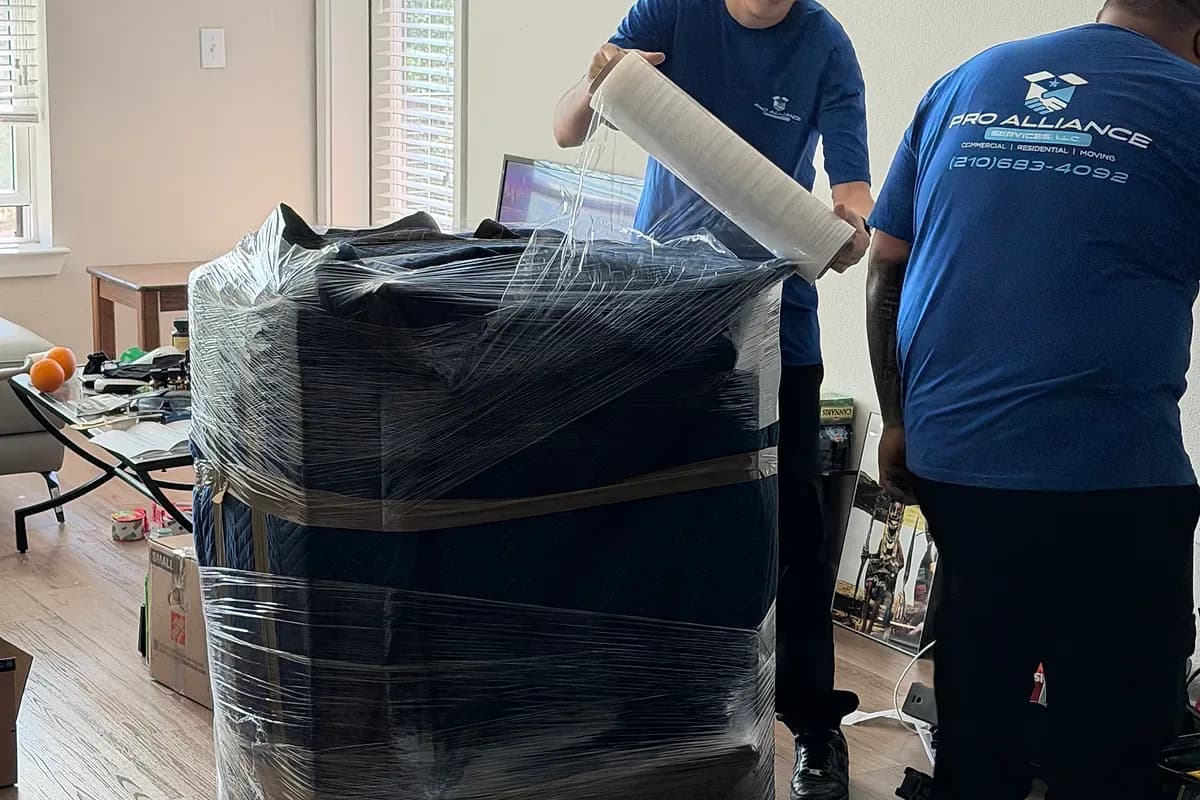
The right carton for the job is a genuine variable. Dish packs and cell dividers exist because they work. Wardrobe cartons keep clothes on hangers and save an hour of folding and refolding. Small book boxes exist because a large box of books cannot be lifted safely.
If you are packing part of the house yourself, get proper cartons rather than collecting supermarket boxes of mixed sizes and unknown strength. Mixed sizes do not stack, and a stack that does not sit square is a stack that shifts. See moving supplies for what to use.
Labeling and the unpack
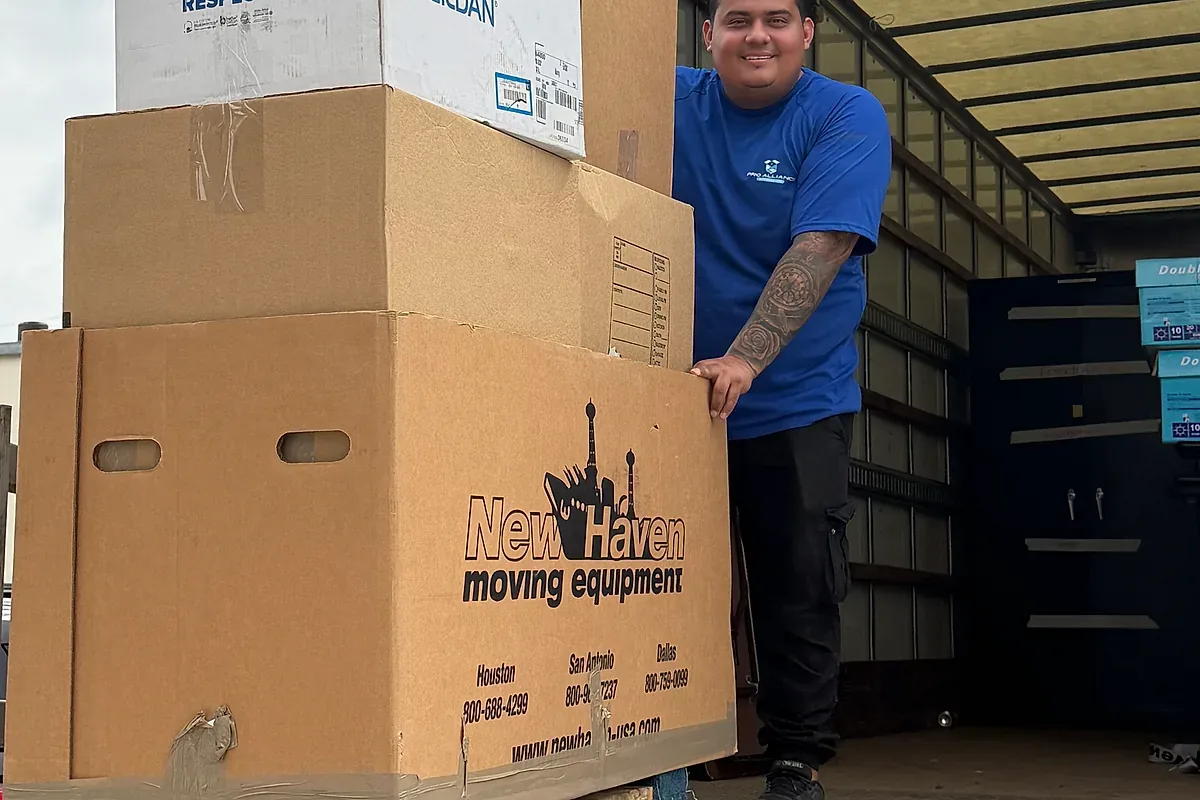
Label by destination room, not by contents, and put the label on the side rather than the top so it is readable in a stack. Add a line for anything you will want on the first night, and keep those cartons together and loaded last.
The first-night box is the single most useful thing in a move and the thing most often forgotten: bedding, toiletries, medications, phone chargers, a change of clothes, and whatever the household needs to function before anything is unpacked.
Getting rid of what is not going
Every move surfaces things you do not want to pay to transport. Decide early, because donation and disposal both take time you will not have in the last week.
The City of Austin publishes guidance on waste, recycling, and drop-off options through Austin Resource Recovery. Check what applies to your material before assuming it can go in a general bin, particularly for electronics and household chemicals.
Packing and your estimate
Packing changes an estimate in two directions. It adds labor and materials, and it removes uncertainty. A properly packed household loads faster and more predictably than one being packed around, which is why partial packing sometimes costs more than full packing once the day runs long.
When you request a quote, say specifically which rooms you intend to pack yourself and be realistic about it. That is the difference between an estimate that holds and one that changes on the morning. General guidance on what a mover should be telling you before you book is published by TxDMV consumer protection and, for interstate moves, by the FMCSA.
The packing decision checklist
- Walk the house room by room and mark each room as yours or the movers'.
- Assign kitchens, glass, ceramics, art, mirrors, and electronics to the movers by default.
- Assign clothes, books, and linens to yourself by default.
- Sort the garage, shed, and attic before deciding anything about them.
- Decide what is being donated or disposed of and arrange it early.
- Order proper cartons rather than collecting mixed boxes.
- Label every carton by destination room, on the side rather than the top.
- Pack a first-night box and keep it separate from the load.
- Finish your half and seal it before the crew arrives, or upgrade to full packing.
Where this sits in the wider batch
The Austin moving services guide covers how packing fits alongside the other services. San Antonio households can use the San Antonio self-packing guide and the full versus partial packing guide, which cover the same decision from that market.
Where Pro Alliance fits
Send your inventory, both addresses, your date, and a room-by-room note of which rooms you plan to pack yourself. See the packing services page or the Austin movers page, then use the free estimate form.
Frequently asked questions
Is full packing worth it?
It depends on your time more than your budget. If your own half will genuinely be finished and sealed before the crew arrives, partial packing saves money. If it will not be, full packing usually costs less than a loading crew working around unfinished rooms.
Which rooms should I always hand over?
The kitchen, and anything glass, ceramic, or framed. That is where breakage concentrates and where correct materials and method make the most difference.
Can I use boxes I have collected myself?
You can, but mixed sizes do not stack square and unknown box strength is a real risk under load. Proper cartons in consistent sizes make a measurable difference to how a truck loads.
How should I label boxes?
By destination room, written on the side so it stays readable in a stack. Add a note for anything needed on the first night and keep those cartons out of the general load.
What do I do with things I am not taking?
Sort them out before the packing starts, since donation and disposal both take lead time. Check the city's guidance for anything that cannot go in a general bin, particularly electronics and household chemicals.
Sources
Ready to plan the real move?
Send both addresses, your date, and what you are moving. The team reviews access at each end and comes back with a written estimate.
Prefer to talk it through? Call (210) 683-4092, Mon–Fri 8:00 AM–5:30 PM and Sat–Sun 8:00 AM–4:30 PM.
Keep planning