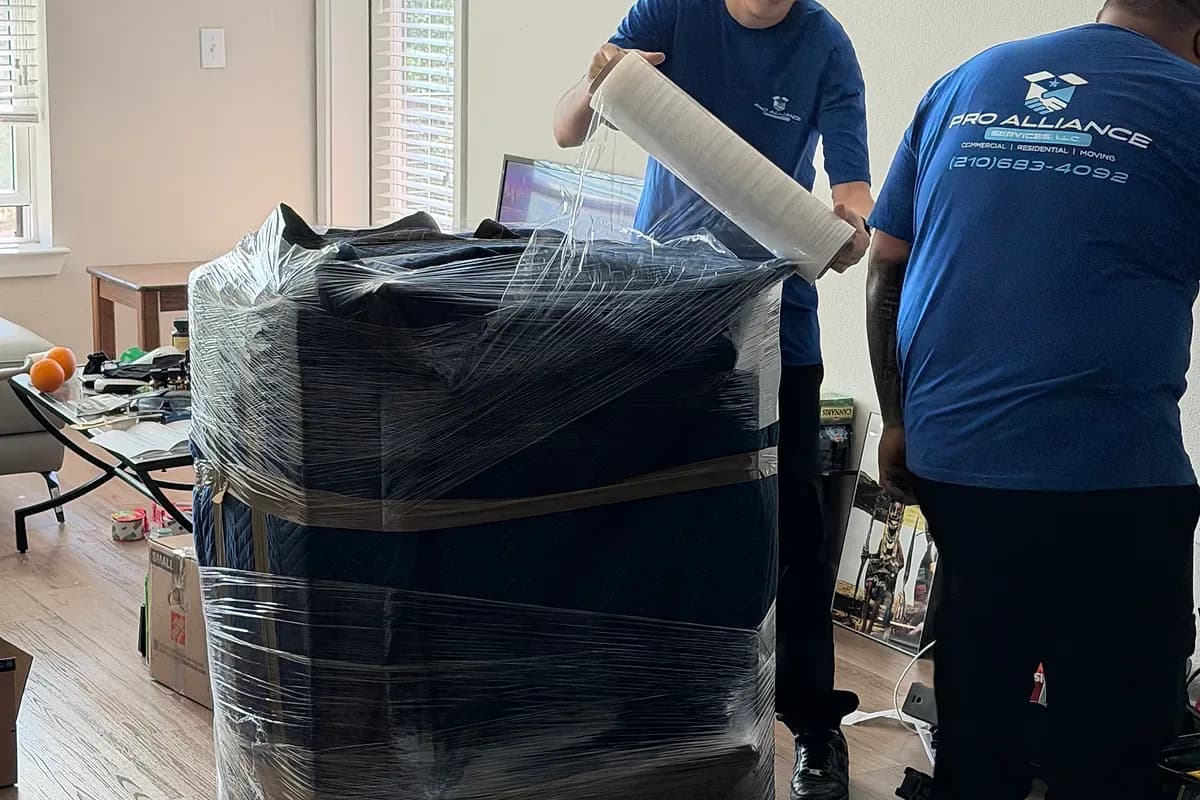
Dates rarely line up. The lease ends on the last day of the month and the closing is a week later, or the new place is not ready, or half the household is going into a smaller apartment and the rest needs somewhere to sit.
So a storage unit ends up in the middle. That is a normal, workable plan, and it is also the situation where the most time gets wasted, because a storage stop is usually treated as an afterthought instead of as the thing that determines the entire load order.
To be clear about what this guide covers: this is about a unit you rent from a storage facility, with the move routed through it. Pro Alliance moves your belongings; the unit and the contract are yours.
Direct answer: A storage stop has to be planned before the truck is loaded, not after. Decide what is going into storage and what is going straight to the new address, then load in reverse order so the storage items come off first and nothing has to be unloaded and reloaded to reach them. Confirm the facility's access hours, its gate and elevator arrangements, and any restriction on vehicle size or where a truck may park. Then decide whether this is one job with a stop in the middle or two separate jobs on different dates, because those are priced and scheduled differently.
Short answer: how a storage stop changes a move
Two things change. The load order becomes strict, because whatever comes off at the storage unit has to be reachable without unloading the rest, which means it goes on the truck last. And a third set of access rules enters the plan: the facility's gate hours, its loading area, whether the unit is on an upper floor with an elevator, and whether it restricts vehicle size. Both are simple to handle when they are known before loading day, and both are expensive to discover at the facility gate with a full truck and a crew standing around.
Split the inventory first
Before anything else, decide which items are going into storage and which are going straight to the new address. Write it as two lists rather than one list with notes.
That split is the plan. It determines the load order, how long the stop takes, and whether the whole thing fits in one day. It also tends to surface things people had not decided, like whether the spare bedroom furniture is coming back out or is really being sold.
If the storage list is longer than you expected, that is worth knowing before you rent the unit rather than after.
Reverse load order
The rule is simple: last on, first off.
Everything going to storage is loaded last, so it comes off first at the stop without disturbing the rest of the load. Doing it the other way round means unloading part of the truck at the facility, pulling out the storage items, and reloading, which can add an hour or more and increases handling on every piece that comes off and goes back on.
That only works if the split is decided in advance. A crew cannot load in reverse order for a decision that has not been made yet.
What to ask the storage facility
Facilities differ more than people expect, and the questions are quick.
What are the gate access hours, and are they different from the office hours? Is there a size restriction on vehicles entering the property, and is there a clearance bar? Where does a truck park relative to the unit, and how far is the carry? If the unit is not at ground level, is there an elevator, and does it need booking? Is there a loading bay, and is it shared? Does the facility require anything from a moving company before it will admit one?
Get the answers before the date, and send them with your quote request.

Packing for storage is not packing for a move
Things that sit for months behave differently from things that travel for an hour.
Cartons should be sealed rather than open topped, and stacked so weight sits on the strongest boxes. Upholstered furniture and mattresses benefit from covering. Anything that could leak should not go in at all. Leave an aisle if you will need to reach something before the unit is emptied, because a wall of boxes with your tax records at the back is a bad afternoon later.
If you are packing for a stay rather than a trip, the packing services guide covers materials and method in more detail.
One job or two
This is the question that decides the price shape.
One job with a stop in the middle means a single crew, a single truck, and a single day: load everything, drop the storage portion, deliver the rest. That is usually the efficient option when both ends are ready.
Two jobs means the storage load goes in on one date and comes out on another, with a separate booking each time. That is the right answer when the new address genuinely is not available, and it should be planned as two moves rather than treated as one move that got interrupted.
Say which one you are doing when you request the estimate. General guidance on what to expect from a mover before booking is published by TxDMV consumer protection.
Street access at either end
If the origin or destination needs a truck on the street rather than on private property, that brings the city or county in. Inside Austin, Austin Transportation and Public Works handles the right of way; outside the city limits, Travis County applies for county roads. Storage facility property itself is private and governed by the operator's own rules, and rental agreements for self-storage are consumer contracts, with general consumer resources published by the Texas Comptroller.
The storage stop checklist
- Write two inventory lists, one for storage and one for the new address.
- Confirm the facility's gate access hours and whether they differ from office hours.
- Ask about vehicle size restrictions and any clearance bar at the entrance.
- Confirm where a truck parks relative to the unit and how far the carry is.
- Check whether the unit is above ground level and whether an elevator needs booking.
- Ask whether the facility requires anything from a moving company before admitting one.
- Tell the mover to load the storage portion last so it comes off first.
- Seal cartons properly and cover upholstery for anything staying more than a few weeks.
- Leave an access aisle if you will need to reach items before the unit is emptied.
- Decide whether this is one job with a stop or two separate bookings, and say so.
Where this sits in the wider batch
The Austin moving services guide covers how this fits alongside the other services, and the local moving page covers the underlying service. San Antonio households can use the San Antonio storage unit stop guide.
Where Pro Alliance fits
Send both addresses plus the storage facility address, your date, two inventory lists, and the facility's access hours and vehicle restrictions. The team plans the load order around the stop. See the local moving page or the Austin movers page, then use the free estimate form.
Frequently asked questions
Does Pro Alliance provide the storage unit?
No. This covers moves routed through a unit you rent from a storage facility. The rental agreement and the unit are yours, and the moving service handles getting your belongings there and out again.
Can the whole thing happen in one day?
Often, provided both ends are ready and the facility's access hours cover your schedule. Where the new address is not available yet, it is planned as two separate bookings instead.
Why does load order matter so much?
Because anything coming off at the storage stop has to be reachable without unloading the rest. Loading the storage portion last avoids unloading and reloading the truck at the facility.
What should I ask the storage facility?
Gate hours, vehicle size restrictions and clearance, where a truck parks relative to the unit, whether there is an elevator and whether it needs booking, and whether they require anything from a moving company.
How should I pack things that are staying in storage for months?
Seal the cartons, stack weight on the strongest boxes, cover upholstery and mattresses, and leave an aisle if you will need to reach anything before the unit is emptied.
Sources
Ready to plan the real move?
Send both addresses, your date, and what you are moving. The team reviews access at each end and comes back with a written estimate.
Prefer to talk it through? Call (210) 683-4092, Mon–Fri 8:00 AM–5:30 PM and Sat–Sun 8:00 AM–4:30 PM.
Keep planning