A moving estimate can start with an item list, but a workable San Antonio move plan also needs the path between those items and the truck. The legal truck position, gate opening, driveway, stairs, elevator, walking distance, and destination layout can change how the day must be organized. Documenting those conditions early gives the mover facts to review before crew and timing expectations are set.
Direct answer: Plan moving access by documenting the exact route at both addresses. Photograph the legal truck position, driveway, gate, exterior steps, interior stairs, elevator, and tight turns. Measure the longest carry and large furniture. Confirm public-street questions with the responsible city and private rules with the owner, association, or property manager.
Short answer: what should a San Antonio moving access packet include?
A useful San Antonio moving access packet has two parts, one for pickup and one for delivery. For each property, record the proposed legal truck position, the route to the main entry, the approximate carrying distance, gates, driveway width and slope, stairs, elevators, low clearances, and tight interior turns. Add current instructions from the city, building, association, or property manager that controls the space. Photograph large items that may need disassembly and label their destination floor and room. If the truck would use public curb space, check the rules for the exact jurisdiction instead of assuming one San Antonio process applies everywhere. Send both packets with the move date and inventory so Pro Alliance can review the actual approach and carry at each property instead of just the mileage between addresses.
Start with the legal truck position
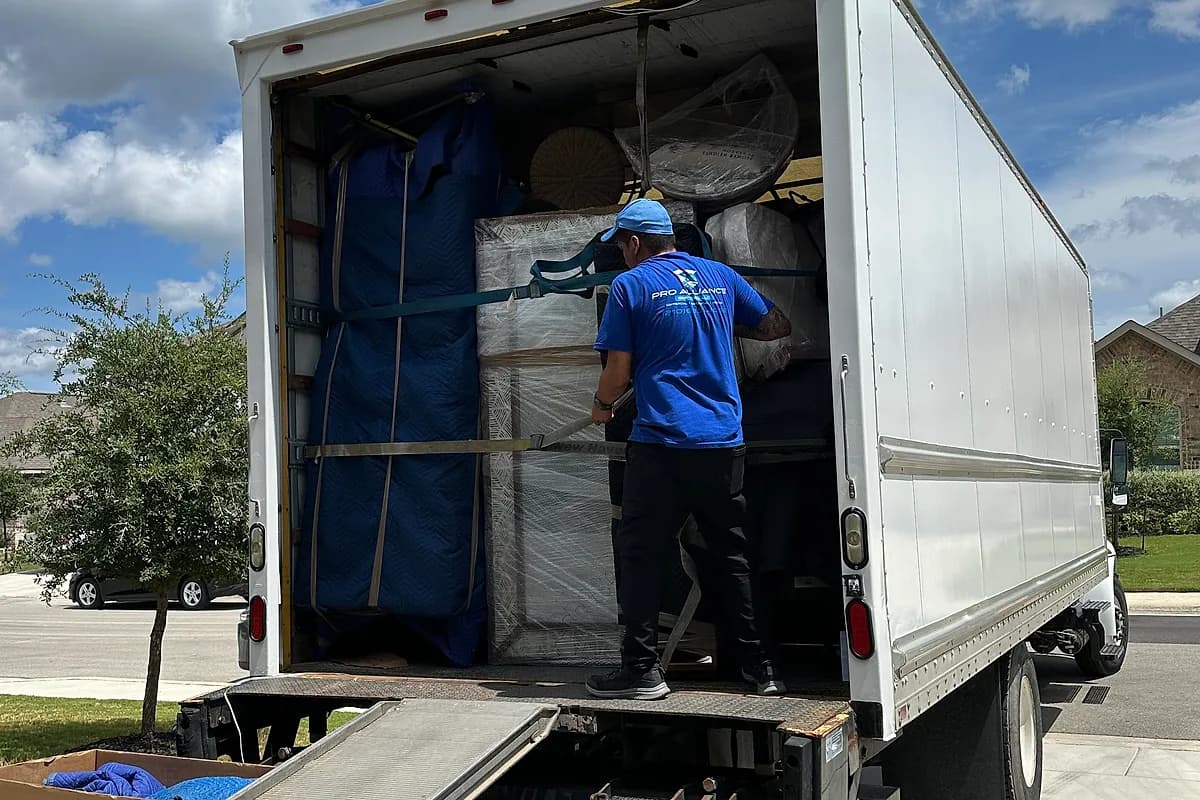
The best truck position is not simply the closest visible space. It must be legal, practical for the vehicle, and clear of hydrants, driveways, fire lanes, restricted curb space, and unsafe traffic conflicts. A private driveway, apartment loading area, neighborhood street, and downtown metered space may be controlled by different rules.
The City of San Antonio publishes parking restriction permit information for reserving certain metered or loading-zone spaces and managing temporary downtown parking. That page does not mean every residential move needs the same permit. It means the customer should identify whether the expected space is public or private and ask the responsible authority what applies to the exact block and date.
At a private property, ask the owner, manager, or association where a moving vehicle may stand, whether the gate has vehicle-size limits, and whether the crew or truck must be registered in advance. Do not send a gate code by ordinary email or place it in a public note. Use the secure method required by the property.
Walk the full carry at pickup and delivery
Carry distance is the path from the usable truck position to the item, not a straight line on a map. A home may have a short driveway and still require a long carry through a side gate, courtyard, garage, hallway, elevator, or rear entrance. An apartment may have convenient parking but a long interior route.
Walk both properties and record:
- the truck-to-entry distance;
- exterior steps and uneven surfaces;
- gate width and opening direction;
- elevator location, reservation window, and interior size;
- hallway width and tight corners;
- the narrowest door and stair turn;
- destination floor and final room for large items;
- any surface that needs approved protection.
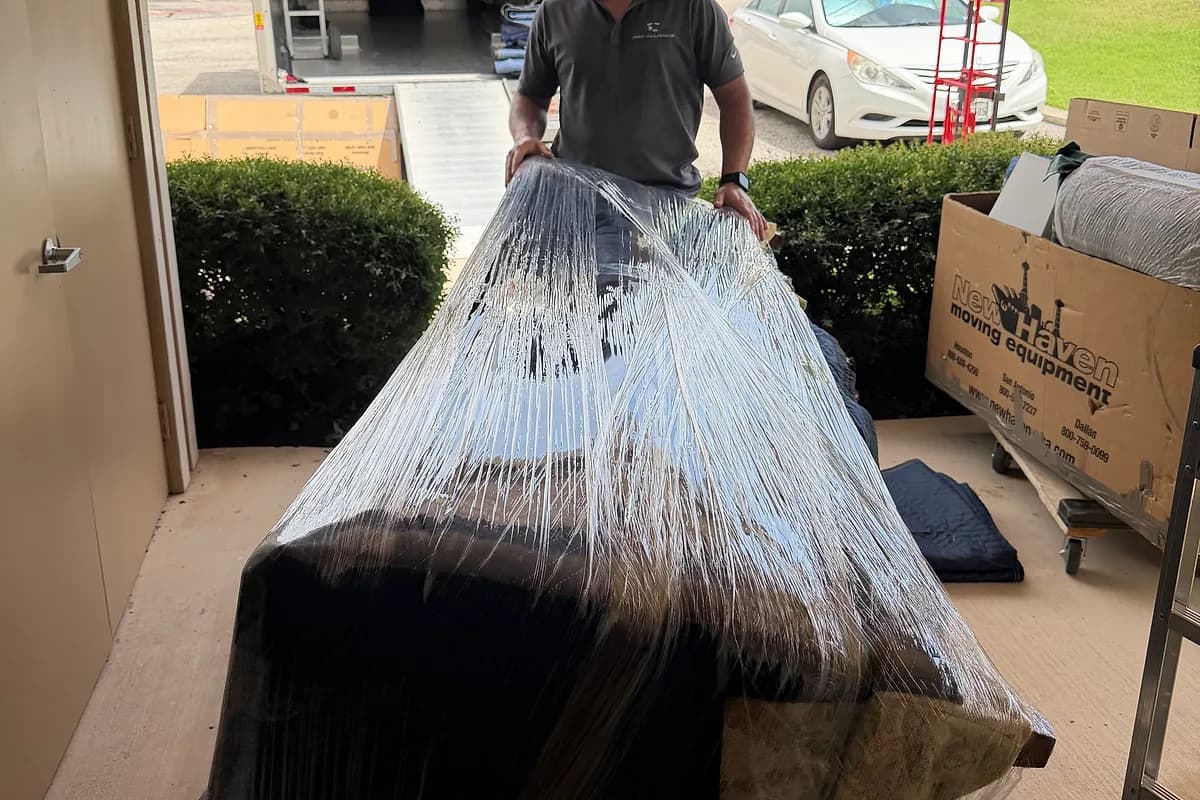
The delivery packet matters as much as pickup. A sofa that leaves a wide front door may not fit the destination stair turn. A box labeled only “bedroom” may reach the wrong level. Measure before loading and label by destination floor and room.
Measure the constraints that can change the plan
Photos show context, but a few measurements make the packet more useful. Record gate width, garage or covered-entry clearance, door width, elevator opening, stair width, and the tightest turn. Measure large furniture at its widest, tallest, and deepest usable dimensions.

Do not assume disassembly is the answer for every piece. Some items were not designed to be taken apart repeatedly. The first decision is whether the item fits the planned route. If it does not, the owner and mover can discuss an appropriate alternative before move day.
For driveways, note the surface, slope, gate, low branches, roof or porte-cochere clearance, and turning space. For a home in a hillier area, the shortest route may not provide the best vehicle approach. For an older central-city home, the main challenge may be a narrow interior turn rather than the street.
Match the process to the San Antonio location
San Antonio is not one access pattern. Stone Oak can involve a master property association, a separate neighborhood association, an apartment manager, or none of those at the exact address. The Dominion has its own current visitor and service-provider process. Alamo Heights and Shavano Park are separate municipalities. Boerne, Fair Oaks Ranch, Schertz, and Cibolo have their own city information and road conditions.
Use the location guide that matches the property:
- Stone Oak gated-community moving checklist
- The Dominion large-home moving access guide
- Alamo Ranch HOA, gate, and garage planning
- Monte Vista historic-home protection guide
- Alamo Heights older-home and street-access guide
- Shavano Park large-home moving checklist
- Boerne Hill Country moving access guide
- Fair Oaks Ranch driveway and access guide
- San Antonio, Schertz, and Cibolo moving guide
These guides help identify questions. They do not replace current instructions from the city, property manager, association, or owner responsible for an address.
Build one access packet for each address
Use this checklist for both pickup and delivery:
- Write the full address, property contact, move date, and approved time window.
- Mark the proposed legal truck position and the final approach direction.
- Photograph the driveway, curb, gate, loading area, and main entry.
- Measure gates, low clearances, doors, elevators, stairs, and large furniture.
- Record the carrying distance and every change in surface or level.
- Confirm current public-street requirements with the correct city.
- Confirm private rules with the responsible owner, association, or manager.
- List pieces that may need special preparation, disassembly, or placement decisions.
- Label the destination floor and room for each box and large item.
- Send the packet with the inventory before the scope and arrival plan are finalized.
Plan the route again close to move day
Construction, weather, temporary closures, and property access can change. Review official current information near the move window. The Texas Department of Transportation maintains DriveTexas for road conditions. The National Weather Service Austin/San Antonio office publishes local forecasts and alerts.
Route planning should continue past the highway segment to the final approach to the property. If a road is closed, flooded, barricaded, or unsafe, do not drive around the control. Contact the mover and property contact to revise the plan.
Where Pro Alliance fits
Pro Alliance Services can look over a local moving request once it includes the pickup and delivery addresses, preferred date, inventory, access packets, and requested services. Availability and the final scope still get confirmed move by move. Review local moving support or request an estimate with the details needed to evaluate the job.
Frequently asked questions
What is the most important moving access photo?
Take a wide photo showing the proposed truck position and the complete route to the entry. Then add close views of gates, stairs, elevators, tight turns, and low clearances. One close doorway photo without the approach does not explain the whole path.
Does every San Antonio move need a parking permit?
No. Requirements depend on the exact public or private space and jurisdiction. Check the City of San Antonio process for a San Antonio public-street question, or contact the separate city, property manager, owner, or association responsible for the address.
How do I measure carrying distance?
Follow the usable path from the expected truck position to the main item staging area. Include side gates, courtyards, hallways, elevators, and stairs. An approximate paced distance plus clear photos is more useful than a straight map measurement.
What if the destination access is harder than the pickup?
Send both access packets before finalizing the plan. Whichever property is more restrictive drives the plan, and the review covers placement by floor and room as well as how items leave the pickup address.
Can Pro Alliance confirm a truck position from photos?
Photos and measurements help with review, but legal use, current property rules, weather, and on-site conditions must still be confirmed. Share the complete details and ask what additional information is needed for the specific move.
Sources
Ready to plan the real move?
Send both addresses, your date, and what you are moving. The team reviews access at each end and comes back with a written estimate.
Prefer to talk it through? Call (210) 683-4092, Mon–Fri 8:00 AM–5:30 PM and Sat–Sun 8:00 AM–4:30 PM.
Keep planning