A Shavano Park home move should be planned from the actual inventory and property access. The city maintains its own public streets and long-term street program, while TxDOT provides information for nearby N.W. Military Highway and FM 1535. The route, driveway, and room placement should be checked together before the schedule is finalized.
Direct answer: Build a Shavano Park move plan with a room-level inventory, photos of the street and driveway approach, gate and clearance measurements, stairs, carrying distance, and final room placement. Check current City and TxDOT information close to move day instead of relying on an older construction status.
Short answer: how do you plan a Shavano Park large-home move?
Start with a room-by-room inventory that identifies large furniture, packed storage, garage items, artwork, equipment, and pieces that may need special preparation or placement. At pickup and delivery, photograph the final street approach, proposed legal truck position, driveway width and slope, gate, overhead clearance, turning space, stairs, and longest carry. The Shavano Park Town Plan discusses the city's public streets and street-reconstruction priorities, while TxDOT maintains project information for N.W. Military Highway and FM 1535. Those conditions can change, so review current sources and drive the final approach near the move date. Label every item by destination floor and room so the unload follows the new home's layout. Keep an owner contact available for placement decisions and route changes.
Use a room-level inventory rather than a home size
A room count does not show how much is in each room or which pieces need more planning. List large furniture, estimated boxes, garage or patio items, stored belongings, and anything that needs disassembly, packing, or a placement decision.
Use fields such as:
- current room and destination room;
- item name and approximate dimensions;
- packed, packing needed, or owner-managed;
- disassembly decision;
- stairs or tight route at pickup;
- stairs or tight route at delivery;
- final placement note.
Keep documents, medication, keys, access devices, jewelry, and irreplaceable personal items in a separate owner-managed group.
Treat driveway and street access as one system
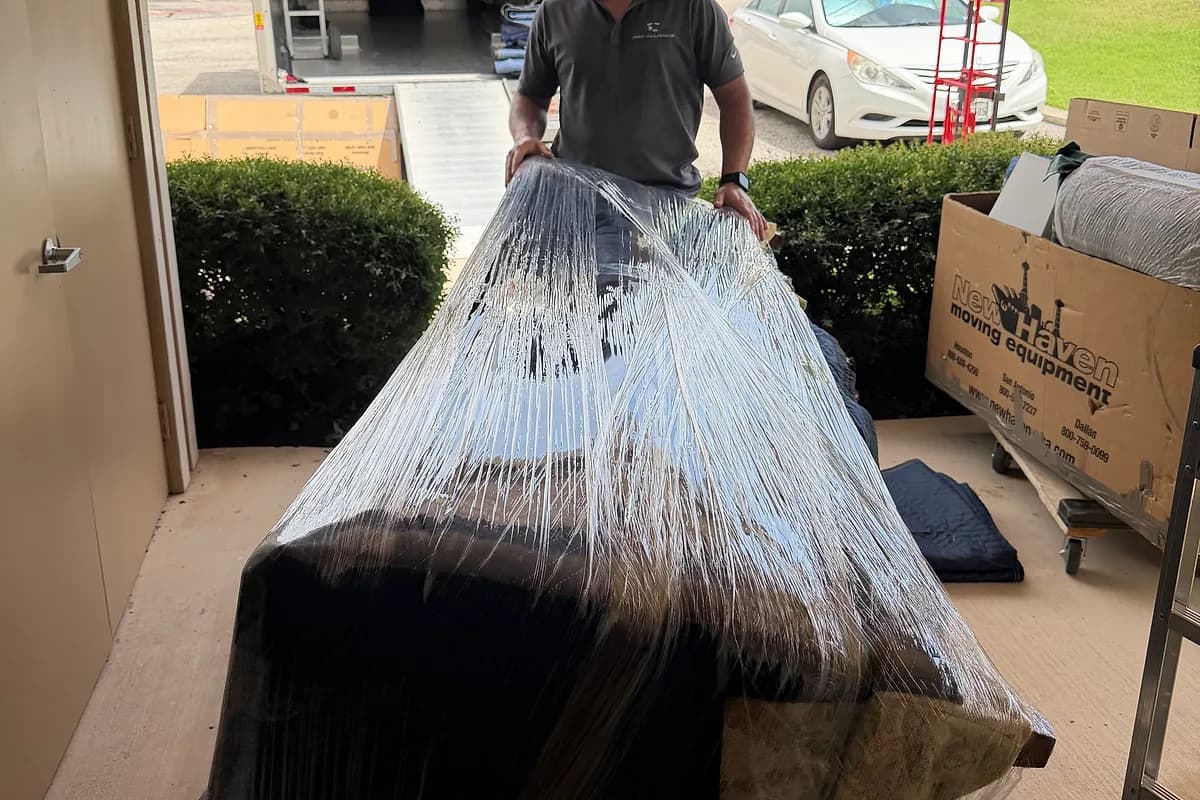
The driveway is only useful if the vehicle can approach and leave safely. Photograph the final street approach in the direction the vehicle is expected to arrive. Note width, turns, signs, low branches, gates, and whether the vehicle has room to enter or must stay on the street.
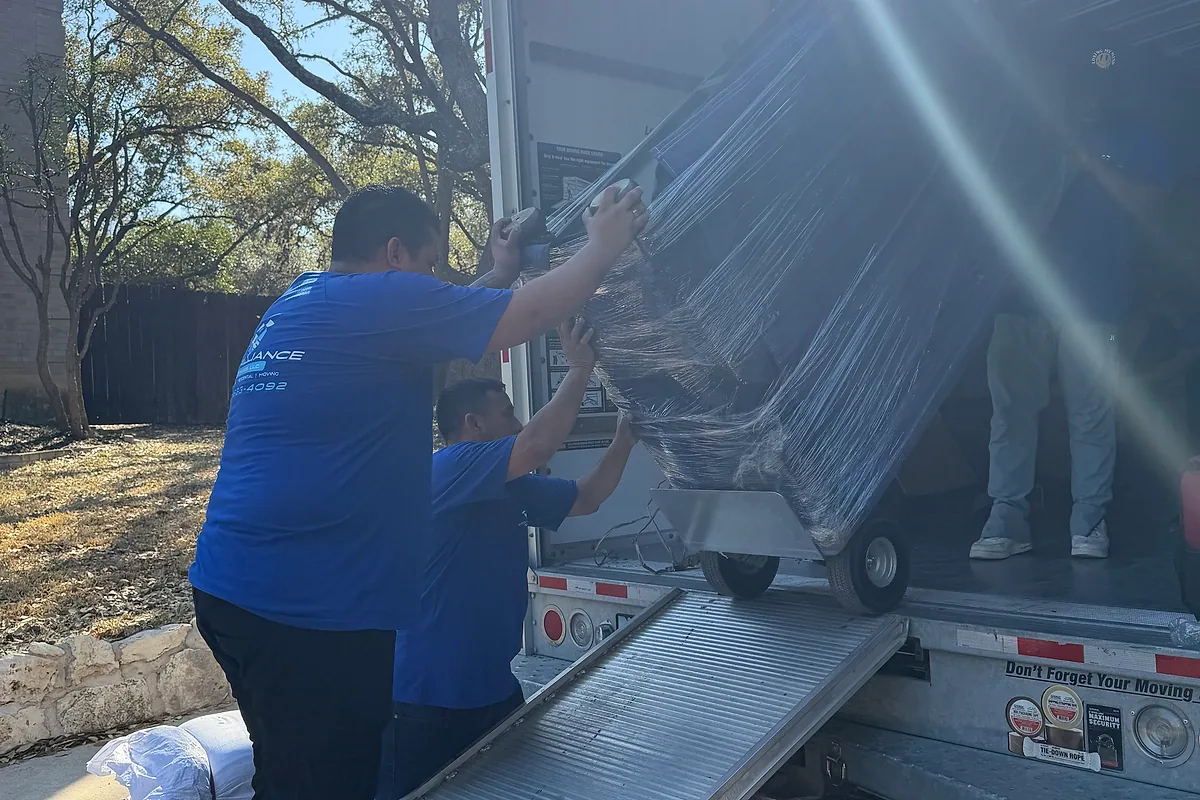
The City of Shavano Park's Town Plan discusses a long-term street program, and road work can change over time. TxDOT's N.W. Military and FM 1535 page is another current route source. Recheck both rather than copying a dated closure or completion statement into the move plan.
The San Antonio moving access guide provides the full access-packet method.
Load for the destination layout
Label large pieces and boxes by floor and room. Measure the destination doors and stair turns before loading. If the new home has several levels, create a simple placement map and give rooms distinct names.
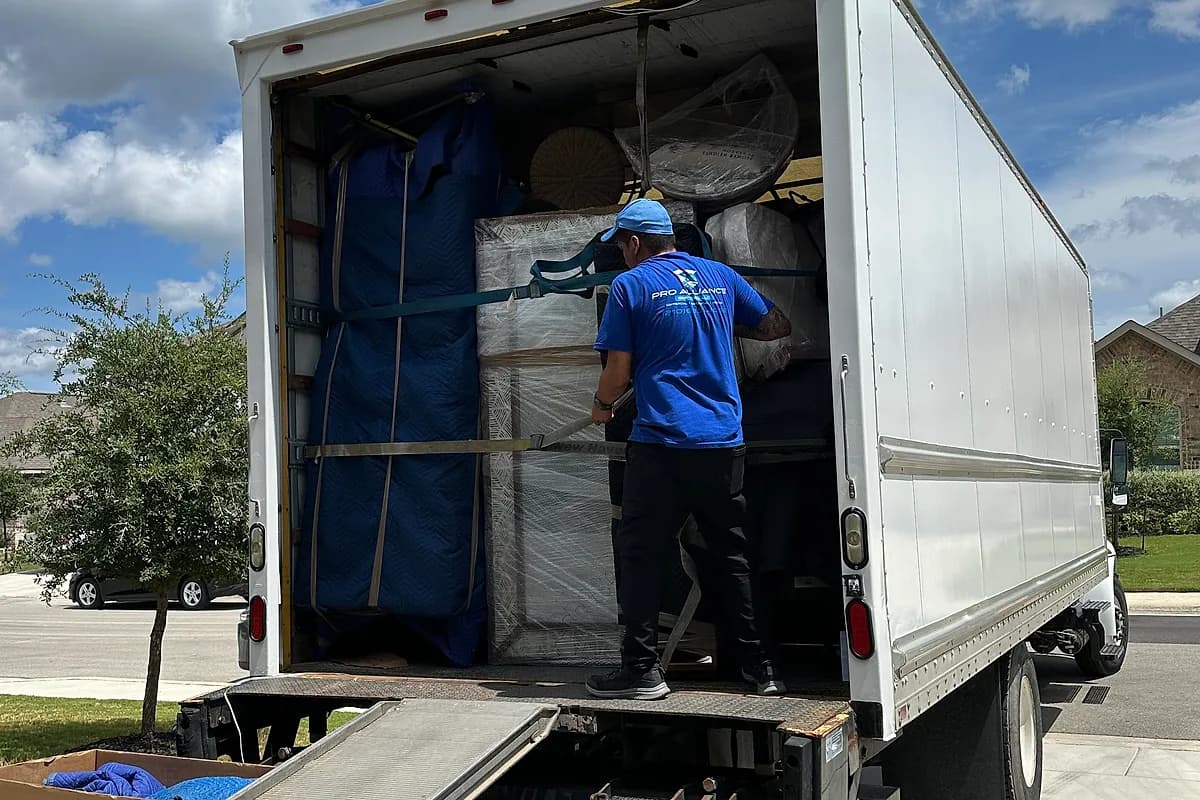
Decide where protected furniture can be staged without blocking exits or the carrying lane. The unload should follow the destination route even when that differs from the order in which items fit into the truck.
Include garages, patios, and storage areas in the first inventory
Large-home estimates become less useful when the first item list covers only bedrooms and living spaces. Walk garages, patios, closets, attic access, detached storage, and other areas that actually contain moving items. Do not add a location simply because homes in the area might have it. Add it only when it exists at the address.
For each area, separate:
- items moving to the new home;
- items moving to another approved stop;
- owner-managed items;
- items that will not move;
- items requiring a preparation or service decision.
Patio, garage, and storage items can have dirt, moisture, fuel, batteries, sharp edges, or other preparation concerns. Identify them early and ask what the mover can accept. Do not place an unreviewed item into the ready-to-load zone.
Hold a destination placement review
Before loading, walk the destination plan with the owner or review a simple floor map. Confirm large furniture orientation, rooms with similar names, items that must remain on the first floor, and pieces that cannot be placed until another item arrives.
Create a short open-decision list. Examples include which wall receives a cabinet, whether a table should be assembled immediately, or which room receives stored boxes. One owner contact should be available to answer these questions. This reduces hallway staging and repeated movement at delivery.
Shavano Park large-home checklist
- Build a room-level inventory for the home, garage, patio, and storage areas.
- Separate owner-managed essentials, records, valuables, medication, and access devices.
- Photograph the final street approach at both addresses.
- Record the proposed legal truck position and carrying distance.
- Measure driveway width, slope, gate, overhead clearance, and turning space.
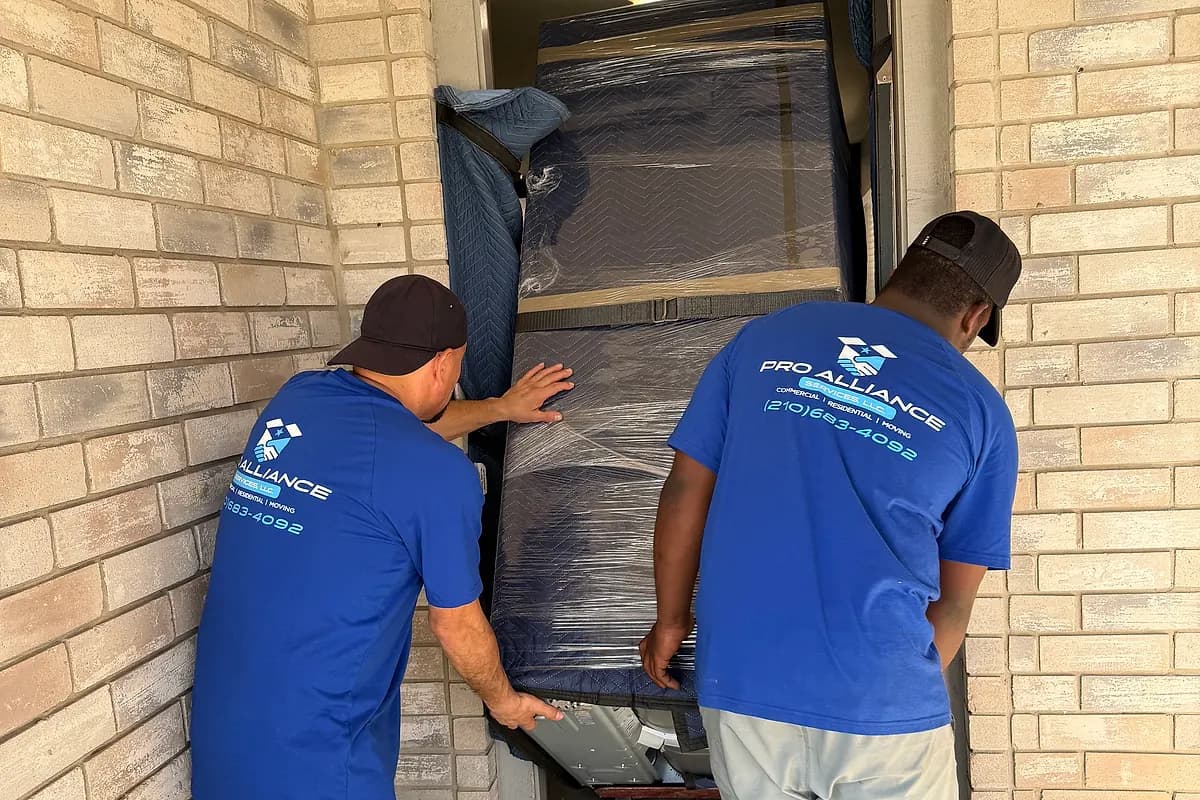
- Measure large items, doors, stairs, landings, and tight turns.
- Check current City and TxDOT route information.
- Label items by destination floor and room.
- Create a placement map for large furniture.
- Send the inventory and both access packets before final scheduling.
Where Pro Alliance fits
A Shavano Park moving request is ready for Pro Alliance Services to review once it covers the addresses, preferred date, inventory, requested services, driveway and street information, and destination placement plan. Availability and scope are then confirmed for that particular move. Review Shavano Park moving services or request an estimate with the room, route, and access details.
Frequently asked questions
Why is a room-by-room inventory important for a large home?
It shows the actual item volume, packing needs, disassembly decisions, special pieces, destination rooms, and placement requirements. Home size alone cannot provide those details.
What driveway measurements should I send?
Send width, slope, gate opening, surface, low clearance, turning space, and the distance from the legal vehicle position to the main entry. Add wide photos of the approach.
Should I rely on a route checked several weeks earlier?
No. Construction, closures, weather, and property access can change. Review official current information close to the move window and communicate material changes.
How should a multi-level destination be labeled?
Use floor and room together, such as “upper primary bedroom” or “lower media room.” Add a handling note where needed.
Can Pro Alliance review a Shavano Park large-home move?
Provide both addresses, date, room-level inventory, driveway and route information, stairs, large-item measurements, and requested services. Availability must be confirmed for the specific move.
Sources
Ready to plan the real move?
Send both addresses, your date, and what you are moving. The team reviews access at each end and comes back with a written estimate.
Prefer to talk it through? Call (210) 683-4092, Mon–Fri 8:00 AM–5:30 PM and Sat–Sun 8:00 AM–4:30 PM.
Keep planning