An Alamo Ranch move should be planned at the property level. The community name can help identify the general part of San Antonio, but it does not tell a mover which association or manager controls the address, which entrance to use, where the vehicle may stand, or how the garage and rooms should be staged.
Direct answer: Identify the owner, association, or property manager responsible for the exact Alamo Ranch address. Confirm current gate, vehicle, move-hour, and parking instructions. Then document the Loop 1604 or Culebra approach, legal truck position, driveway, garage clearance, carrying path, and final room placement.
Short answer: what makes an Alamo Ranch move plan useful?
A useful Alamo Ranch plan connects the current property instructions, the vehicle approach, and the home's staging plan. Ask the responsible association, landlord, or manager whether a moving truck or crew must be registered, which entrance to use, and where loading is permitted. Check current route conditions near the move date because Loop 1604, Culebra Road, and connecting streets can be affected by changing traffic or construction. At the property, photograph the driveway, garage opening, curb, stairs, side gate, and full carrying path. Use the garage as a staging area only if it remains safe, clear, and approved. Label boxes by destination floor and room so unloading does not create a second sorting job. Keep access devices and first-night essentials with the owner.
Confirm which property rules apply
The Alamo Ranch Community Association describes Alamo Ranch as a master-planned community. That does not mean one article can state a universal moving rule for every home, apartment, or sub-community. Ask the current owner or property contact which organization controls the address and request written move instructions where available.
Confirm:
- approved vehicle entrance;
- gate or visitor authorization;
- move hours or quiet hours that affect access;
- parking and loading position;
- limits on blocking sidewalks, mailboxes, driveways, or common areas;
- required protection or cleanup;
- apartment elevator or loading procedures, if applicable.
If no private rule applies, public-street and safety requirements still matter. Use the San Antonio moving access guide to document the exact truck position and path.
Review the route without promising a fixed travel time
The City of San Antonio's Highway 151 and Loop 1604 regional plan identifies Alamo Ranch development around Culebra Road and Loop 1604. These are useful geographic anchors, but an old plan or map cannot predict move-day traffic.
Check the current route close to departure, from the highway down to the final approach. If a planned entrance is affected by a closure, event, or construction, contact the property manager and mover before changing the route. Do not stop a moving vehicle in an unapproved lane while trying to solve access at the gate.
Use the garage as a controlled staging zone
A garage can help separate ready-to-load items from owner-managed essentials, but it should not become an unsafe pile. Keep doors, electrical panels, water equipment, steps, and walking paths clear. Place heavier boxes low, keep fragile items in a defined area, and do not leave heat-sensitive belongings in an unconditioned space longer than appropriate for the item.
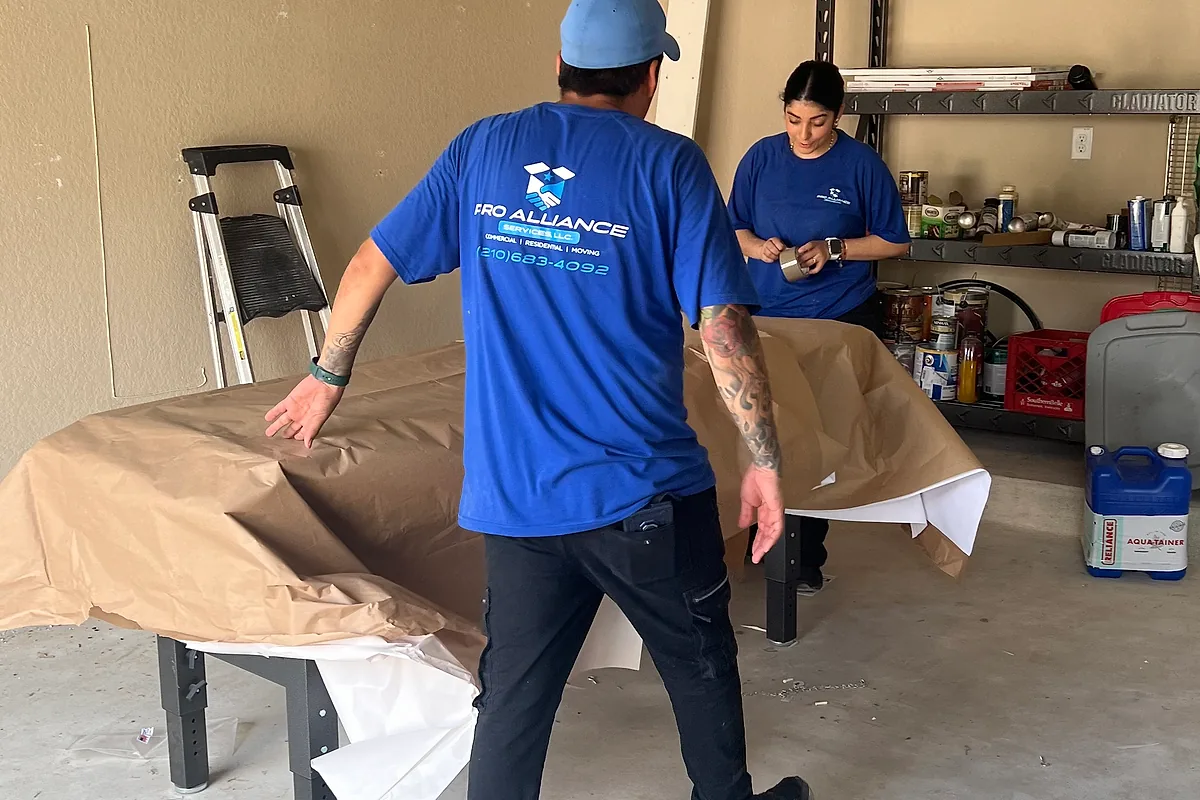
Use labels such as “upper primary bedroom” or “first-floor office.” A label that says only “bedroom” or “office” does not tell the crew which floor it belongs on. Create a separate group for keys, medication, documents, chargers, pet supplies, and the first night. Those items remain with the owner.
Connect garage staging to the truck path
Staging is only useful when the route from the garage to the approved vehicle position stays clear. Walk that route after boxes are arranged. Check door swing, steps, vehicles, trash containers, tools, hoses, landscaping edges, and the turning space needed for two-person carries.
Create three visible zones inside the garage:
- ready to load;
- owner-managed and not for loading;
- decision needed.
Keep labels facing the carrying lane. Do not place a fragile or decision-needed item behind ready-to-load boxes. If the garage door is part of the route, confirm its full opening height and keep controls available to the owner.
Make a move-day communication card
List the property contact, owner contact, mover contact, approved entrance, truck position, and destination room-label system. Keep private codes and credentials outside the card. If the pickup and delivery use different communities or managers, create a separate card for each address.
This simple handoff is especially useful when one person manages pickup and another receives the delivery. Both people should know which decisions they can make and when the owner must be contacted.
Alamo Ranch moving checklist
- Identify the responsible owner, association, landlord, or property manager.
- Obtain current entrance, vehicle, crew, parking, and move-hour instructions.
- Check current Loop 1604, Culebra Road, and final-approach conditions.
- Photograph the approved truck position, driveway, gate, garage, and stairs.
- Measure garage clearance, side gates, doors, and large furniture.
- Keep garage utilities, exits, steps, and walking paths clear.
- Label boxes by destination floor and room.
- Separate owner-managed documents, medicine, keys, devices, and essentials.
- Send the property instructions, access packet, and inventory before final planning.
- Reconfirm access with the property contact near move day.
Where Pro Alliance fits
Send both addresses, the preferred date, the inventory, the requested services, and the current property-access information, and Pro Alliance Services can review the Alamo Ranch request from there. Confirming availability and scope happens against the specific move. Review local moving support or request an estimate with the route, garage, stair, and placement details.
Frequently asked questions
Does every Alamo Ranch property have the same HOA rules?
No. Identify the owner, association, apartment manager, landlord, or other contact responsible for the exact address. Ask for current written instructions instead of relying on another property's rules.
Should I reserve street space for the moving truck?
First determine whether the proposed position is public or private and which authority controls it. A private association cannot authorize public space, and a city process does not replace private property permission.
Is the garage a good place to stage moving boxes?
It can be useful if the owner approves it and utilities, doors, exits, steps, and walking paths stay clear. Keep fragile, high-value, and heat-sensitive items in an appropriate protected location.
How should boxes be labeled for a two-story home?
Use the destination floor and room, plus a handling note where needed. “Upper bedroom 2, fragile” gives the crew clearer placement information than “bedroom.”
Can Pro Alliance review an Alamo Ranch move?
Provide both addresses, the date, inventory, access instructions, route concerns, stairs, garage details, and requested services. Pro Alliance must confirm availability and the specific plan.
Sources
Ready to plan the real move?
Send both addresses, your date, and what you are moving. The team reviews access at each end and comes back with a written estimate.
Prefer to talk it through? Call (210) 683-4092, Mon–Fri 8:00 AM–5:30 PM and Sat–Sun 8:00 AM–4:30 PM.
Keep planning