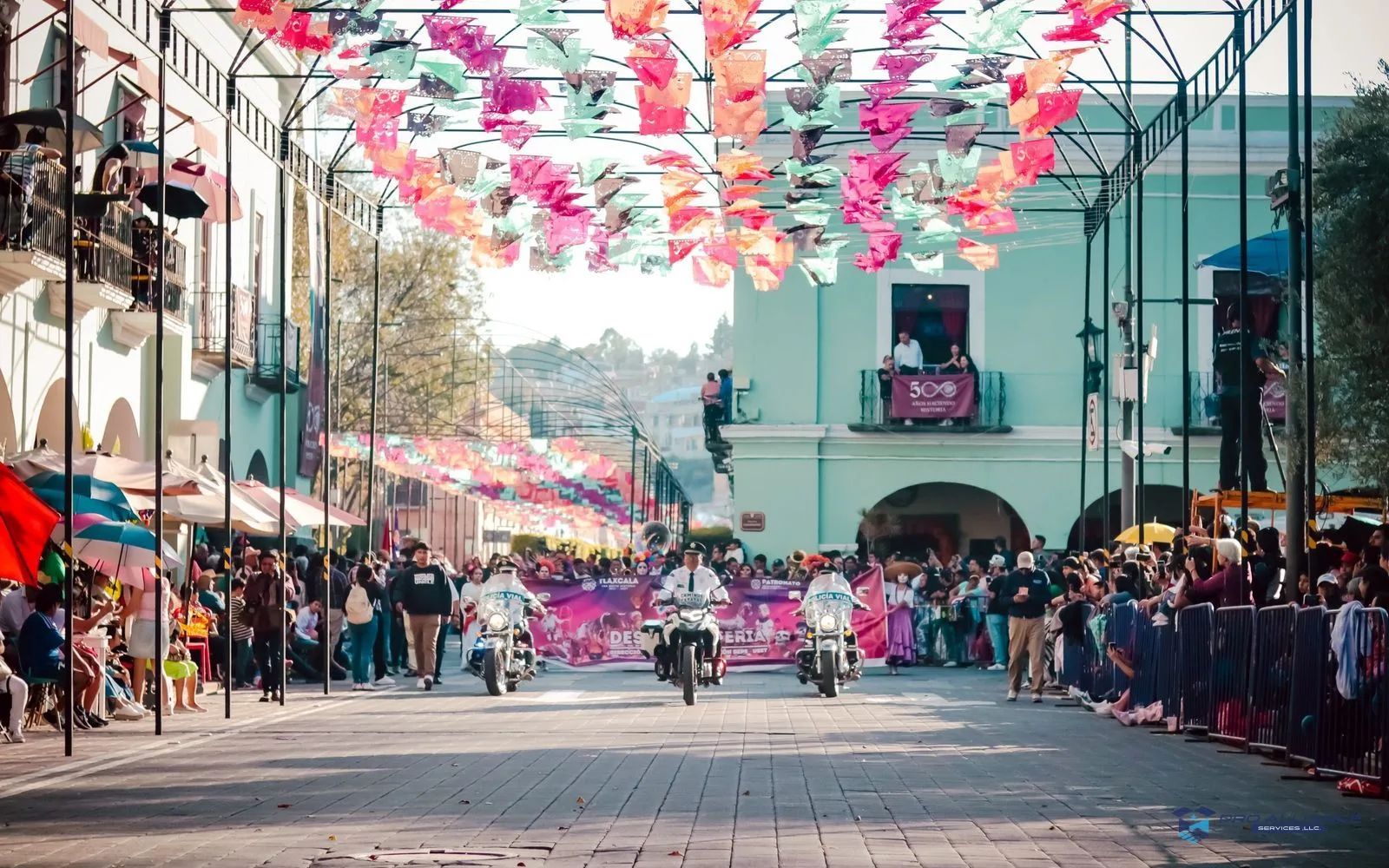
Nobody plans to move during Fiesta. It happens anyway, because a lease ends when it ends, a closing funds when it funds, and April is a popular month to do both. Then the week arrives. The streets around the apartment are closed, the garage where the truck was going to stage is charging event rates, and the crew is looking at a parade route between the loading dock and the highway.
The same thing happens on a smaller scale whenever downtown fills up: a big game at the Alamodome, a River Walk event, a festival at one of the plazas. The move is not impossible on those days. It just has to be planned with the event in the picture, using the same tools the City publishes for visitors.
This guide is that plan. It covers what an event weekend actually does to a move, where to look up the closures before the day, and how to set the timing and staging so the crew is never waiting behind a barricade. It stays out of the general downtown move, which the downtown San Antonio moving checklist owns, and out of elevator and dock booking, which the managed building move guide covers.
Direct answer: An event weekend changes three things about a San Antonio move: which streets are open, where a truck can park, and how long everything takes. Check the City's weekly downtown lane closure report and its Know Before You Go page for the event, then plan the truck's route and staging spot around the closures rather than discovering them. Move the loading to the earliest hours, before crowds and closures build, and tell the mover in advance that the address is inside an event zone so the crew arrives with a route. If the building is close to a parade route or a closed street, the safest move is to shift the date by a day, and the second safest is to start at dawn.
Short answer: how to move on a Fiesta or event weekend in San Antonio
Moving on a Fiesta or big-event weekend in San Antonio works if the plan starts from the City's own closure information. The Public Works Department publishes a weekly downtown lane closure report, and the Center City Development and Operations Department keeps a Know Before You Go page with parking and closure links for major events. Read both the week before, trace the truck's route from the highway to the door, and pick a staging spot that is not on a closed street or in a garage charging event rates. Start early, before the crowds and the closures build. Warn the mover that the address sits inside an event zone. If the building is on or beside a parade route, move the date by a day instead of fighting it.
What an event weekend actually does to a move
Three things change. Streets close, some for the whole event and some only for a parade window. Parking changes: the City suspends its free-parking programs during Fiesta and applies event rates at its garages and lots, and metered spaces near closures disappear with the streets. And everything takes longer, because the crowds that fill downtown arrive on the same roads the truck needs.
The City says so directly on its Know Before You Go Downtown page. Expect heavy traffic on busy event weekends, leave early, plan the route, and enter the parking facility's address rather than the venue's in the navigation app. That advice is written for people attending the event. It applies twice as hard to a truck that needs a curb.
Where to look up the closures
The Public Works Street Closures page is the starting point. It carries the weekly downtown lane closure report, a real-time map of emergency closures, and links to the larger construction projects that close streets for months at a time. The lane closure report is the document to read for a move: it lists what is closed that week for construction and for events, block by block.
The Know Before You Go page adds the event layer: a parking map of City-owned garages and lots, a downloadable list of downtown events and street closures, and a link to sign up for the closure newsletter. Read it once the week before the move and again the morning of, because event closures can be added late.
For the roads outside downtown, the DriveTexas map shows the highway closures and construction that decide how the truck reaches the city in the first place.
Parking and staging on an event day
A moving truck needs a place to stand for hours, close to the door, with room to open the ramp. On an ordinary day that is a curb, a loading zone, or a spot the building assigns. On an event day the curb may be behind a barricade and the loading zone may be inside a closure.
Work the problem in this order. Ask the building what it assigns for moves and whether that spot is affected by the event. If the building cannot help, look at the City's parking map for a garage or lot near the address. A garage has height limits a box truck may not clear, and event rates will apply. Then consider the block behind the building, or the nearest cross street outside the closure, and measure the carry distance from there to the door.
That carry distance is what the estimate has to know. A crew walking an extra block with every load is a different job from a crew parked at the door, and the mover should hear about it before the day, not after. The San Antonio moving access guide covers how to read carry distance the way a crew does.
Timing: start before the city wakes up
Crowds and closures build through the day. The mornings of most event days are quiet, and a crew that arrives at first light can often load a whole apartment before the first barricade goes up. Ask the mover for the earliest start it offers, and be ready with the elevator, the keys, and the parking arranged so the early start is not wasted waiting for the building.
The reverse is also true. A move that starts at noon on a parade day is starting at the worst hour, with the streets at their fullest and the parking at its scarcest. If a morning start is impossible, an evening start after the event clears is sometimes better than a midday one, as long as the building allows it and the crew can work with daylight running out.
If the address sits on the parade route itself, or on a street the closure list shows as closed for the day, none of the timing tricks help. That is the day to move the date. One day in either direction usually clears the closure entirely.
Getting out of the city, and using the City's tools for the family
The truck's problem ends at the highway. The family's problem often does not, because the family is still trying to get across town with a car full of the things that did not go on the truck. The City recommends VIA's park and ride service for events, and VIA's Park and Ride page lists the lots it runs for major downtown events. For the family member who has to be downtown for the handoff while the truck is already gone, it is a reasonable way in and out.
The rest of the plan is the ordinary downtown or apartment move, with an event on top. If the move lands in the fall instead of the spring, the fall and holiday moving guide covers the closures and daylight problems that come with that season.
The event-weekend checklist
- Read the City's weekly downtown lane closure report and the Know Before You Go page the week before the move and again the morning of.
- Trace the truck's route from the highway to the door on the closure map, and find the last open cross street before any closure.
- Ask the building what it assigns for moving trucks on that day and whether the spot is inside an event closure.
- Check the City's parking map for a nearby garage or lot, and confirm the height clearance before assuming a box truck fits.
- Measure the carry distance from the staging spot to the door and give it to the mover before the estimate is final.
- Take the earliest start the mover offers, and have the keys, elevator, and parking ready so the early hours are not lost.
- If the address is on a parade route or a closed street, shift the date by a day rather than fighting the closure.
- Plan the family's own trip downtown separately from the truck, using park and ride if the streets around the venue are closed.
Where Pro Alliance fits
Send both addresses, the date and which event it falls on, a room-by-room inventory, and whatever the building told you about truck parking that day. The team can review the specific move before putting a scope in writing. Start with the free estimate form. Apartment and downtown moves are described on the apartment movers page.
Frequently asked questions
Can I move during Fiesta in San Antonio?
Yes, with a plan. Fiesta closes downtown streets around its events and parades, suspends the City's free-parking programs, and applies event rates at City garages. A move away from the closures, started early, with a staging spot confirmed in advance, works. A move on a parade route on parade day does not, and should shift by a day.
Where do I find out which streets are closed?
The City's Public Works Department publishes a weekly downtown lane closure report and a real-time emergency closure map, and its Know Before You Go page links the event closures and the parking map. Read them the week before and again the morning of the move.
Will a moving truck fit in a downtown garage?
Sometimes. City garages have height limits, and a box truck may not clear them. Ask the building for its assigned moving spot first, then check the garage clearance before planning on it. A cross street outside the closure, with a longer carry, is often the practical answer.
What time should the move start on an event day?
As early as the mover and the building allow. Crowds and closures build through the day, and the first hours are the quiet ones. A midday start on a parade day is the worst option; an evening start after the event clears is sometimes the second best.
Does an event change the estimate?
It can, if the staging spot is farther from the door than on an ordinary day. Carry distance is part of what an estimate is built on, so tell the mover where the truck will actually stand and how far the crew will walk. An estimate built on the real staging plan will hold up; one built on an ordinary day's curb will not.
Sources
Ready to plan the real move?
Send both addresses, your date, and what you are moving. The team reviews access at each end and comes back with a written estimate.
Prefer to talk it through? Call (210) 683-4092, Mon–Fri 8:00 AM–5:30 PM and Sat–Sun 8:00 AM–4:30 PM.
Keep planning