There is a category of work that is not a move and gets treated like one anyway.
Furniture arrives flat packed and nobody in the household wants to spend a Saturday with an allen key. An office takes delivery of thirty desks that have to become thirty working workstations before Monday. A household has already moved and the beds, the dining table, and the shelving all need putting back together at the other end.
None of that involves a truck going between two addresses. All of it involves the same skills, and it gets quoted differently.
Direct answer: Installation work is quoted from three things: how many items, what kind, and what the space is like. Send the manufacturer and model or a link for each item, the quantity, the room each one goes in, and whether anything needs fixing to a wall. Then say what access looks like, because a commercial install with a delivery window and a freight elevator is a different job from a bedroom set in a house. Assembly time varies enormously between products, so the item list matters more here than in almost any other kind of job.
Short answer: what furniture installation covers
It covers building furniture that arrives unassembled, reassembling furniture that was taken apart for a move, and installing systems furniture such as office workstations and shelving. It is separate from a move because there is no transport leg and no inventory to load, so it is scoped by item count and item type rather than by volume. The variables are how many pieces, how complex each one is, whether anything anchors to a wall, and what the access and working conditions are. A list with manufacturers and models is worth more than any description of the amount of furniture.
Flat-pack assembly at home
The scope question here is entirely about the item list. A six-drawer dresser and a wardrobe from the same manufacturer can differ by hours, and two products that look similar can differ by more than that.
So send the specifics: manufacturer, model or product name, quantity, and which room each goes in. A link to the product page is the fastest way to communicate all of that at once.
Two things to flag separately. Anything that has to be anchored to a wall, which most tall furniture should be, because that changes what is needed and depends on the wall construction. And anything already partly built, because a half-assembled item sometimes takes longer than a boxed one.
Reassembly after a move
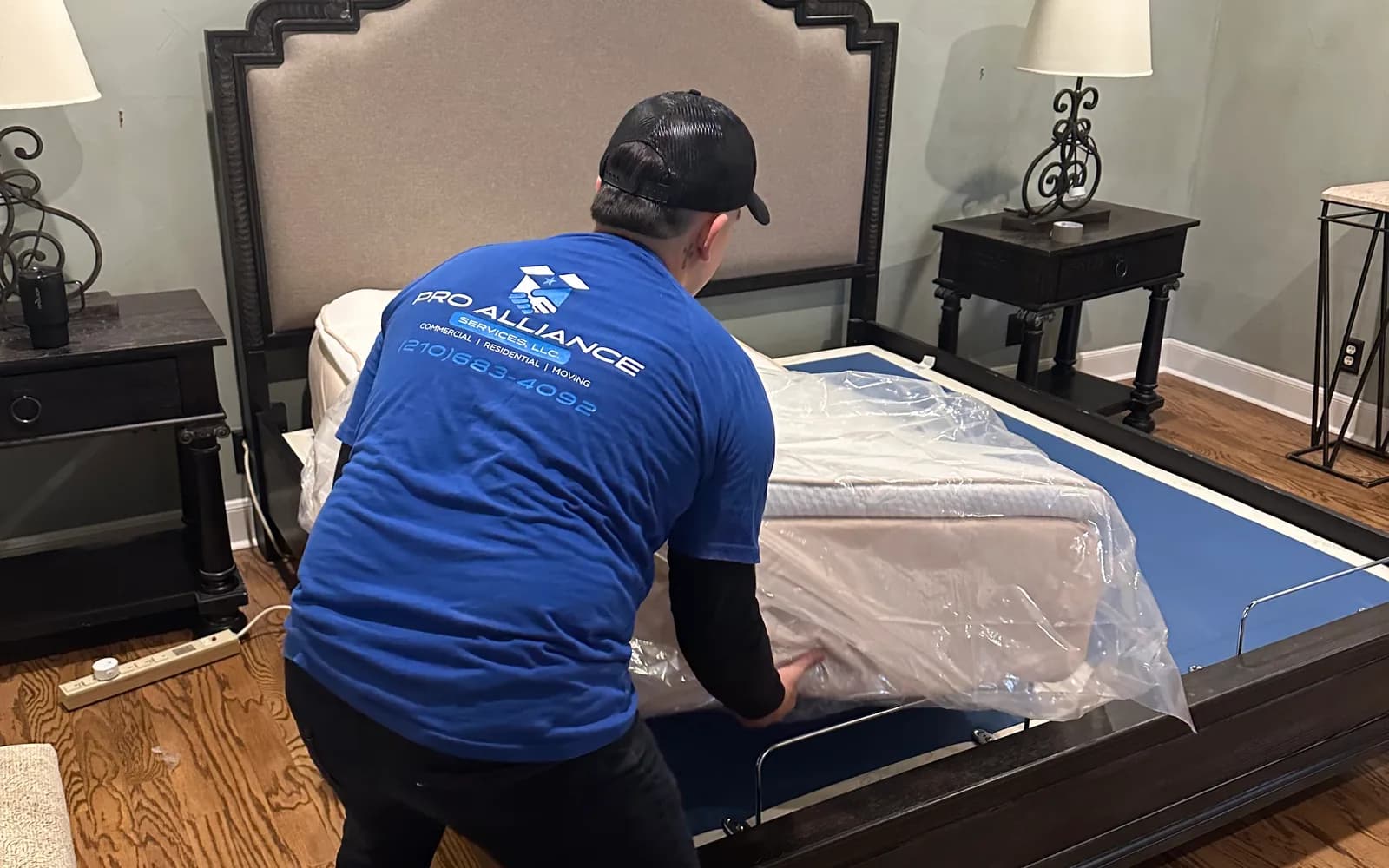
Standard disassembly and reassembly of items like bed frames, table legs, and mirrors attached to dressers is part of a normal move rather than a separate service. Where this becomes its own job is when the move already happened, or when the reassembly is much larger than the transport, or when it is happening on a different date from the move.
The thing that decides how smoothly reassembly goes is what happened to the hardware. Bagged, labeled, and taped to the piece it came from is the difference between an hour and an afternoon. If your furniture was disassembled by someone else and the hardware is in one communal box, say so, because it changes the estimate honestly rather than at the end.

Office and systems furniture
Commercial installs are a scheduling job as much as a build job.
Workstation systems, benching, and modular shelving come with their own hardware, their own sequence, and often their own layout drawing, and the layout drawing is the single most useful thing you can provide. Without it the crew is guessing at panel orientation and power routing, which is the sort of guess that gets discovered on Monday morning.
The access questions are the same ones any commercial job has: dock and freight elevator availability, permitted working hours, after-hours security arrangements, and the property's certificate of insurance requirement. Those come from the building, not from the furniture vendor. The Austin office move planning guide covers that side in more detail.
Where a delivery vehicle needs the street rather than a dock, Austin Transportation and Public Works is the authority inside the city.
What to check before the crew leaves
Installation is one of the few jobs where a five-minute walkthrough at the end genuinely matters.
Open and close every drawer and door. Check that anything meant to be anchored actually is. Check that adjustable feet are set and the piece is not rocking. On a desk or table, check the surface is level rather than assuming. On systems furniture, check that power and data routing matches the drawing.
Anything wrong is quick to fix while the crew and the tools are still there, and slow to fix afterward.
Packaging and waste
A large install generates a surprising amount of cardboard, polystyrene, and plastic strapping, and it will fill a normal bin several times over. Decide in advance whether the crew takes it away or whether you are handling it, and if you are handling it, check the city's guidance through Austin Resource Recovery for what goes where. On a commercial site the property may have its own rules about what can go in the building's waste stream.
The installation scope checklist
- List every item with manufacturer, model or product name, and quantity.
- Note which room or zone each item goes in.
- Flag anything that must be anchored to a wall, and say what the wall is made of.
- Say whether any item is already partly assembled.
- For a reassembly job, say whether the hardware is bagged and labeled by piece.
- Provide the layout drawing for any systems or workstation furniture.
- Confirm building access, working hours, and any insurance requirement for a commercial site.
- Decide who removes the packaging waste and confirm where it can go.
- Allow time for a walkthrough with the crew before they leave.
Where this sits in the wider batch
The Austin moving services guide covers how installation fits alongside the other services. If the furniture also has to be transported, see the Austin furniture and single-item moves guide. For a full office relocation, see the Austin office move planning guide.
Where Pro Alliance fits
Send the item list with manufacturers and models, the room or zone for each, any layout drawing, and the access details for the site. See the furniture installation page or the furniture moving page, then use the free estimate form.
Frequently asked questions
Is assembly included in a normal move?
Standard disassembly and reassembly of things like bed frames and table legs is part of a normal move. Larger builds, installs on a separate date, or systems furniture are scoped separately.
What do you need from me to quote an assembly job?
An item list with manufacturer and model or a product link, the quantity, and the room each item goes in. Assembly time varies enormously between products, so the list matters more than a general description.
Can you anchor furniture to the wall?
Flag anything that needs anchoring when you request the estimate and say what the wall is built from, since that determines what fixings are appropriate and whether it is straightforward.
Do you install office workstations?
Yes. Send the layout drawing along with the item list, plus the building's dock, elevator, working hours, and insurance requirements, since those usually set the schedule.
Who takes away the packaging?
Decide that in advance. A large install produces far more cardboard and plastic than a normal bin holds, and on a commercial site the property may restrict what goes into the building's waste stream.
Sources
Ready to plan the real move?
Send both addresses, your date, and what you are moving. The team reviews access at each end and comes back with a written estimate.
Prefer to talk it through? Call (210) 683-4092, Mon–Fri 8:00 AM–5:30 PM and Sat–Sun 8:00 AM–4:30 PM.
Keep planning