The move into a senior living community is usually organized by someone who does not live in either home. An adult child, often from another city, coordinates a parent's move from a house they have lived in for decades into an apartment with one bedroom, a small kitchen, and a set of rules written by the community.
It is a small move by inventory and a large one by everything else. The community has a move-in window and paperwork for the mover. The apartment has dimensions that decide what comes and what does not. The parent has opinions, some medical equipment, medications that cannot ride in a box on a truck, and a strong preference that the day not feel like an eviction.
This guide is for the person coordinating. It covers what the community's move-in rules usually contain, how to fit a lifetime into the floor plan, the things the family handles rather than the mover, and how the day itself runs across two addresses. The sorting of the family home, which is the longer project, has its own guide: the downsizing playbook covers that, and this page starts where it ends.
Direct answer: Plan a move into a senior living community in this order. Get the community's move-in rules in writing first, because they set the day: the move-in hours, the elevator reservation, the certificate of insurance the mover must provide, and the loading area. Then measure the apartment and choose what comes by fitting the floor plan, not by sentiment, and plan the rest of the household as a separate downsizing project. Keep medications, documents, and medical equipment with the family rather than on the truck. Book the mover for a two-address day, with the community's window as the fixed point and the family home as the flexible one. Send the community's requirements to the mover before the estimate is written.
Short answer: how to move a parent into a senior living community in San Antonio
Start with the community's own move-in rules, which usually cover the hours moves are allowed, the elevator or entrance reserved for them, the certificate of insurance the mover has to send, and where the truck may park. Then measure the apartment and choose the furniture that fits the floor plan, planning the rest of the household as a separate downsizing project. Keep medications, documents, valuables, and medical equipment with the family rather than on the truck. Book the mover for a day with two addresses, treating the community's window as fixed and the family home as flexible. Send the community's requirements to the mover before the estimate is written so the scope includes them.
What a senior living community is, and why its rules matter
In Texas, assisted living facilities are licensed by the Health and Human Services Commission. The state's assisted living page describes them as individualized health and personal care assistance in a homelike setting, in buildings that range from large apartment-like settings to private residences. The licensing framework sits in Chapter 247 of the Texas Health and Safety Code. Independent living communities are a different arrangement, closer to an apartment lease with services attached, and they are not licensed the same way.
For the move, the distinction matters less than the building. Both kinds of community run as managed buildings with residents who need quiet hallways and working elevators, so both tend to have written move-in rules. Those rules are the first document to request, and the mover needs a copy.
The move-in rules, and what to ask for
Move-in rules vary by community, and the questions that surface the important ones are simple. What hours are moves allowed, and which days? Is there an elevator reserved for moves, and does it need to be booked? Does the community require a certificate of insurance from the mover, and to whom is it addressed? Where does the truck park, and is there a loading entrance separate from the front door? Is there a limit on how many moves happen on one day?
Get the answers in writing and pass them to the mover before the estimate is written. A certificate of insurance in particular takes time to produce and has to name the right entity. The managed building move guide covers how that works in any building with a management office, and the same process applies here.
Fitting a lifetime into the floor plan
The apartment is smaller than the house, and no amount of careful packing changes that. What changes the outcome is choosing by the floor plan instead of by feeling. Get the apartment's dimensions from the community, or measure it on a visit, and draw the furniture in before deciding anything. The bed, one chair the parent actually sits in, the dresser, a table, and the pieces that make the room recognizable as theirs. Then stop.
Everything that does not fit has a destination, and choosing those destinations is the downsizing project covered on its own page: family claims, donation, and disposal, in rounds, with the people who have a say. The pieces going to relatives across town are small separate deliveries, and the single item and small furniture moves page describes how those run.
One practical point families miss: the parent should see the plan. A drawn floor plan with their furniture in it does more to settle the day than any reassurance, because it shows the room will be theirs.
What the family handles, not the mover
Some things should never be on the truck. Medications, in their containers, travel with the family in a bag that is never out of sight, and the first doses at the new apartment should be planned before the move. Medical equipment that the parent uses daily, a walker, an oxygen concentrator, a lift chair, moves with the family or as the very first thing off the truck. Tell the community what is coming so it can be placed correctly.
Documents, jewelry, and anything irreplaceable ride in the family's car. So does a small first-night kit: bedding for the first night, the coffee maker, the television remote, the photographs that go on the nightstand, and whatever makes the first evening feel like home instead of a hotel.
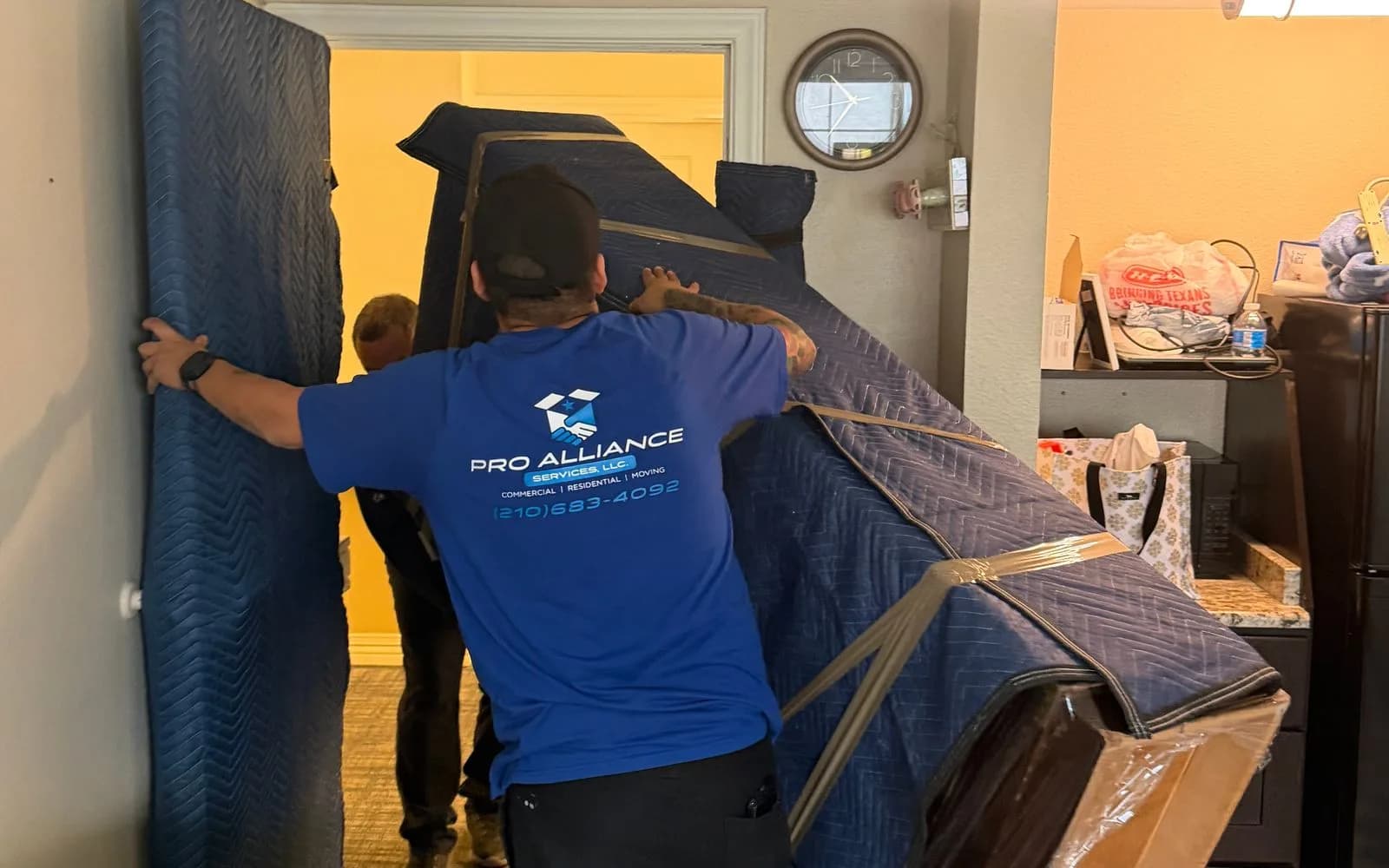
None of this is a mover's job, and a good mover will say so. The mover's job is the furniture and the boxes, done in the community's window, with the protection the building requires.
The two-address day
The day has a fixed point and a flexible one. The community's move-in window is fixed, because it was reserved and other residents depend on it. The family home is flexible, because it will still be there tomorrow. Plan the day backward from the window: the truck should arrive at the community with time to spare, which means it loads at the house earlier than feels necessary.
The parent does not have to watch the house being emptied. Many families arrange for the parent to arrive at the community when the furniture is in place and the bed is made, so the first sight of the apartment is a finished room. That takes a family member at each address and a mover who knows the plan, which is why the plan should be written down and shared.
If the move falls in the winter, the fall and holiday moving guide covers the closures and daylight problems that come with the season, and communities often restrict moves around the holidays for their residents' sake.
Hiring the mover for this move
The vetting is the same as for any move, with the community's requirements added to the brief. The mover should be registered with the Texas Department of Motor Vehicles, whose consumer protection pages explain what a registered mover owes you. The estimate should be in writing from an inventory the mover has seen, which the federal Protect Your Move guidance treats as the baseline for any move.
- Request the community's written move-in rules first, including hours, elevator booking, insurance certificate, and truck parking.
- Send those rules to the mover before the estimate is written so the scope includes the certificate and the window.
- Get the apartment's dimensions and draw the furniture in before deciding what comes, then show the parent the plan.
- Plan the rest of the household as a separate downsizing project with its own calendar and its own destinations.
- Keep medications, medical equipment, documents, and valuables with the family, never on the truck.
- Pack a first-night kit that makes the apartment feel lived in the moment the parent walks through the door.
- Plan the day backward from the community's move-in window, loading at the house earlier than feels necessary.
- Put a family member at each address, and arrange for the parent to arrive once the room is set up if that suits them.
- Confirm the mover's TxDMV registration and get the estimate in writing from an inventory the mover has seen.
Where Pro Alliance fits
Send the community's name and its written move-in rules, the family home's address, a list of the furniture that is coming and where the rest is going, and the dates. The team can review the specific move before putting a scope in writing. Start with the free estimate form. Household moves are described on the residential movers page.
Frequently asked questions
What do senior living communities usually require from a mover?
Most have written move-in rules covering the hours moves are allowed, an elevator or entrance reserved for moves, a certificate of insurance from the mover, and where the truck may park. Ask for the rules in writing and send them to the mover before the estimate.
How do I decide what furniture comes?
By the floor plan. Get the apartment's dimensions, draw the furniture in, and keep what fits and what makes the room recognizably the parent's own. Everything else is a downsizing decision with its own destinations, made in rounds with the family.
Should medications and medical equipment go on the truck?
No. Medications travel with the family in a bag that stays in sight, with the first doses at the new apartment planned in advance. Daily medical equipment travels with the family or comes off the truck first, and the community should know it is coming.
Does my parent need to be there while the house is emptied?
Not necessarily. Many families arrange for the parent to arrive at the community once the furniture is placed and the bed is made, so the first sight of the apartment is a finished room. That takes a family member at each address and a written plan the mover has seen.
Is a move into assisted living different from a move into independent living?
For the mover, not much. Both are managed buildings with residents who need working elevators and quiet hallways, and both tend to have written move-in rules. Assisted living facilities are licensed by Texas Health and Human Services; independent living is closer to a lease with services attached. The building's rules decide the day either way.
Sources
Ready to plan the real move?
Send both addresses, your date, and what you are moving. The team reviews access at each end and comes back with a written estimate.
Prefer to talk it through? Call (210) 683-4092, Mon–Fri 8:00 AM–5:30 PM and Sat–Sun 8:00 AM–4:30 PM.
Keep planning