Cedar Park is one of the more straightforward places in the metro to run a move, which makes the two things that do go wrong worth knowing about.
The first is routing. Almost everything here hangs off US 183 and the 183A toll lanes, and for a loaded truck the faster road is not automatically the cheaper or even the quicker one. The second is street geometry. Subdivisions built in the last twenty five years were laid out around cars, and a cul-de-sac that comfortably holds six vehicles does not necessarily let a thirty-foot truck turn around.
Neither is a real obstacle. Both are worth answering before somebody quotes your move.
Direct answer: Cedar Park moves come down to three checks. Whether a full-size truck can enter your street and turn around, particularly in a cul-de-sac or a narrow lane. Whether the practical loading path is through the garage rather than the front door, which is common in newer builds here and changes where floor protection goes. And which route the loaded truck should take, since 183A tolls by axle and the frontage road is sometimes the better call. Photograph your street and driveway, note which entry the crew should use, and send both with the inventory.
Short answer: what to check before a Cedar Park move
Photograph your street from the direction a truck would approach, your driveway, and the entry the crew will use. If you are on a cul-de-sac or a narrow lane, note whether a long vehicle could turn around or would have to reverse out. Decide whether loading runs through the garage or the front door, because garage-forward designs are common here and the protection plan differs. Then flag the route: 183A saves time at some hours and costs axle-based tolls, while RM 1431 through Whitestone backs up around school pickup. Send all of that with a room-by-room inventory.
Toll or frontage, and why it is a real decision
The 183A lanes run the length of Cedar Park and are operated by the Central Texas Regional Mobility Authority. For a car the decision is trivial. For a loaded moving truck it is not, because tolls are charged by axle class and a heavy vehicle accelerates more slowly, which reduces the time saved.
The right answer depends on the hour, the origin, and the destination, and it is a decision worth making rather than defaulting. Current construction across the district is published by TxDOT, which occasionally changes the calculation on the free route.
The other recurring timing problem is RM 1431, known locally as Whitestone Boulevard, which carries most of the east to west traffic and congests around school arrival and dismissal. If the destination is on the far side of it, that is worth building into the arrival window.
Cul-de-sacs, lane widths, and turnarounds
Cypress Canyon, Ranch at Brushy Creek, Bella Vista, and Silverado West were all planned with residential traffic in mind, and the streets reflect that. Lane widths are modest, parked cars narrow them further, and cul-de-sac bulbs are sized for turning a car rather than a box truck.
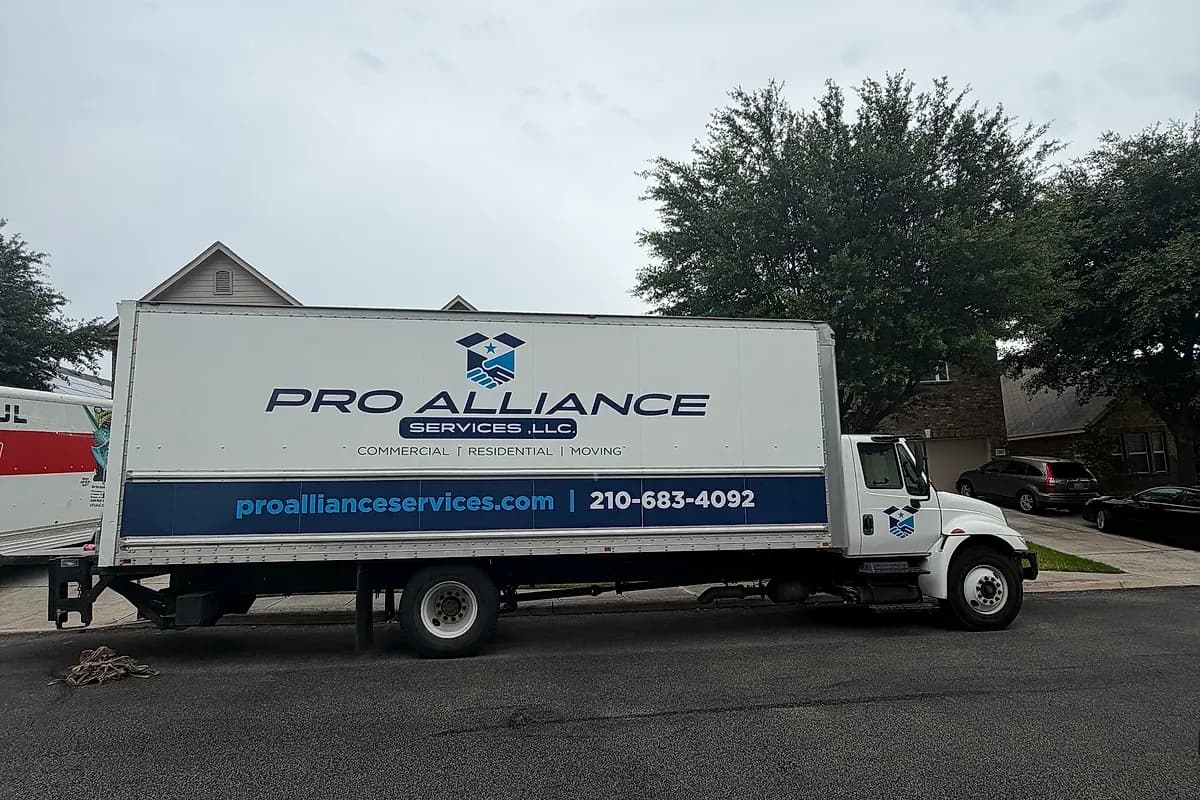
What that means practically: sometimes the truck parks at the mouth of the cul-de-sac and the crew carries. Sometimes a shorter vehicle with more trips is the better plan. Occasionally the driveway itself works. All three are fine, and all three cost different amounts of time, which is exactly why it belongs in the quote rather than in the day.
A photograph of your street taken from the nearest through road answers this faster than any description.
Garage-forward houses change the carry route
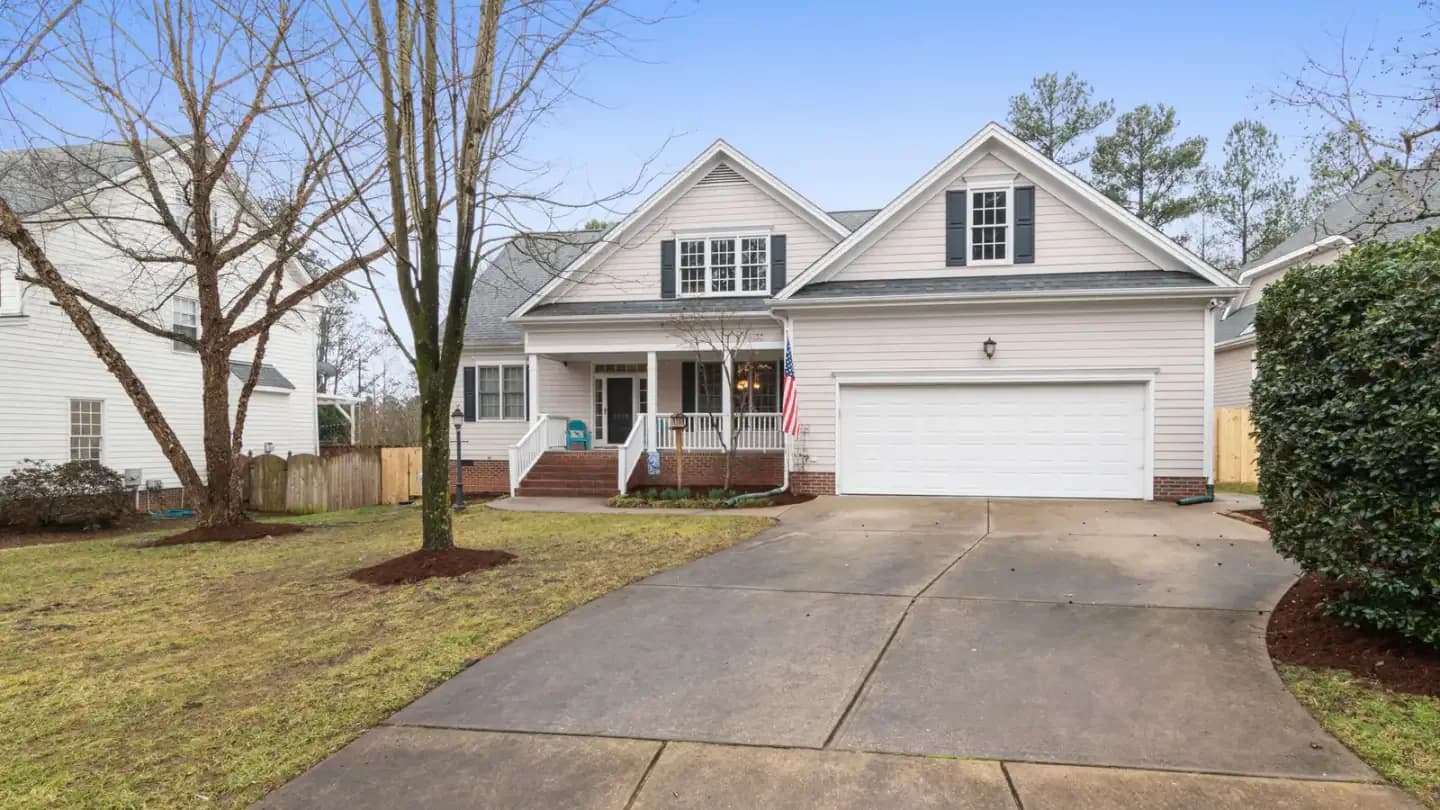
A lot of Cedar Park's housing stock puts the garage at the front of the house, closest to the street, with the front door set back behind a walk. That makes the garage the shortest route in, and for a move that is usually the right call.
It also changes the protection plan. Loading through a garage means a different floor surface, a step up into the house, and often a turn immediately inside that a front-door route would not have. Tell the mover which entry you expect to use, and if it is the garage, mention the step and whether the interior door opens into a hallway or a room.

Older Cedar Park
Not all of it is new. Buttercup Creek and Anderson Mill West have more mature trees and tighter curb clearance, and the houses there are more likely to have entry steps and narrower doors than the newer sections. If your address is in one of those, treat it more like the South Austin checklist: measure the doorway and the tightest turn, and look up before assuming the truck can park at the curb.
Streets and drainage in the city are handled by Cedar Park Public Works, and roads outside the city limit fall to Williamson County Road and Bridge.
The Cedar Park pre-move checklist
- Photograph your street from the direction a truck would approach it.
- Photograph the driveway and the entry the crew will use.
- Note whether a long vehicle can turn around on your street or must reverse out.
- Decide whether loading runs through the garage or the front door, and say which.
- If loading through the garage, note the step up into the house and the turn just inside.
- Measure the narrowest door on the route and the tightest interior turn.
- Check whether your subdivision association restricts commercial vehicle parking or hours.
- Flag your preferred arrival time so the 183A and RM 1431 decision can be made sensibly.
Where this sits in the wider metro
The Austin metro moving access guide covers the questions that apply everywhere. Along the same corridor, Leander sits directly north and deals with newer construction still, while Round Rock and Georgetown cover the I-35 side.
Where Pro Alliance fits
Send both addresses, your date, a room-by-room inventory, and photos of the street, driveway, and entry. The team confirms whether a full-size truck can reach the house and prepares a written estimate for the real carry. See the Cedar Park movers page or the Austin movers page, then use the free estimate form.
Frequently asked questions
Can a full-size moving truck get into my cul-de-sac?
Usually, but not always, and reversing a long vehicle out of a narrow bulb is slow. Send a photo taken from the nearest through road and the team will confirm whether the truck comes in or stages at the mouth.
Should the crew load through the garage or the front door?
Whichever gives the shorter, straighter route, which in most newer Cedar Park homes is the garage. Tell the mover which you expect so the floor protection is laid in the right place before anything moves.
Do you use the 183A toll lanes?
When the route calls for it. Tolls are charged by axle, so the decision is made deliberately for each move rather than defaulting to the fastest line on a map.
Do you move apartments in Cedar Park?
Yes. Apartment moves are planned around the property's loading area, any elevator, and the hours management allows. Send the community's move-in packet if one was issued.
What if my subdivision has rules about moving trucks?
Send them with the quote request. Association guidance on entrances, parking, and permitted hours is built into the plan rather than discovered on the day.
Sources
Ready to plan the real move?
Send both addresses, your date, and what you are moving. The team reviews access at each end and comes back with a written estimate.
Prefer to talk it through? Call (210) 683-4092, Mon–Fri 8:00 AM–5:30 PM and Sat–Sun 8:00 AM–4:30 PM.
Keep planning