Most people hire movers by collecting three quotes and picking the one in the middle. That method rewards whoever writes the most confident email, whether or not a real company with a real truck stands behind it.
San Antonio has plenty of legitimate movers. It also has phone-only operations that quote low, collect a deposit, and stop answering once your furniture is on their truck. The difference between the two is visible before you pay anything, but only if you check in the right order.
This guide is that order. Registration first, then the estimate, then valuation, then a fixed set of questions, then the broker patterns that should end a conversation. Where a deeper guide exists for a step, this page links it rather than repeating it.
Direct answer: Hire movers in San Antonio in this order. Confirm the company's TxDMV registration, and its USDOT and MC numbers if the move crosses state lines. Get a written estimate built from an inventory the company has actually seen. Choose a valuation level in writing before moving day. Ask every company the same set of questions so the answers compare. Then walk away from broker patterns such as firm quotes given sight unseen and demands for a large deposit. Checked in that order, a bad operator usually fails at the first or second step, before any of your money is at risk.
Short answer: how to hire movers in San Antonio
Start with registration. Movers working within Texas must be registered with TxDMV, and interstate carriers hold USDOT and MC numbers, all searchable in public registries. Then ask for a written estimate based on an inventory the company has seen in person or in photos, and read what it includes. Settle valuation, the coverage level that applies if something is damaged, in writing before moving day. Ask every company the same questions so the answers compare cleanly. Finally, watch for broker patterns: a firm phone quote without seeing your home, a large deposit demand, a generic phone greeting. Any one of those is a reason to keep looking, however good the number sounds.
Check the registration before anything else
Movers operating within Texas must be registered with the Texas Department of Motor Vehicles, and the registrations are public. Carriers that cross state lines also hold USDOT and MC numbers in federal registries. A company that hesitates when you ask for its numbers has answered your real question already.
The state explains what to check on its Don't Make a Move Without Us page, and the registry itself is searchable through the TxDMV motor carrier search. What each field means, and what a suspended or revoked status looks like, is covered step by step in the guide to verifying a licensed moving company in Texas. Treat that lookup as the first gate. Nothing else in this sequence matters if a company fails it.
One detail deserves its own sentence: confirm that the legal name and address in the registry match what the company told you. Federal consumer guidance warns about operators who change names to shed complaint histories, and the mismatch is often the only visible trace.
Read the estimate as a document, not a number
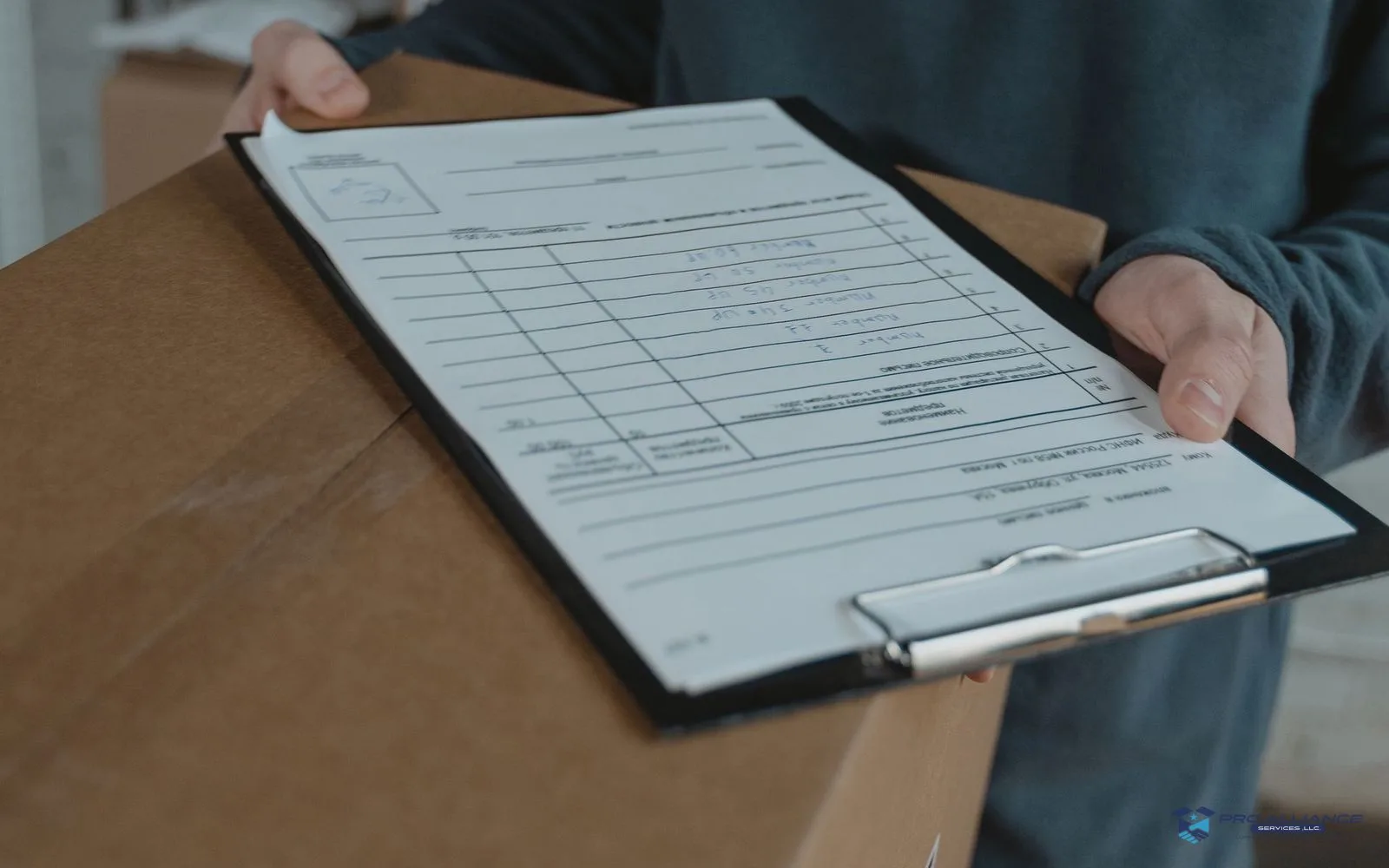
An estimate is only comparable when it was built the same way as the others on your desk. That means the company saw your inventory, in person or through photos, and put the result in writing with the covered services spelled out.
A number given over the phone after two questions is not an estimate. It is an opening position, and the federal Protect Your Move guidance treats sight-unseen pricing as a warning sign on its own. Before comparing bids, read what each one includes and what it lists as an extra: stairs, long carries, disassembly, packing materials.
What actually happens between requesting an estimate and receiving the number, and what the estimator needs to see, is a subject of its own. The guide to what a moving estimate involves in Texas walks through the whole process.
Settle valuation before you sign
Valuation is the coverage level that applies if something is damaged during the move. It is not an insurance policy, and the difference between the two levels movers offer decides what a claim is actually worth. The choice belongs in writing before moving day, not in a conversation on the truck ramp.
Most people skip this step because the words sound like paperwork. It is the step most worth slowing down for. The plain-language guide to moving valuation coverage in Texas explains the two levels and how to choose between them.
Ask every company the same questions
By this point you have two or three companies that pass the registration check and quote from a real inventory. The way to separate them is a fixed script, asked in the same order, with the answers written down.
The full script is the twelve questions to ask movers before booking, along with notes on what a good answer sounds like for each one. The short version: ask who actually does the work, what could change the number, how claims are handled, and what happens if your dates move. Companies comfortable with those questions tend to be comfortable being checked, and that is the trait you are hiring.
Broker patterns that should end the conversation
A carrier owns trucks and employs the crew that handles your goods. A broker sells the job onward to a carrier you never vetted. Brokers are legal, but you should know which one you are talking to, and some operations work hard to blur the line.
Certain patterns come up often enough that the FTC's consumer alert on moving scams lists them plainly: a firm price without anyone looking at your goods, a demand for a large deposit before the job, a phone answered with a generic greeting instead of a company name, or no verifiable address behind the website. None of these proves fraud on its own. Each is a reason to slow down, and two together are a reason to stop.
The hiring checklist

Here is the whole sequence as a list you can work through in an afternoon.
- Ask each company for its TxDMV number, and for its USDOT and MC numbers if your move leaves Texas.
- Search those numbers in the public registries and confirm the legal name, address, and active status match what you were told.
- Ask directly whether the company is the carrier that will perform the work or a broker who will pass it on.
- Provide a room-by-room inventory, then get every estimate in writing from a company that has seen it.
- Read each estimate for what it includes and what it treats as an extra before comparing any totals.
- Choose a valuation level and get the choice recorded in writing before moving day.
- Put the same questions to every company in the same order and keep notes on the answers.
- Treat pressure to commit today, or to hand over a large deposit, as information about the company rather than about your move.
Where Pro Alliance fits
Run this sequence on Pro Alliance the same way you would on anyone else; the registration numbers are published on the site, and every estimate starts from your inventory. Send both addresses, a room-by-room list of what is moving, and your preferred dates through the free estimate form so the team can review the specific move before putting a number in writing. The local service itself is described on the San Antonio local movers page.
Frequently asked questions
Do all movers in Texas need to be registered?
Household goods movers operating for hire within Texas must be registered with TxDMV, and movers that cross state lines must also hold federal registration. The records are public, so any company you talk to can be checked against the record it claims.
Someone with a pickup helping for cash is not a registered mover, and that matters the moment something is damaged or goes missing. Registration is what connects a company to a complaint process.
What is the difference between a carrier and a broker?
A carrier operates the trucks and crews that physically perform moves. A broker arranges moves and sells them to carriers. Hiring a broker means the company that shows up is one you never vetted, so if you do use one, vet the assigned carrier the same way you would vet anyone.
Is the lowest quote always a bad sign?
No. A low quote from a registered carrier that saw your inventory and put the scope in writing is a competitive bid. A low quote from a phone-only operation that saw nothing is bait, because the number can change once your goods are loaded. Where the quote came from matters more than where it ranks.
What should a written estimate include?
The services covered, the inventory it was based on, anything treated as an extra, the valuation choice, and the payment terms. A document that is one line with a total is a number rather than an estimate, and it will not protect you in a dispute.
Can I check a mover's complaint history?
Registration records show a company's current status, and federal databases carry safety and complaint information for interstate carriers. Checking takes a few minutes. Search the exact legal name from the registry rather than the brand name on the website, since the two do not always match.
Sources
Ready to plan the real move?
Send both addresses, your date, and what you are moving. The team reviews access at each end and comes back with a written estimate.
Prefer to talk it through? Call (210) 683-4092, Mon–Fri 8:00 AM–5:30 PM and Sat–Sun 8:00 AM–4:30 PM.
Keep planning