San Antonio's moving season and its hottest months are the same months. Lease cycles and school calendars push most household moves into June through September, and the weather does not adjust for either. Whoever is carrying furniture in August is doing it in serious heat, and pretending otherwise is the most common summer planning mistake.
The heat does not make a summer move a bad idea. It makes an unplanned summer move a bad idea. Start time, water, pacing, what rides in the cargo box, and where the kids and the dog spend the day are all decisions. Every one of them is easier made a week out than at noon on the driveway.
Direct answer: Plan a June through September move around the forecast and the clock. Check the National Weather Service forecast for your date, arrange the earliest start you can, and treat the afternoon as the wind-down rather than the main event. Keep water on the loading path and take breaks in shade or air conditioning before anyone needs one. Pull candles, electronics, and medications out of the load, because a closed cargo box parked in the sun runs far hotter than the air outside. Send children and pets somewhere cool for the day. If the plan is a rental truck and your own labor, price what the heat changes before committing.
Short answer: how to move in San Antonio between June and September
Book the earliest start you can get, because the heavy lifting should be finished before the hottest part of the afternoon. Watch the National Weather Service forecast for the metro in the week before your date and know whether a heat advisory is in effect. Stage water where people are walking, plan breaks in shade or indoors, and slow the pace on purpose. Load candles, electronics, houseplants, and medications last, or better, carry them in your own air conditioned car, since a parked cargo box heats well past the outdoor temperature. Arrange a cool place for children and pets away from the propped-open front door. Start electric service at the new address ahead of the move so the cooling works on arrival.
The crowded season problem
Summer is when the metro moves. Families schedule around the school year, leases turn over, and closings cluster in the same months. The practical consequence is that summer dates, and summer weekend dates in particular, are claimed earlier than anything else on the moving calendar, across the whole industry.
If your date is still flexible, the tradeoffs are covered in the guide to the best time to move in San Antonio. If your date is already fixed in July, this article is about executing it well.
Start early and read the forecast
The shape of a Texas summer day is consistent. The coolest hours sit around sunrise, and the peak arrives in the middle of the afternoon. A move planned around that shape does the stairs, the ramp, and the heaviest pieces first, then spends the hottest hours on light boxes, cleanup, and the drive.
Ask for the earliest start on offer when you book, whoever you book. Then watch the weather. The National Weather Service Austin/San Antonio office publishes the local forecast and any heat advisories for the metro; check it when your date is a week out and again the day before. The NWS heat safety pages are blunt about the reason: heat is among the deadliest weather hazards in the country, and it does its damage quietly.
What heat does inside a parked truck
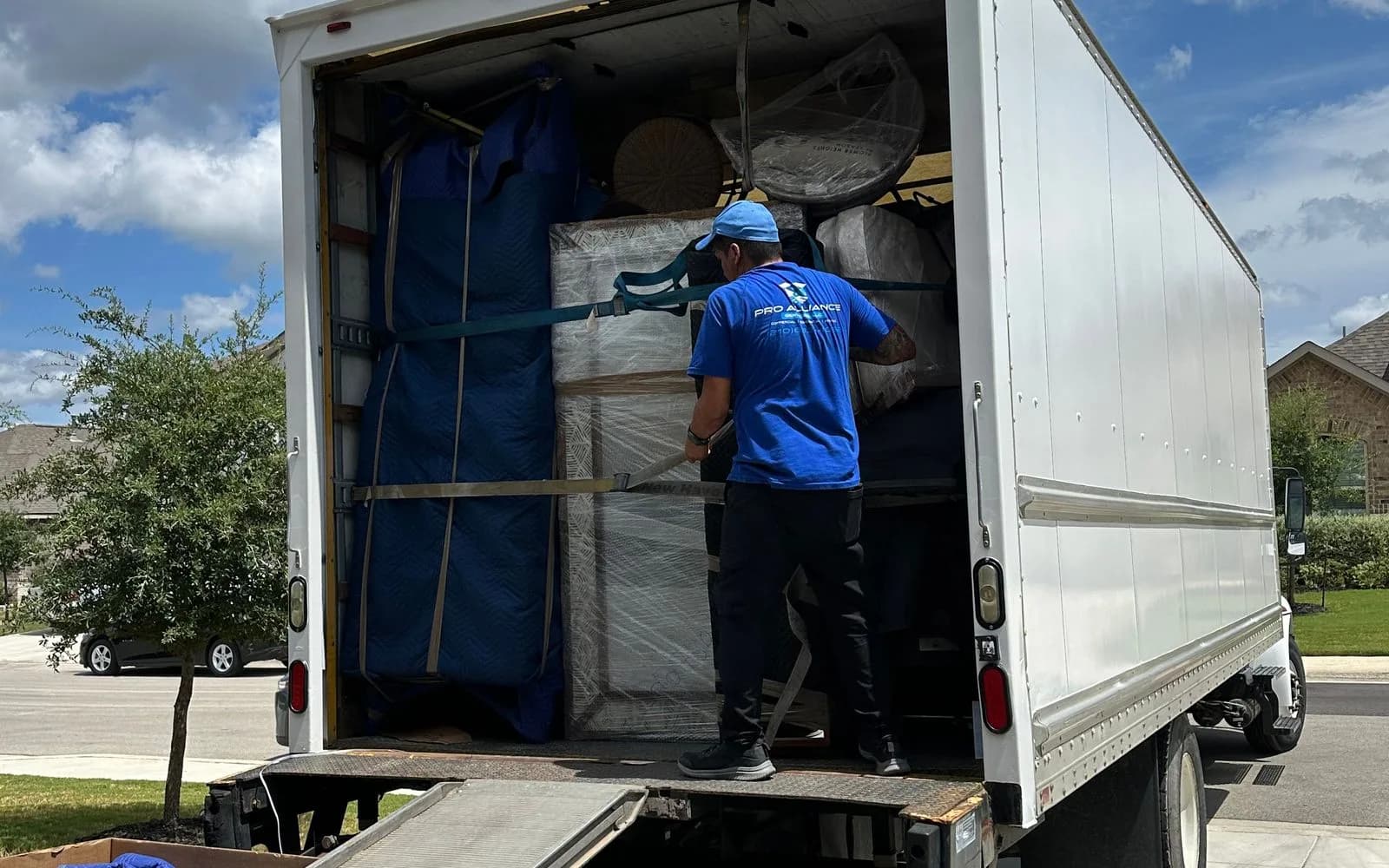
A closed cargo box in direct sun heats far beyond the outdoor air, the same way a parked car does. Some belongings handle that badly. Candles and crayons soften and slump. Vinyl records warp. Electronics, batteries, and instruments with glued joints are not built for a sealed metal box in August, and many medications carry a storage temperature on the label.
The fix is loading order. Anything heat-sensitive goes in last and comes out first, or skips the truck entirely and rides in a car with the air conditioning running. Aerosols and other pressurized cans should not go in the load at all, in any season.
The parked-vehicle warning on the NWS heat pages applies to people and pets without exception. Nobody waits in a parked car while the truck is loaded, not for a minute.
Water, pacing, and who should sit this day out
Hydration and pacing are simple, and they are also the first things skipped once the truck is half full and the finish feels close. Stage water on the loading path itself, drink before you feel like it, and take breaks indoors or in shade on a schedule rather than waiting for someone to ask. Slow is the summer pace. Watch the people around you, because heat sneaks up on the person working hardest.

Children and pets belong somewhere else entirely. A moving day means a propped-open front door, strangers carrying heavy things, and a hot yard. A grandparent's house, a friend's living room, or a daycare day solves all of it at once.
The summer moving checklist
- Check the National Weather Service forecast for your date a week out and again the day before.
- Ask for the earliest start time on offer when you book, and plan the heaviest rooms first.
- Stage water on the loading path itself and restock it at the destination.
- Plan breaks in shade or air conditioning on a schedule instead of waiting until someone needs one.
- Pull candles, electronics, medications, and houseplants out of the main load and carry them in a car.
- Arrange a cool place for children and pets away from the propped-open door.
- Start CPS Energy service at the new address before moving day so the cooling runs when you arrive.
- Keep the afternoon light, because the day should wind down as the temperature peaks.
Doing it yourself in July
The rental truck question reads differently in summer. The comparison is laid out in movers versus a rental truck in San Antonio, and heat shortens the list of reasons to do it yourself. A first-time load takes longer, and every extra hour lands deeper in the afternoon. The people doing the carrying are also the people driving, assembling beds, and making decisions at the hot end of the day.
Whichever way you go, have the electricity on at the new address before anyone lifts anything. Arriving to a house that has been sealed and cooking all day undoes the planning. If the new place has gas appliances, CPS Energy's natural gas safety FAQ covers what to know as service starts back up.
Where Pro Alliance fits
Send both addresses, your date, and a room-by-room inventory, and mention anything that lengthens the carry: stairs, a long walk from door to curb, a gate code. The team reviews the scope and prepares a written estimate for the actual job. See the local movers page, then use the free estimate form.
Frequently asked questions
What time of day should a summer move start?
As early as can be arranged. The coolest hours of a San Antonio summer day are around sunrise, and the heavy work should be finished before the afternoon peak. Plan the sequence so stairs, ramps, and the biggest pieces come first and the light work fills the hot hours.
Is it safe to move during a heat advisory?
Check the current advisory from the National Weather Service and take its guidance seriously. An advisory day calls for slower pacing, more water, more breaks, and a hard look at whether the heaviest work can shift earlier in the day. The forecast usually shows the pattern coming several days out, which is why checking a week ahead is on the checklist.
What should not ride in the truck in summer?
Candles, crayons, vinyl records, electronics, batteries, houseplants, and medications with a storage temperature on the label. Carry them in a car with the air conditioning running. Aerosols and other pressurized cans stay out of the load in any season.
Where should kids and pets be on moving day?
Somewhere cool and somewhere else. The combination of a propped-open door, a hot yard, and heavy things moving through hallways is bad for both, and a parked car is never a holding area, not even briefly. Arrange the day with family, friends, or daycare before the truck is booked.
Would waiting until fall make this easier?
Cooler working hours and a quieter calendar, yes. Whether waiting is possible depends on leases, school, and closings, which is usually why the date landed in summer to begin with. If the date is yours to choose, choose it with the heat in mind. If it is not, the plan above is the answer.
Sources
Ready to plan the real move?
Send both addresses, your date, and what you are moving. The team reviews access at each end and comes back with a written estimate.
Prefer to talk it through? Call (210) 683-4092, Mon–Fri 8:00 AM–5:30 PM and Sat–Sun 8:00 AM–4:30 PM.
Keep planning