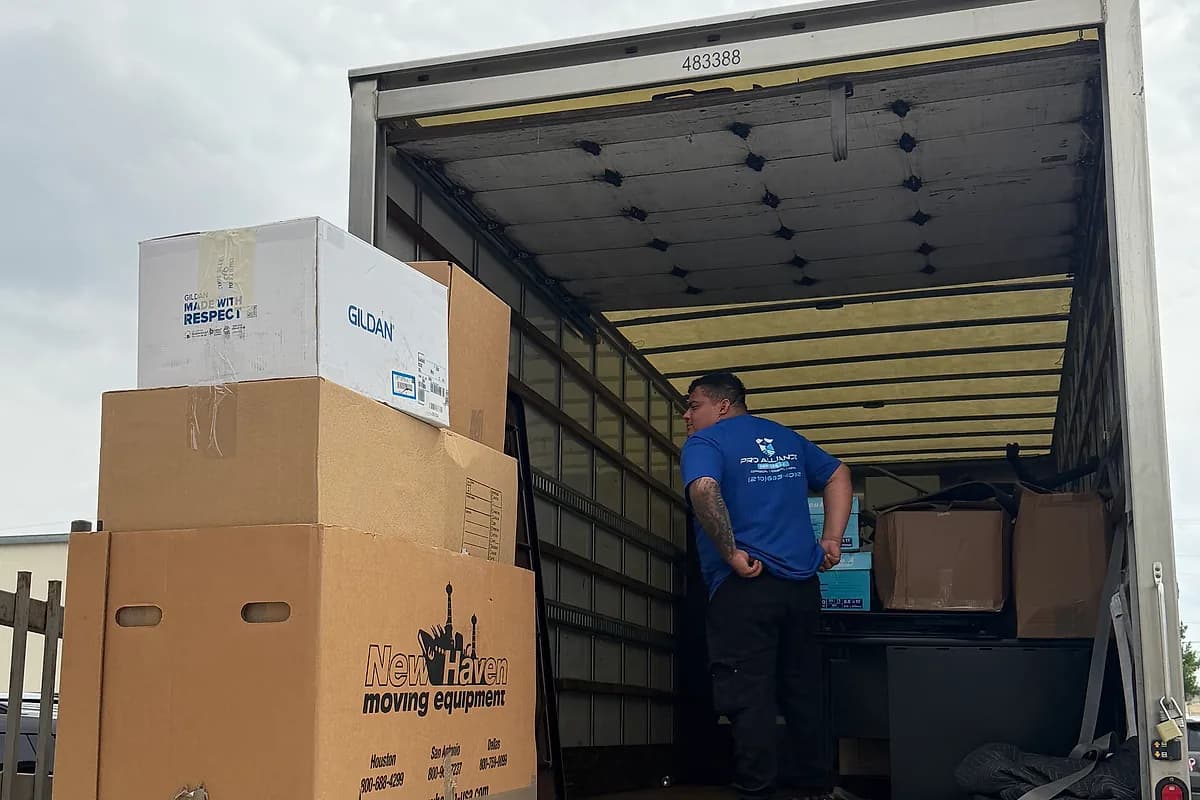
A gate that works for a resident car may not work for a moving vehicle. The route can differ by height, length, turning space, call-box process, security staffing, and loading rules. Confirm the approved truck entrance and exit before giving the mover an arrival route.
Direct answer: Ask management which entrance a moving vehicle must use, then record gate width, overhead clearance, turning space, opening method, approved hours, loading point, exit route, and backup contact. Register the vehicle or crew if required. Share credentials securely and never publish a gate code.
Short answer: what should a gated-apartment access sheet include?
Create one access sheet for each gated property. Mark the public-road approach, approved service or resident gate, gate width and height, tight turns, overhead equipment, call-box or security process, loading point, elevator or stair route, and exit. Include the property manager, security contact, resident, and mover contact. Ask whether the gate opens automatically on exit and what happens if the system fails. Confirm whether a truck can stop inside the property without blocking a fire lane, driveway, resident route, or emergency access. Share gate codes, fob data, and resident credentials through a secure channel, never in a group chat, a posted note, or an unprotected route map.
Identify the correct gate
Properties may have:
- a resident gate;
- visitor call box;
- service or delivery entrance;
- garage gate;
- emergency-only gate;
- separate exit.
Do not choose the widest visible gate without management approval. Ask for the gate name, street, nearest intersection, and a current photo. If the service entrance has limited hours, add those hours to the building reservation.
Measure vehicle clearance and turning space
Record:
- gate opening width;
- lowest overhead point;
- approach angle;
- island or call-box position;
- turning space after entry;
- internal speed or vehicle restrictions;
- exit width and opening method.
Share the expected vehicle information with management and the route with the mover. A vehicle that passes the gate may still lack turning or standing space inside.
Secure the access method
Ask whether the property uses a staffed gate, one-time code, resident call, fob, license-plate registration, driver identification, or another process. Record who completes each step and the deadline.
Do not send a permanent resident code in a large email or public document. If a credential changes, update the designated contacts only. Delete temporary credentials from shared notes after the move when appropriate.
Confirm the legal loading point
Passing the gate is only the first approval. Once inside, ask where the vehicle may stand, how long it may remain, and whether another route must stay open. Outside the gate, City parking laws and posted restrictions still matter on public streets.
For La Cantera and The Rim, combine this sheet with the Loop 1604 route guide. If both properties have secured gates or elevators, use the two-building coordination plan.
Prepare a gate-failure plan
The backup plan should identify:
- property or security contact;
- approved alternate entrance, if one exists;
- where the vehicle may legally wait;
- how the resident and mover will communicate;
- when the schedule must be reconsidered.
Do not tailgate another vehicle, prop open a secured gate, use an emergency gate, or create an unapproved entrance.
Test the access chain before move day
The gate is only one part of the route. Follow the planned vehicle path from the public road through the gate, around each turn, to the legal loading point, and back to the exit. Then follow the carrying path from the vehicle to the unit. Record every place where a credential, person, clearance, or property rule can stop progress.
Use this access-chain check:
- Confirm the exact service or moving-vehicle gate.
- Confirm width, height, turning space, and exit clearance.
- Confirm how the gate opens and who is authorized to open it.
- Confirm the vehicle or crew registration process.
- Confirm the approved loading location and time limit.
- Confirm the route to the unit, including elevators or stairs.
- Confirm an available property contact and approved backup.
- Share credentials only through a secure method.
Test temporary codes, fobs, call-box listings, and remotes before the move if the property allows it. Do not photograph or publish a permanent code. Keep credentials out of widely shared route sheets, posted notes, and shared documents. If security must verify the crew or vehicle, provide only the information the property requires.
If the service gate is locked or blocked, stop in a safe legal location and call the responsible property contact. Do not reroute through an open resident gate on your own, and once inside keep the vehicle out of fire lanes, driveways, reserved spaces, and other restricted areas. Update the mover when the approved route changes.
Reconfirm the access chain close to arrival because staffing, temporary codes, construction, and other scheduled moves can change. The resident should keep a charged phone and the property contact available, while the driver follows posted controls. If the gate opens late, the vehicle still may not queue on a public road or block another entrance.
Give the mover a simple diagram showing the approved turn, gate, loading point, and exit direction. Include the nearest public cross street and the property contact, but omit permanent credentials. A clear diagram helps when several resident gates look similar or navigation chooses an entrance that the property has not approved for commercial access.
Bringing the access sheet to Pro Alliance
Pro Alliance Services can review a local gated-apartment request after receiving the addresses, date, inventory, property instructions, clearance information, approved route, and requested services. Availability and vehicle planning must be confirmed for the exact move. Review the managed-building guide, apartment moving services, or request an estimate.
Frequently asked questions
Can a moving truck use the resident gate?
That takes two confirmations: management approving the route, and the mover confirming the vehicle fits.
Should I give the mover my permanent gate code?
Use the secure method required by the property and share only what is needed. A temporary or staffed process may be safer.
What if the service gate is locked on move day?
Contact the designated property or security contact. Use only an approved alternate route and legal waiting location.
Does gate access mean the truck can park anywhere inside?
Parking inside is a separate question. Confirm the approved loading point and keep fire lanes, drives, and emergency access clear.
Should the gate process be tested before the scheduled arrival?
Yes, when the property allows it. Verify the temporary code, fob, call-box listing, registration, or security procedure without publishing permanent credentials.
Sources
Ready to plan the real move?
Send both addresses, your date, and what you are moving. The team reviews access at each end and comes back with a written estimate.
Prefer to talk it through? Call (210) 683-4092, Mon–Fri 8:00 AM–5:30 PM and Sat–Sun 8:00 AM–4:30 PM.
Keep planning