A Converse move usually looks simple on a map. The city sits on FM 78 in Bexar County, Loop 1604 crosses the city limits on its way to I-10 East, and San Antonio is next door. The complications show up at street level, where newer subdivisions put homes on small lots with narrow lanes, dense curb parking, and driveways sized for cars rather than trucks.
New construction adds its own wrinkle. Streets can be finished before mapping services catch up. A correct address may still send a driver to the wrong entrance or to a road the app does not know yet. Add HOA rules and the question of where a box truck can legally and practically stand, and a Converse move deserves a real access plan.
This guide covers the approach roads, the street-level constraints, and the packet of photos and measurements that lets a mover review a Converse address before move day.
Direct answer: Plan a Converse move around the street as much as the house itself. Confirm the approach on FM 78, Loop 1604, or I-10 East against current road conditions, because the corridor east of San Antonio has active construction. Photograph the street and its parked cars at the hour the move would start. Measure the driveway before assuming a truck can use it. Get HOA rules in writing. If the home is new construction, send a nearby cross street and simple directions along with the address.
Short answer: what does moving access planning in Converse involve?
TxDOT's FM 1516 expansion between FM 78 and I-10 runs in phases through fall 2028, including summer work near Judson High School, so check DriveTexas rather than relying on an older visit to the area. Many newer Converse subdivisions were platted with narrow lanes, and two rows of parked cars can turn a street into a single lane, so photograph the block at the hour the move would actually start and note whether trash pickup falls on that day. A small-lot driveway often cannot hold a box truck at all, in which case a cleared garage bay makes a useful staging point for the carry. HOAs in newer sections sometimes regulate moving trucks directly, so get the current rules in writing before the date is set, and if the address is new construction, add the subdivision name and a cross street, since mapping services can lag the actual street grid.
Plan the approach: FM 78, Loop 1604, and I-10 East
FM 78 runs through Converse and carries most local routes. Loop 1604 crosses Converse city limits between FM 78 and I-10 East, which ties the city into both corridors. Whichever approach the truck uses, check it against current conditions instead of memory.
Construction is the reason. TxDOT is expanding FM 1516 between FM 78 and I-10 in east Bexar County, in phases that run into fall 2028. The section in front of Judson High School was scheduled for summer work while school is out. Phased projects change lane patterns and turn access as they progress, which matters more to a loaded box truck than to a commuter.
Check DriveTexas, TxDOT's road condition map, close to the move date. If the other end of the move is in another city around San Antonio, start with the guide to moving between San Antonio and nearby cities. Then build an access packet for both addresses, not just the Converse one.
Narrow streets and curb parking set the truck position
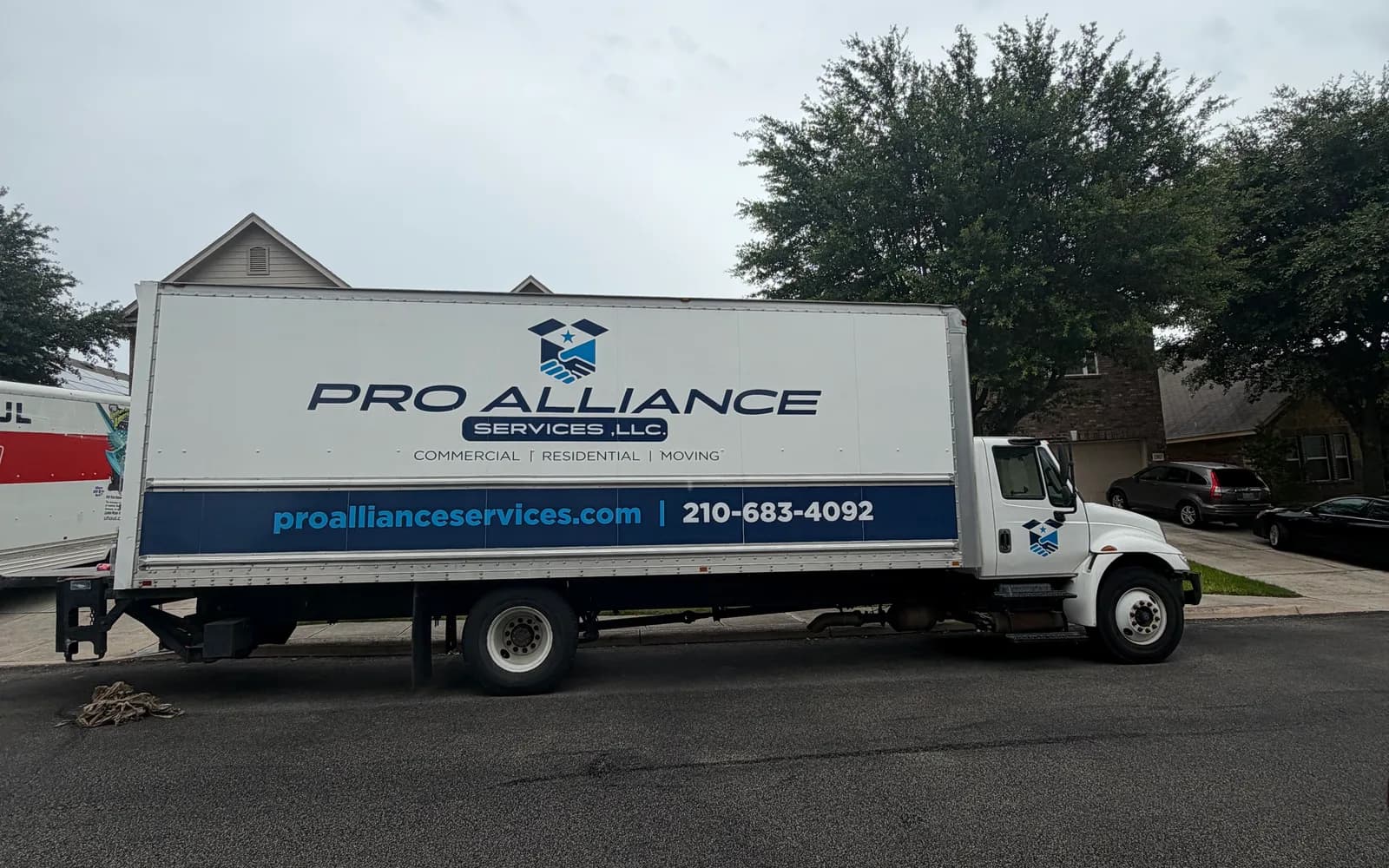
Many newer Converse subdivisions were platted tight. Two rows of parked cars can turn a residential street into a single lane. A box truck needs more than a car-sized gap to stop, level out, and open a ramp. The truck also cannot block hydrants, driveways, mailbox access, or the through lane for neighbors.
So photograph the street at the hour the move would actually start. A street that is empty at midday can be lined with cars in the early morning and evening. If trash pickup falls on the move day, note it, because bins narrow the usable curb even further.
If the front curb cannot host the truck, look for the nearest workable position: a corner, a wider stretch, or a neighbor's frontage with permission. A longer carry just needs to be part of the plan before the day starts.
When the map has not caught up with the street
In active subdivisions, streets open faster than mapping services index them. A brand-new address can route a driver to the wrong gate, a model-home parking lot, or a street that dead-ends into construction fencing.
Do not let the truck discover this on move day. Send the subdivision name, the nearest established cross street, and simple directions from FM 78 or Loop 1604 along with the address. A pinned map location is more reliable than a street name the app has not learned. The day before, drive the route into the subdivision yourself, since construction phases can move barricades and temporary entrances.
Driveways, garages, and HOA rules on small lots
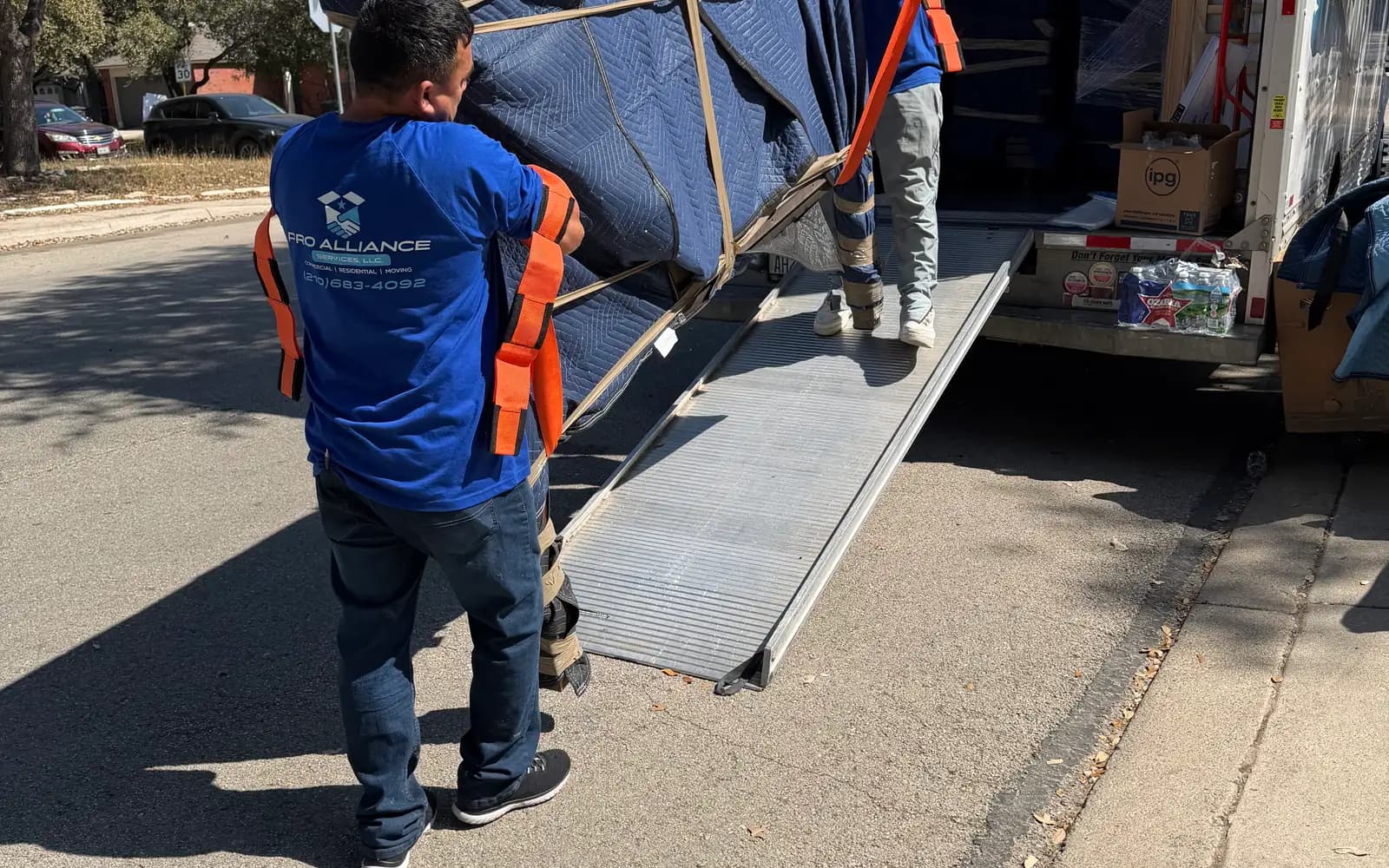
A small-lot driveway often cannot hold a box truck at all. It may be too short, too steep at the apron, or shared with the neighbor's approach. Measure length and width and note the slope, then let the mover judge instead of assuming the driveway is the answer. Loading from the street with the ramp to the curb is common when the position is planned ahead.
Garages are useful staging space in these homes. A cleared garage bay shortens the carry and keeps boxes out of the sun while the truck is positioned.
HOAs are common in newer sections. Some regulate moving trucks, street parking, or how long a vehicle may stand at the curb. Ask for the current written rules early and send them with the packet. For public street questions inside the city, Converse Public Works manages streets, sidewalks, and stormwater, and the City of Converse site lists how to reach each department.
Build the Converse access packet
One list covers what the mover needs to see. Work through it for the Converse address, then repeat it for the other end of the move:
- Write the full address plus the subdivision name and the nearest established cross street.
- Photograph the street in front of the home at the hour the move would start.
- Note hydrants, mailboxes, street trees, and how much curb stays open on a normal day.
- Measure the driveway length, width, and slope, and note whether it is shared.
- Photograph the garage, front walk, porch steps, and main entry.
- Measure the front door, the tightest interior turn, and the largest furniture pieces.
- Collect written HOA or property manager rules on moving trucks and parking.
- Check current road conditions for FM 78, Loop 1604, and I-10 East shortly before the move.
- Send the packet, the inventory, and the move date together before the plan is final.

A packet like this turns a tight street from a surprise into a plan. The mover can see the truck position options, the carry distance, and the constraints before anyone commits to a start time.
Where Pro Alliance fits
On a small Converse lot, truck position and carry distance get decided before the day or argued about during it. Sending the address packet, the inventory, the preferred date, and any HOA parking rules lets the team work them out early. Look over Converse moving support for the local picture, then send everything with an estimate request.
Frequently asked questions
Which roads do movers use to reach Converse?
Most routes use FM 78 through the city, Loop 1604 where it crosses the city limits, or I-10 East with a connecting road. TxDOT has active work in the area, including the FM 1516 expansion between FM 78 and I-10, so conditions change as phases progress. Check the DriveTexas map close to the move date.
What if the street is too narrow for a moving truck?
The move still works from the nearest workable truck position, such as a corner or a wider stretch of street. The tradeoff is a longer carry, which should be identified during planning rather than discovered on move day. Street photos taken at the planned hour help the mover judge the options.
GPS cannot find my new Converse address. What should I do?
Send the full address plus the subdivision name, the nearest established cross street, and simple directions from FM 78 or Loop 1604. A pinned map location helps more than a street name that mapping services have not indexed yet. Confirm the route into the subdivision the day before, since new sections can shift entrances during construction.
Do I need HOA approval to move in Converse?
Requirements vary by association. Many rules cover the truck rather than the move itself: where it may stand, for how long, and whether street parking is restricted. Ask for the current written rules early. For public street questions, Converse Public Works is the city department that manages streets, sidewalks, and stormwater.
What details does a mover need for a Converse estimate?
Send the complete access packet, the inventory, the preferred date, and both addresses if the other end of the move is outside Converse. Street photos, driveway measurements, and written HOA rules are the items that most often change the plan. With those in hand, the review reflects real conditions instead of assumptions.
Sources
Ready to plan the real move?
Send both addresses, your date, and what you are moving. The team reviews access at each end and comes back with a written estimate.
Prefer to talk it through? Call (210) 683-4092, Mon–Fri 8:00 AM–5:30 PM and Sat–Sun 8:00 AM–4:30 PM.
Keep planning