A refrigerator, a washer and dryer, and maybe a chest freezer in the garage. Those few items take more planning than a house full of boxes, because each one is tied to water, power, or gas, and each one has to fit through the same doors the furniture uses. In the Austin metro there is a third question most people leave until the last week: what happens to the old units that are not coming along.
Our San Antonio appliance prep guide covers the preparation steps for each appliance in detail, and they apply in Austin too. This guide covers what is different here. The utility providers change depending on which side of a city line you live on. Apartments and newer two-story homes decide the carry. And the City of Austin has its own rules for getting rid of an old appliance.
Direct answer: To move appliances in Austin, book the utility changes with the right provider for each address, have a qualified professional disconnect any gas appliance, and defrost and drain units several days early. Measure the path at both homes and tell the mover about stairs or elevators. Old appliances can go to City of Austin bulk collection with an appointment, doors removed, if you are a residential curbside customer.
Short answer: how do you get appliances ready for an Austin move?
Work backward from the moving date. A week out, confirm which utilities serve both addresses and schedule the stop and start dates. Inside the city, electric service is Austin Energy, water is Austin Water, and gas for many homes is Texas Gas Service, but several suburbs run their own utilities. Book a qualified professional to disconnect and cap any gas range or dryer. A few days before the move, empty and defrost the refrigerator and freezer, and drain the washer hoses. Measure doors, stairs, and turns at both homes. If an old unit is staying behind for disposal, schedule that separately, because the moving truck is not the disposal plan.
Know which utility serves each address
Austin is one metro and many utility maps. A move from central Austin to Round Rock or Georgetown can mean dealing with different electric and water providers at each end, and the shutoff at one address has nothing to do with the start at the other.
Inside the City of Austin, Austin Energy supplies electricity and Austin Water supplies water. Texas Gas Service lets customers start, stop, or transfer gas service online. Outside the city limits, check with the city itself. Georgetown, for example, runs its own electric and water utility through Georgetown Utility Systems, and Pflugerville handles its own utility billing. Getting this wrong usually shows up on moving day as a new home with no gas for the dryer or no water for the ice maker line.
Two appliance tasks depend on those dates. The water supply to a refrigerator ice maker and to the washer needs shutting off at the valve before disconnection. And any gas appliance needs its line disconnected and capped by a qualified professional before the crew arrives. Movers do not open gas connections, and a crew that finds a dryer still connected will leave it where it stands.
Plan the carry at both homes
The appliance itself is rarely the problem. The route is. Austin's housing gives you two common patterns, and each has its own trouble spot.
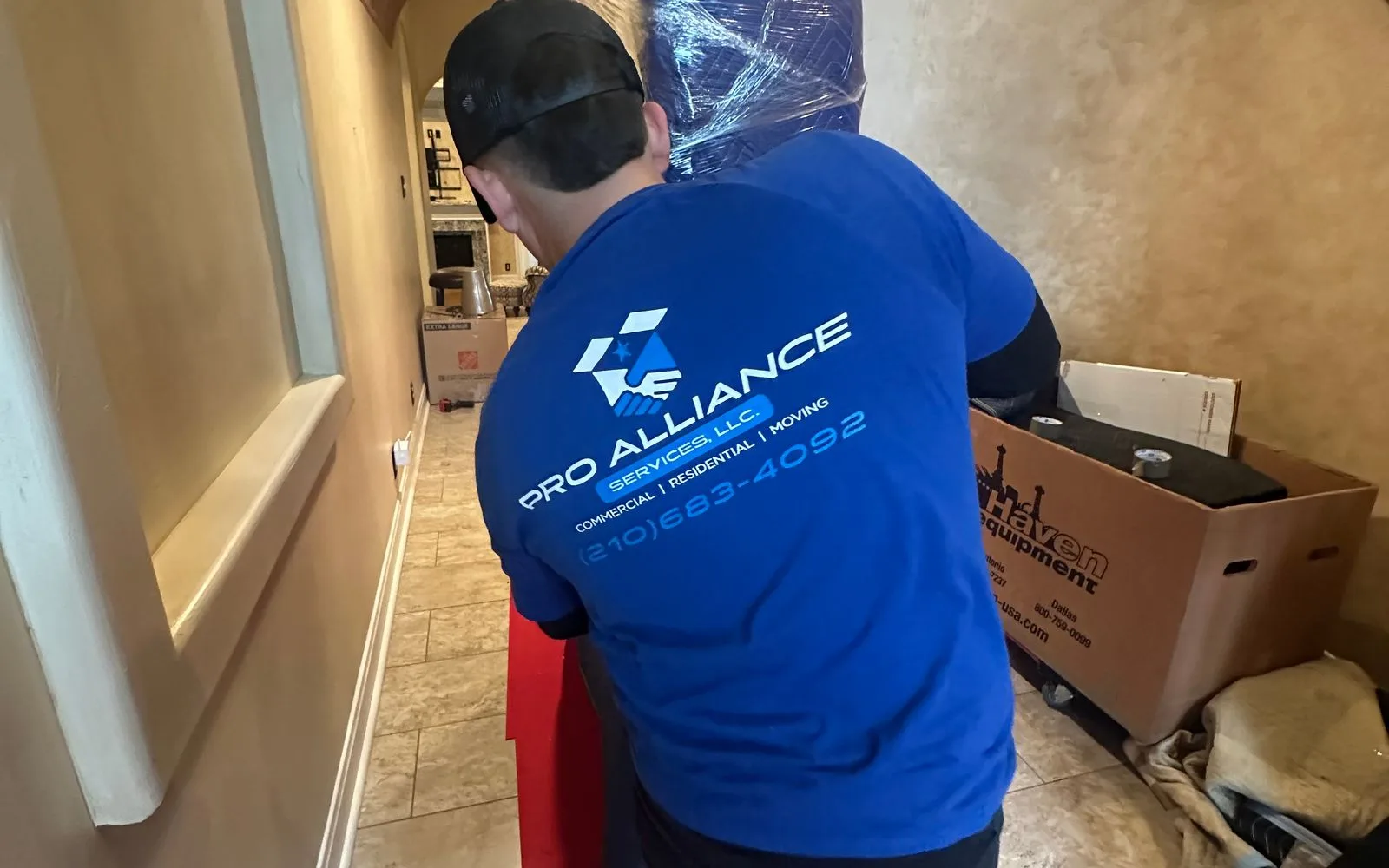
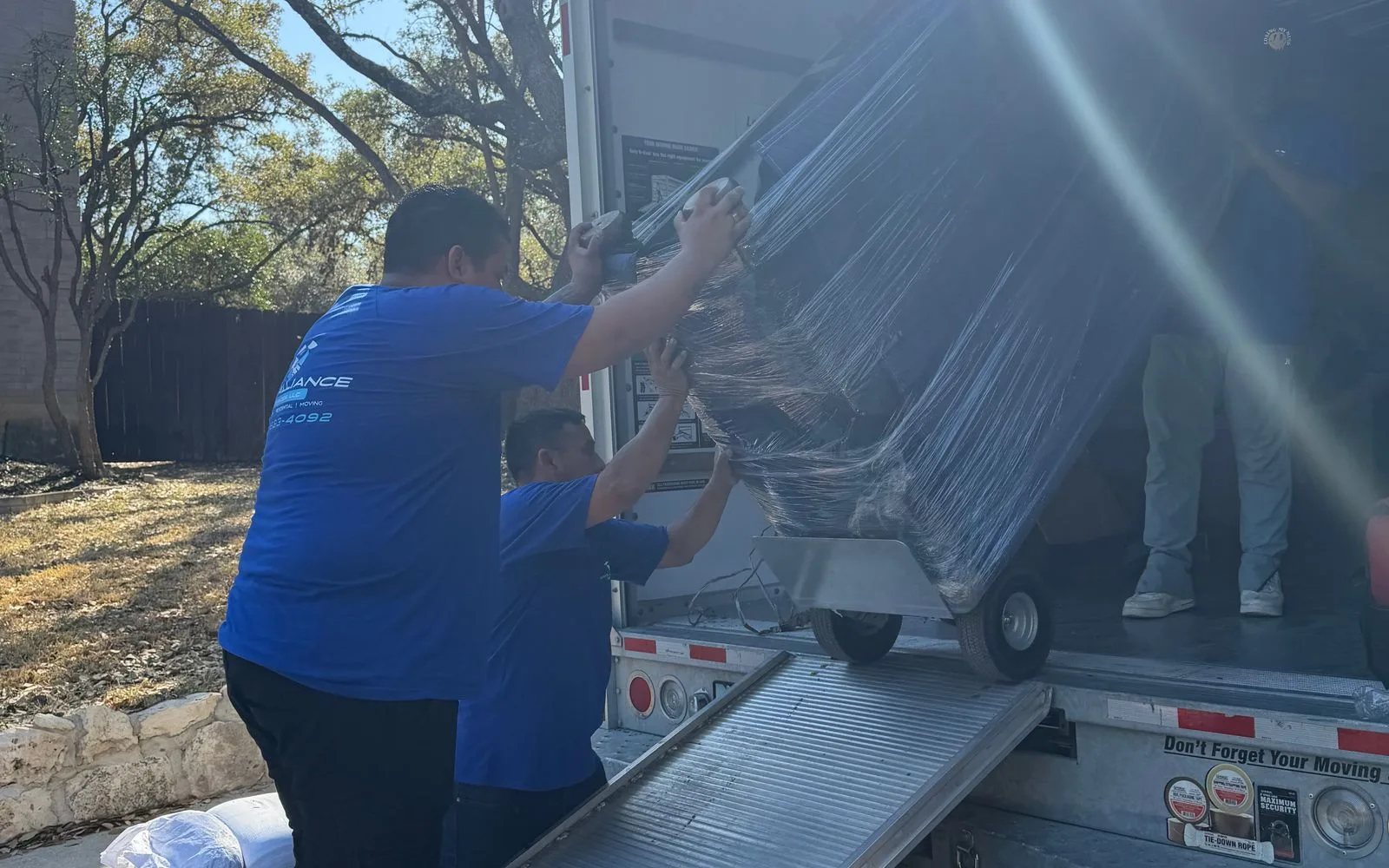
Newer suburban homes across the metro often put the laundry room upstairs. That means a washer and dryer coming down a staircase with a turn at the landing, which is a two-person carry on a dolly with straps, and the stair width and landing depth decide whether it goes smoothly. Measure them.
Apartments and condos add the building's rules. A refrigerator going to a third-floor unit needs either a service elevator or a stair carry, and many properties require the elevator to be reserved and padded. Our Austin apartment moving guide covers reservations, loading zones, and move-in paperwork, and the Austin building access questions list is worth sending to your property manager.
Decide what happens to the old units
A move is when most people replace the old refrigerator or the tired washer. That leaves the old one, and the question of where it goes.
If you are a City of Austin residential curbside customer, meaning a single-family home or a building up to a fourplex, Austin Resource Recovery offers on-demand bulk collection. Appliances are accepted with the doors removed. Collection needs an appointment, made online, in the Austin Recycles app, or through 3-1-1, and customers can schedule up to three bulk collections a year. Items go out at the curb by 5:30 a.m. on the appointment date, with appliances in the metal pile. They must sit away from carts, mailboxes, and parked cars, and they are not collected from an alley.
If you rent in a larger apartment building, you are not a curbside customer, so ask the property how it handles appliance disposal. Refrigerators, freezers, and window air conditioners hold refrigerant, and federal rules make the final recycler or landfill responsible for making sure it is recovered before disposal. A reputable appliance retailer or recycler taking an old unit will know that process. Leaving a refrigerator at an apartment dumpster does not.
An appliance checklist for Austin moves
Use this list in the week before the move:
- Confirm which utility provider serves each address and schedule the stop and start dates.
- Book a qualified professional to disconnect and cap any gas range, dryer, or water heater that is moving.
- Shut off the water to the refrigerator ice maker and the washer, then disconnect and drain the hoses.
- Empty, unplug, and defrost the refrigerator and freezer several days early and leave the doors open to dry.
- Measure doorways, stair widths, landings, and elevator doors at both homes.
- Reserve the service elevator and loading area at any apartment or condo building.
- Schedule bulk collection or a recycler for any old appliance that is not coming along.
- Tell the mover what each appliance is, where it sits, and what has already been disconnected.
Where Pro Alliance fits
Pro Alliance is based in San Antonio and runs moves across the Austin metro. Send both addresses, a list of the appliances, and notes on stairs and elevators, and the team will plan the appliance move as part of your full scope. You can also review our Austin movers page, then request a free estimate. If a pool table is going too, read our Austin pool table moving guide first.
Frequently asked questions
Will movers disconnect my gas dryer or range?
No. Gas disconnection should be done by a qualified professional before moving day, and the line should be capped. Movers carry the appliance once it is disconnected. Tell the mover in advance which gas appliances are moving and when they will be ready.
How early should I defrost a refrigerator before a move?
Start several days ahead. Empty it, unplug it, and leave the doors open with towels underneath so the interior dries completely. A refrigerator that is still wet inside can develop odors and drip in the truck. Your owner's manual may give model-specific guidance.
Can the City of Austin pick up my old refrigerator?
If you are a City of Austin residential curbside customer, bulk collection accepts appliances with the doors removed. You need an appointment, and the items must be at the curb by 5:30 in the morning on that date. Apartment residents in larger buildings should ask their property.
Do I need to tell the mover about stairs for the washer and dryer?
Yes. An upstairs laundry room means a stair carry with a turn at the landing, which affects the equipment and the number of people needed. Measure the stair width and landing, and include photos with your estimate request.
Does the utility provider change between Austin and the suburbs?
Often it does. Inside the city, Austin Energy and Austin Water serve most homes. Several suburbs run their own utilities or billing, so check with the city at your new address before scheduling your start dates.
Sources
Ready to plan the real move?
Send both addresses, your date, and what you are moving. The team reviews access at each end and comes back with a written estimate.
Prefer to talk it through? Call (210) 683-4092, Mon–Fri 8:00 AM–5:30 PM and Sat–Sun 8:00 AM–4:30 PM.
Keep planning